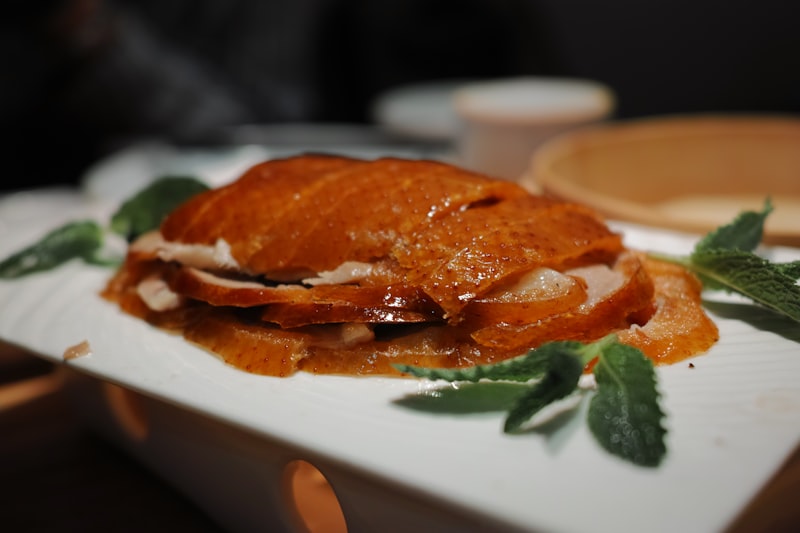
🍜 China Food Ordering Guide – Your complete guide to ordering food in China: digital ordering (QR menus, delivery apps), menu logic, regional cuisines, essential phrases, and group dining strategies. Updated with recent payment limit increases and translation tools.
 China‘s food ecosystem is digital, diverse, and delicious.
Chinese menus look chaotic but follow consistent rules used nationwide. Once you understand the logic, you can walk into 95% of local restaurants and order well without speaking a word of Chinese. This guide combines digital ordering tools, menu logic, regional cuisines, and practical phrases to help you eat like a local.
📱 Part 1 – Digital Ordering & Payment
China‘s food ordering is app‑first. Master these tools and you’ll never need a menu translation.
01 / In‑Restaurant Ordering – QR Code Menus
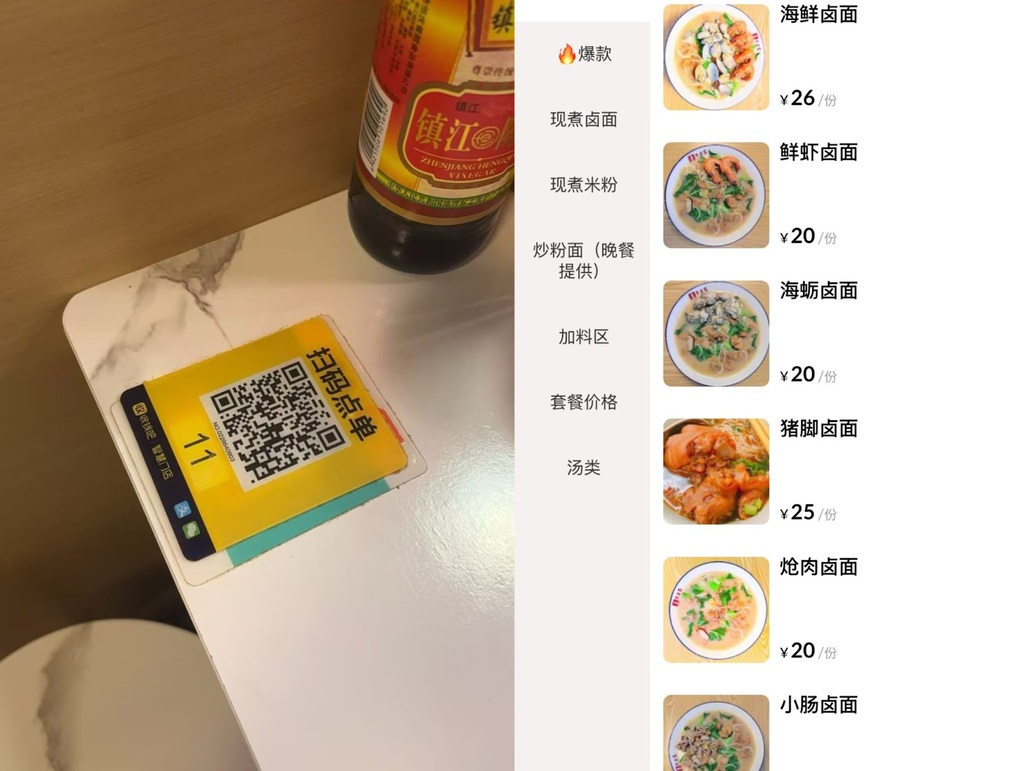 Scan QR code → browse → order → pay.
Almost all mid‑range and modern restaurants use QR code menus. Each table has a unique QR code. Scan it with WeChat or Alipay → menu opens in your app (often with pictures) → select dishes → submit → kitchen receives order instantly. Many restaurants no longer provide paper menus.
What if there‘s no QR code? Smaller or older restaurants may still have paper menus. In that case, use the point‑and‑smile method (see Section 9) or Dianping app to show photos.
02 / Food Delivery – Meituan & Ele.me
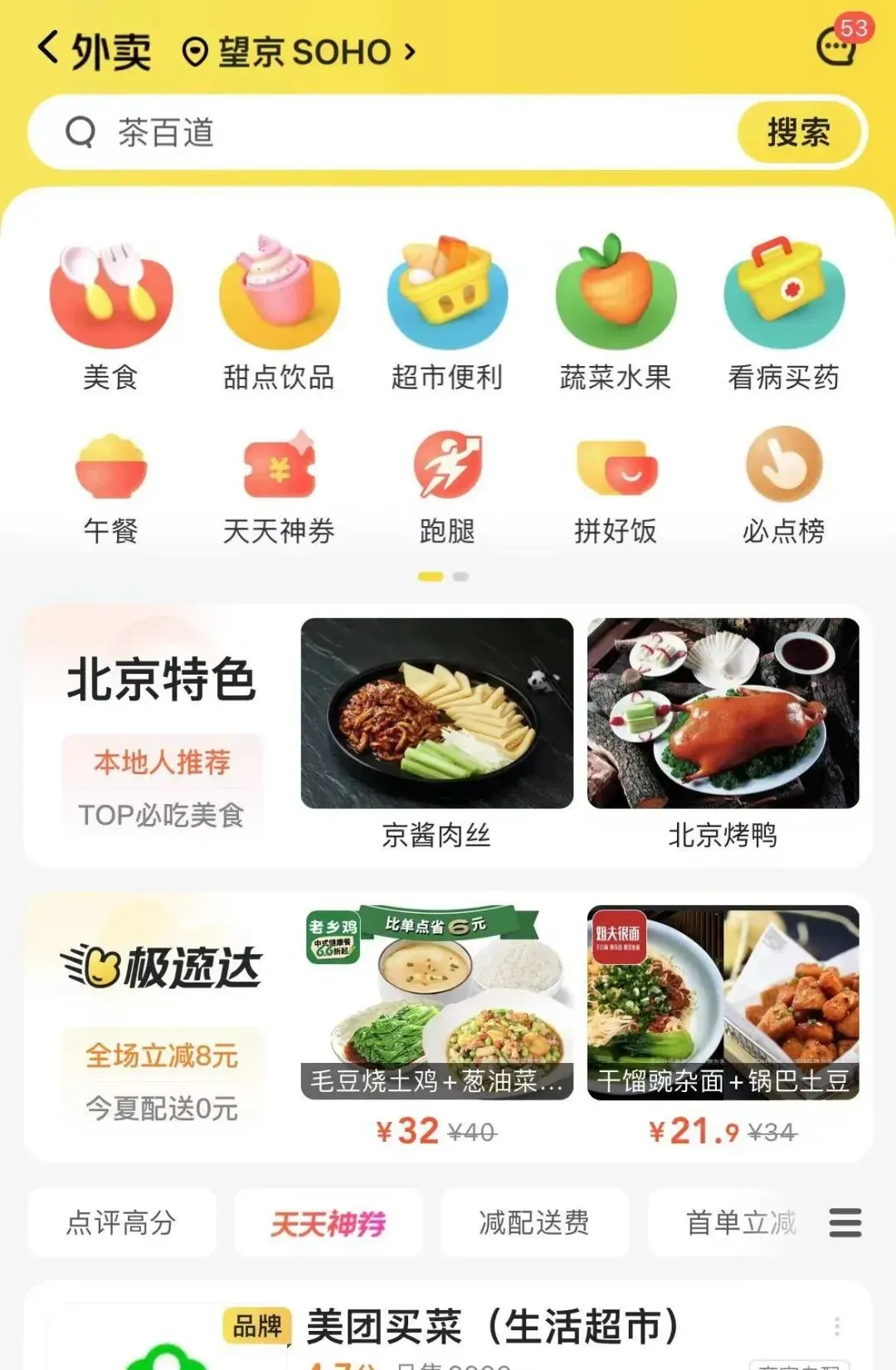 Delivery apps – 30 minutes to your hotel.
China has the world‘s largest food delivery market. Most orders arrive within 30 minutes with real‑time tracking.
- Meituan (美团) – dominant platform. Use the WeChat Mini Program version – tap the three dots (⋯) → “Translate” to get English interface. Supports international phone registration.
- Ele.me (饿了么, now rebranded as Taobao Flash Purchase) – Alibaba‑backed, integrated into Alipay. Same translation method works.
How to Register & Order (No Chinese Needed)
- Registration: Open the Meituan or Ele.me mini‑program inside WeChat/Alipay → use your international phone number to receive an SMS code → complete registration.
- Address: The app auto‑detects your current location. For hotel delivery, enter your hotel name and room number. Check “Leave at front desk” if available.
- Translation: After opening the mini‑program, tap the three dots (⋯) → “Translate” → the entire interface converts to English.
- Special instructions: In the “buyer notes” field, type “Please leave at front desk (放在前台)” to avoid phone calls.
- Payment: Pay via Alipay or WeChat Pay (international cards linked). No local bank card required.
Pro tip for hotel delivery: Save your hotel address in Chinese characters (copy from booking confirmation). If the rider calls, say “Wǒ shì wàiguó rén” (我是外国人 – “I am a foreigner”). Most will then leave the order at the front desk.
03 / Payment – Alipay, WeChat Pay & e‑CNY
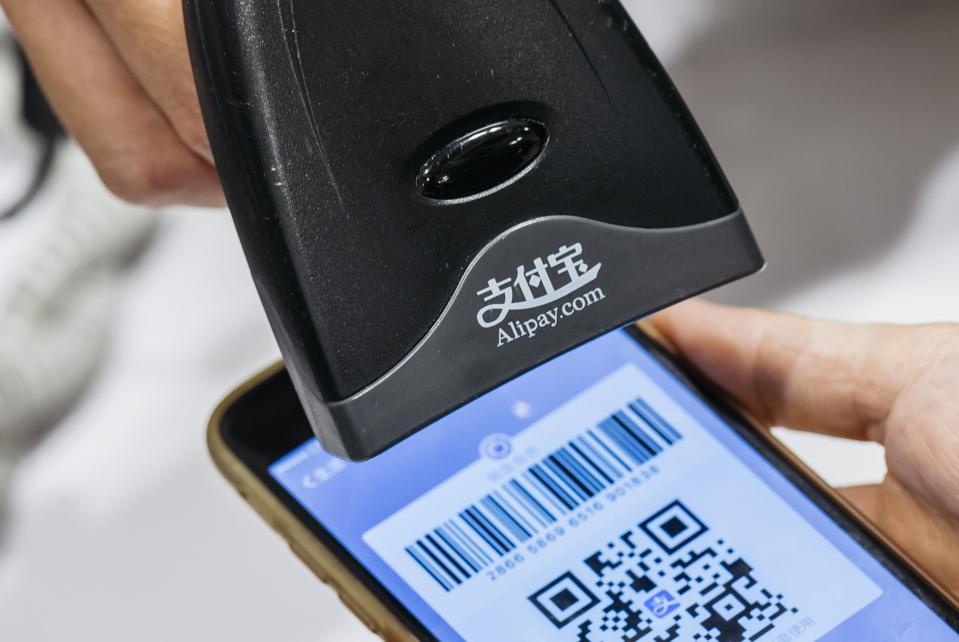 Scan to pay – instant and secure.
All food payments (in‑restaurant and delivery) are completed via QR-based mobile payment. Cash is rarely used in urban restaurants.
Alipay Tour Pass (Travel Wallet)
Download the Alipay International app → register → find “Tour Pass” → pre‑load foreign currency (USD, EUR, GBP, etc.) → use the balance to pay for food delivery, restaurant QR codes, metro, and more. Unused funds are refundable before you leave China. This bypasses the need for a local bank card.
Recent Transaction Limit Increases
- With passport verification: Single transaction up to $5,000 (approximately ¥35,000); annual up to $50,000.
- Without verification: Lower limits (~$500 per transaction).
Transaction Fees
- Under ¥200 (~$28): No fee.
- Over ¥200: 3% fee.
- e‑CNY (Digital Yuan): Zero fees for all transactions – great for large bills.
04 / Discover Where to Eat – Apps That Replace Guesswork
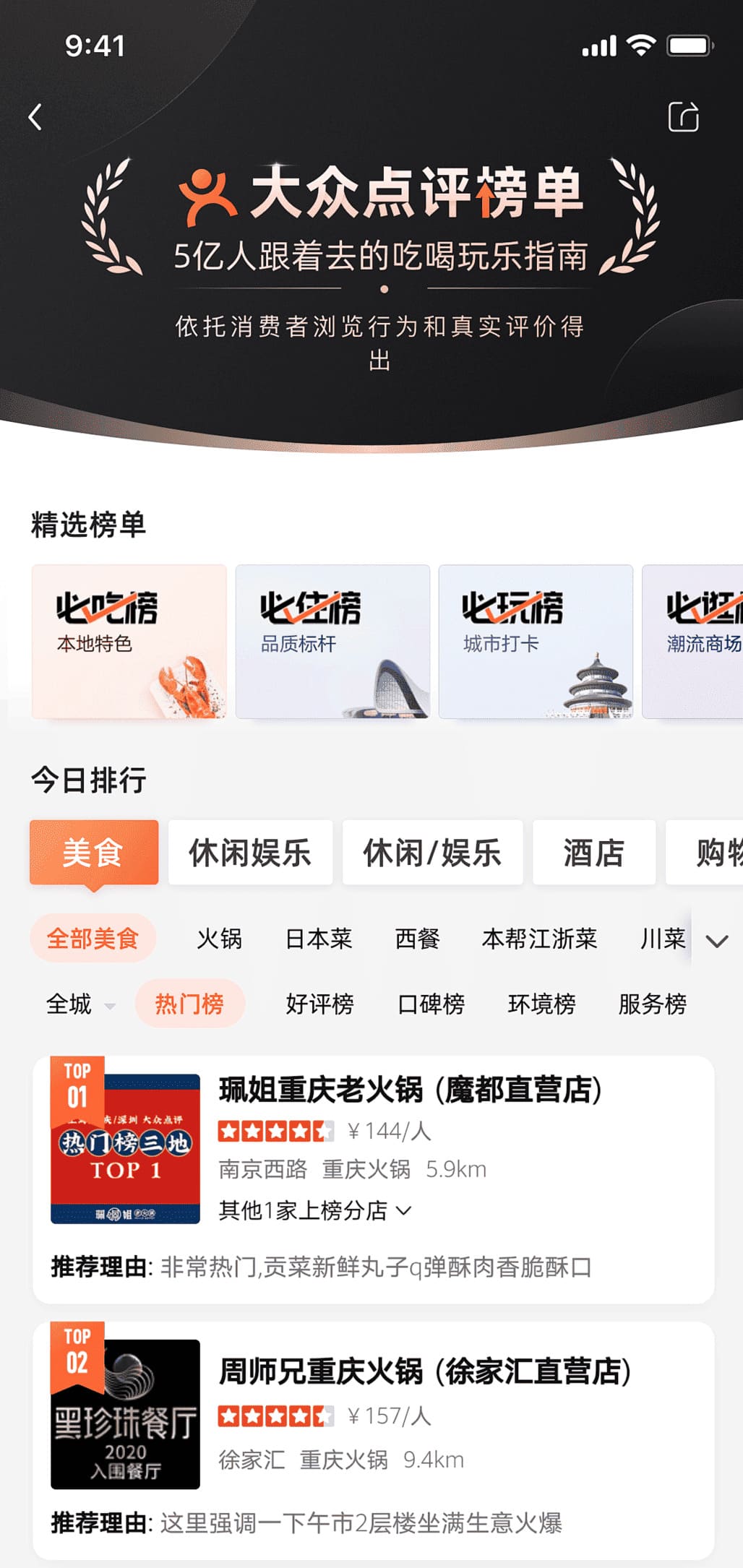 Dianping – China’s Yelp with user photos.
- Dianping (大众点评) – WeChat Mini‑Program: Search “大众点评” in WeChat. Browse “Recommended Dishes” (推荐菜), user photos, ratings, and crowdsourced reviews. Hand your phone to a server to point to what you want – works everywhere.
- Xiaohongshu (小红书 / RedNote): Search for “city name + 美食攻略” (food guide) or “本地人推荐” (local recommendations). Full of real‑life reviews and hidden gems. Use in‑app translate (iOS) or screenshot + Baidu Translate.
- Bib Gourmand (必吃榜) – by Meituan: Algorithm‑vetted list of affordable, high‑quality restaurants. The “Must‑Eat” badge on Dianping indicates tested consistency.
- Black Pearl Restaurant Guide (黑珍珠): Meituan‘s upscale dining guide, comparable to Michelin. Good for special occasions, fine dining, and business meals.
- Amap (高德地图) – Restaurant Scanner Street List: Open Amap (English version available) → search “food” → look for “必吃榜” or “本地人常去” tags directly on the map. Taps into location‑based local favourites.
📖 Part 2 – Menu Logic & Regional Cuisines
Once you understand the structure, you can navigate any menu.
05 / Menu Layout – Read Front to Back
How to Spot Signature Dishes
- Red border / red seal / crown / star icon – restaurant’s headline items.
- “Manager‘s Pick” (店长推荐) / “Crowd Favourite” (人气必点) / “Top Seller” (销量第一) / “Limited Daily” (每日限量) – validated by countless diners.
- Large, high‑resolution photographs – typically the flagship dishes (but favour real customer photos over stock images).
- “Executive Chef’s Recommendations” – usually on the last few pages; that‘s where the real talent shows.
06 / Price Logic – By Protein, Not Portion
Chinese restaurant pricing is consistent across the country. Prices are set by protein content, not serving size. Below are current standard ranges for typical home‑style restaurants:
| Dish type | Price range (RMB) | Notes |
|---|---|---|
| Pure vegetable dishes | ¥20–¥40 | Stir‑fried seasonal greens, cold cucumber salad |
| Egg and tofu dishes | ¥25–¥45 | Tomato and egg, mapo tofu |
| Pork and chicken dishes | ¥40–¥70 | Red‑braised pork, kung pao chicken |
| Beef and lamb dishes | ¥50–¥90 | Sichuan boiled beef, cumin lamb |
| Freshwater fish | ¥60–¥120 | Steamed sea bass, pickled‑cabbage fish stew |
| Seafood | Priced by weight | Usually “market price” (时价) – confirm price and weight before ordering |
City adjustment: Add 20% for first‑tier cities (Beijing, Shanghai, Guangzhou, Shenzhen); subtract 20% for third‑ and fourth‑tier cities.
Seafood rule: Always ask “Duōshǎo qián yī jīn?” (多少钱一斤?) – “How much per jin?” and confirm any preparation fee separately.
Value benchmark: ¥50–¥80 per person buys an excellent casual meal; over ¥100 per person should be a noticeably better establishment.
07 / Regional Cuisines – Same Name, Different Dish
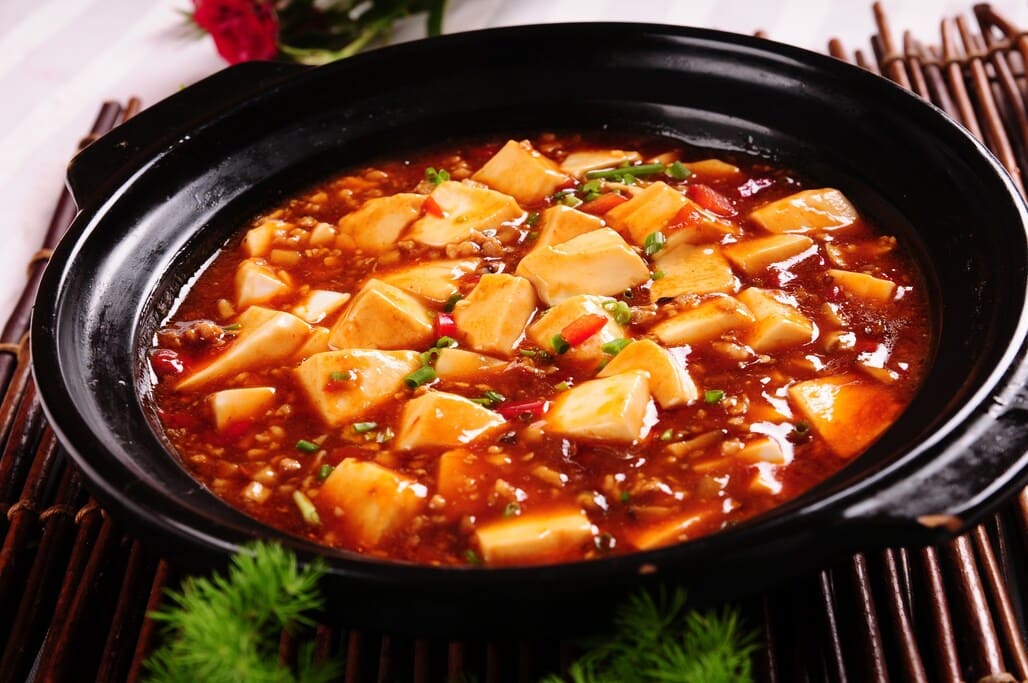 Mapo tofu – Sichuan vs other regions taste very different.
The same dish name can mean entirely different things in different provinces. Before ordering, identify which cuisine the restaurant represents.
The Eight Major Regional Cuisines
- Sichuan (川菜) – Numbing‑spicy, savoury‑aromatic. Signatures: mapo tofu, water‑boiled fish, kung pao chicken.
- Hunan (湘菜) – Boldly spicy and rich. Signatures: chopped‑chili fish head, chili‑fried pork.
- Cantonese (粤菜) – Light, clean, true‑to‑ingredient. Signatures: white‑cut chicken, steamed fish, roast goose.
- Shandong (鲁菜) – Savoury and full‑bodied. Signatures: sweet‑and‑sour carp, braised sea cucumber.
- Jiangsu (苏菜) – Balanced sweet‑savoury. Signatures: squirrel‑shaped mandarin fish, salted duck.
- Zhejiang (浙菜) – Fresh, crisp, tender. Signatures: West Lake fish in vinegar gravy, Dongpo pork.
- Fujian (闽菜) – Sweet‑and‑sour with depth. Signatures: Buddha Jumps Over the Wall, oyster omelette.
- Anhui (徽菜) – Savoury with light spice. Signatures: stinky mandarin fish, hairy tofu.
Other Popular Regional Cuisines
- Xinjiang – Cumin, lamb, wheat. Signatures: lamb skewers, big‑plate chicken.
- Northeastern (Dongbei) – Generous portions, bold savoury. Signatures: guo bao rou, chicken stewed with mushrooms.
- Shaanxi – Sour, spicy, savoury, wheat tradition. Signatures: rou jia mo, yang rou pao mo, oil‑splashed noodles.
08 / Cooking Methods – Texture, Flavour & Appearance
The cooking method directly determines what arrives on your plate. Learn these characters and you’ll have a reliable sense of texture and style.
| Chinese | Pinyin | English | Texture & Flavour | Appearance |
|---|---|---|---|---|
| 炒 | chǎo | stir‑fry | crisp‑tender, savoury, high‑heat aroma | glossy, sauce evenly coated |
| 蒸 | zhēng | steam | light, delicate, natural flavour | pale, moist, clear broth |
| 煮 | zhǔ | boil | simple, brothy, soft texture | soup‑based, ingredients submerged |
| 炖 | dùn | slow‑stew | tender, fall‑apart, rich broth | dark sauce, thick gravy |
| 炸 | zhá | deep‑fry | crispy exterior, juicy interior | golden brown, bubbly surface |
| 烤 | kǎo | roast / grill | smoky, caramelised edges | charred marks, dry surface |
| 烧 | shāo | braise | soft, deeply infused flavour | thick, red‑brown sauce |
| 白灼 | bái zhuó | quick‑blanch | crisp, bright, natural taste | served with dipping sauce, barely cooked |
| 干煸 | gān biān | dry‑sauté | dry, intensely savoury, slightly chewy | no visible sauce, wrinkled surface |
09 / Dish Names That Don‘t Mean What They Say
- 夫妻肺片 (Husband and Wife Lung Slices) – No lung. Sliced cold beef tripe, heart, tongue, and head meat in chili oil.
- 鱼香肉丝 (Fish‑Fragrant Pork) – No fish. Pork in a sauce of pickled chilies, scallion, ginger, and garlic that evokes a “fish‑flavoured” style.
- 狮子头 (Lion‘s Head) – Large braised pork meatballs.
- 蚂蚁上树 (Ants Climbing a Tree) – No ants. Glass noodles tossed with seasoned ground pork.
- 佛跳墙 (Buddha Jumps Over the Wall) – Rich layered stew of sea cucumber, abalone, and other premium ingredients.
- 老婆饼 (Wife Cake) – No wife. Flaky sweet pastry filled with winter melon and almond.
- 虎皮青椒 (Tiger‑Skin Green Peppers) – No tiger. Green peppers pan‑blistered until the skin wrinkles like a tiger’s coat.
🗣️ Part 3 – Speaking & Group Tactics
No language skills? Use these methods and phrases – 99% success rate.
10 / Ordering Without Language – Three Foolproof Methods
The Point‑and‑Smile Method
Walk over to a table whose food has just arrived → point at whatever looks good → nod at the server. If the restaurant has an open kitchen, point directly at a dish being prepared. For larger groups, point at a nearby table‘s full spread and say “Hé tāmen yīyàng” (和他们一样) – “the same as theirs.”
Use Dianping (大众点评) – Show Photos
Search for the restaurant in Dianping → look at the “Recommended Dishes” (推荐菜) ranking. Hand your phone to the server – this works everywhere and produces better results than improvised ordering.
Two Foolproof Questions
- Point to a dish and ask: “Zhège hǎochī ma?” (这个好吃吗?) – “Is this good?”
- Ask directly: “Nǐmen jiā shénme zuì hǎochī?” (你们家什么最好吃?) – “What‘s your best dish?”
11 / Essential Ordering Phrases
| English | Chinese | Pinyin |
|---|---|---|
| No spice, please | 不要辣 | Bù yào là |
| Mild | 微辣 | Wēi là |
| Medium spicy | 中辣 | Zhōng là |
| Very spicy | 特辣 | Tè là |
| No peanuts (allergy) | 不要花生 | Bù yào huāshēng |
| No garlic | 不要蒜 | Bù yào suàn |
| Less salt | 少盐 | Shǎo yán |
| The bill, please | 买单 | Mǎidān |
| One more of this | 再来一个 | Zài lái yī gè |
| Is this dish spicy? | 这个菜辣吗? | Zhège cài là ma? |
| How many people does this serve? | 这个菜适合几个人吃? | Zhège cài shìhé jǐ gè rén chī? |
| Can I take leftovers to go? | 可以打包吗? | Kěyǐ dǎbāo ma? |
| Do you have a private room? | 有没有包间? | Yǒu méiyǒu bāojiān? |
12 / Group Dining Formula – Balance, Portion & Quantities
When ordering for a group, follow this structure to ensure balance and avoid waste.
| Number of diners | Hot dishes | Cold dishes | Meat:Vegetable ratio | Total cost per person (RMB) |
|---|---|---|---|---|
| 2 | 2–3 | 1–2 | 4:6 or 5:5 | ¥50–80 |
| 3–4 | 3–4 | 2 | 5:5 or 6:4 | ¥50–80 |
| 5–6 | 5–6 | 2–3 | 6:4 or 7:3 | ¥50–80 |
| 7–8 | 6–7 | 3–4 | 7:3 or 8:2 | ¥50–80 |
- Meat‑to‑vegetable ratio: 6:4 or 5:5 – avoid an all‑meat or all‑vegetable table.
- Cooking method mix: Combine stir‑fry, steam, braise, and fry – don‘t make everything stir‑fried or everything deep‑fried.
- Must‑have categories: 1 signature centrepiece dish + 2–3 regional specialties + 1 soup + 1 staple (rice, noodles, or dumplings).
- Portion guide: Home‑style restaurants serve generous portions. For 2–3 diners, 3–4 dishes is plenty; for 4–5 diners, 5–6 dishes is more than enough.
13 / Common Ordering Mistakes to Avoid
- Not checking spice levels – many dishes default spicy unless you specify otherwise.
- Assuming English menu availability – most local restaurants have Chinese‑only menus. Use camera translation instead.
- Forgetting portion sizes – many dishes are family‑style and large. Order fewer dishes than you think you need.
- Not keeping a backup offline translation option – relying solely on Google Translate without a VPN is risky.
- Ignoring ingredient lists – if you have allergies, learn the Chinese characters for common allergens (peanut 花生, shrimp 虾, egg 鸡蛋).
- Ordering seafood without confirming price per jin – always ask “多少钱一斤?” before ordering.
14 / Pre‑Departure Checklist – Food Ordering
🎒 VoyRay Pro Tip
China is a paradise for eating – every region has its own distinct flavour, and the occasional unfamiliar order is part of the experience. The best food is almost always in the small neighbourhood spots where locals eat, not in glossy tourist restaurants. Follow the locals and you’ll find the most authentic flavours. If a dish doesn‘t work out, smile, learn from it, and try something new next time. That’s the joy of eating in China.
📌 For payment setup, see China Payment Guide. For translation apps and offline packs, see China Travel Apps Guide. For eSIM connectivity, see China eSIM / Internet Guide.