📄 China 240‑Hour Transit Guide (TWOV) – This guide covers the expanded 240‑hour Transit Without Visa policy (effective December 2024). It includes eligibility rules, complete list of 55 eligible countries, entry/exit ports, cross‑province travel areas, step‑by‑step process, common mistakes, and special regional programs (e.g., Guangdong 144‑hour group transit from Hong Kong/Macau).
📅 Timeliness Notice: This guide reflects China's 240‑hour transit visa‑free policy as of June 2026. The policy unified and replaced previous 72/144‑hour schemes in most ports. 65 designated ports, 24 eligible provinces, and 55 nationalities. Always verify via the National Immigration Administration (NIA) official website (nia.gov.cn) or the "移民局12367" App/mini‑program before travel.
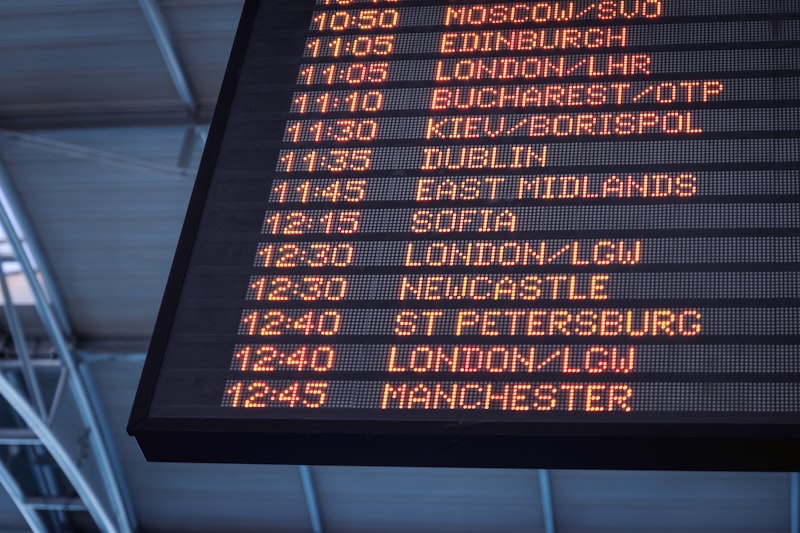
China’s 240-hour transit visa-free policy (Transit Without Visa / TWOV) is one of the most flexible entry frameworks in Asia — but it remains strictly rule-based. It is designed for genuine third-country transit passengers, not open-ended tourism. Understanding eligibility boundaries, regional restrictions, and documentation flow is essential to avoid denial at boarding or entry.
01 / Policy Update & Core Change (2024 Revision)
China significantly expanded its transit visa-free system in December 2024. The key changes are structural rather than cosmetic:
240-Hour Expansion
Most eligible ports now allow up to 240 hours (10 days) of stay, replacing the previous 72/144‑hour frameworks in all major entry points.
Cross‑Province Travel Freedom
The “same‑port exit restriction” has been removed. Travelers may now enter in one city and exit from another, and move freely across the 24 designated provinces. For example: Shanghai → Hangzhou → Suzhou → Beijing departure is fully legal.
Remaining Exceptions
The 240‑hour policy applies uniformly across all 65 designated ports. The previous 72‑hour exceptions (Guilin, Harbin, Changsha) have been upgraded to 240 hours as of 2025.
02 / Eligibility Rules (Non-Negotiable Conditions)
1. Third-Country Requirement
Your itinerary must follow Country A → China → Country B, where A ≠ B. A return loop (A → China → A) is not eligible. Hong Kong, Macau, and Taiwan count as third regions.
2. Transit Purpose Only
Permitted: tourism, short business meetings, family visits, cultural exchanges.
Not permitted: employment, study, journalism, or paid performance activities.
3. Passport Requirements
Minimum 6‑month validity beyond departure date + at least one blank page recommended.
03 / Eligible Countries – Complete List (55 Nationalities)
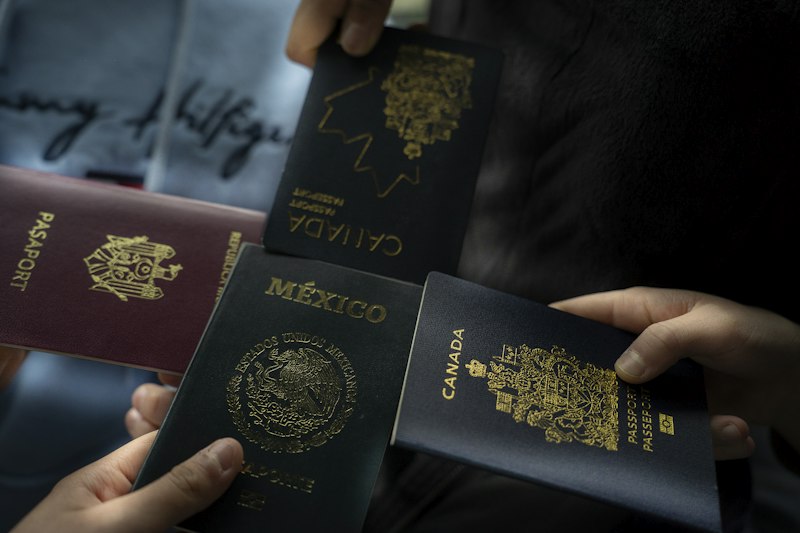
The 240‑hour transit policy applies to citizens of the following 55 countries. This list is distinct from the unilateral 30‑day visa‑free program – TWOV requires a third‑country onward ticket.
🌍 Europe (40 countries)
Austria, Belgium, Czech Republic, Denmark, Estonia, Finland, France, Germany, Greece, Hungary, Iceland, Italy, Latvia, Lithuania, Luxembourg, Malta, Netherlands, Poland, Portugal, Slovakia, Slovenia, Spain, Sweden, Switzerland, Monaco, Russia, United Kingdom, Ireland, Cyprus, Bulgaria, Romania, Ukraine, Serbia, Croatia, Bosnia and Herzegovina, Montenegro, North Macedonia, Albania, Belarus, Norway.
🌎 Americas (6 countries)
United States, Canada, Brazil, Mexico, Argentina, Chile.
🐨 Oceania (2 countries)
Australia, New Zealand.
🌏 Asia (7 countries)
South Korea, Japan, Singapore, Brunei, United Arab Emirates, Qatar, Indonesia.
04 / Entry Ports, Exit Flexibility & Travel Scope
65 Designated Ports (Selected major examples)
Airports: Beijing Capital/ Daxing, Shanghai Pudong/ Hongqiao, Guangzhou Baiyun, Shenzhen Bao’an, Chengdu Tianfu, Xi’an Xianyang, Hangzhou Xiaoshan, Nanjing Lukou, Chongqing Jiangbei, Kunming Changshui, Xiamen Gaoqi, Tianjin Binhai, Qingdao Jiaodong, Zhengzhou Xinzheng, Wuhan Tianhe, Changsha Huanghua, Guilin Liangjiang, Harbin Taiping.
Seaports: Shanghai Wusongkou (cruise), Tianjin International Cruise Port, Xiamen Cruise Terminal.
Rail ports: Beijing West Railway Station (for Hong Kong – Beijing high‑speed rail), Kunming Mohan Railway Port (China‑Laos railway).
Land ports: Hong Kong‑Zhuhai‑Macau Bridge, Gongbei (Zhuhai), Hengqin (Zhuhai).
Travel Coverage – 24 Provinces (Cross‑Province Allowed)
You may travel freely across the following 24 provinces, autonomous regions, and municipalities:
Beijing, Tianjin, Hebei, Shanghai, Jiangsu, Zhejiang, Fujian, Shandong, Henan, Hubei, Hunan, Guangdong, Guangxi, Hainan, Chongqing, Sichuan, Guizhou, Yunnan, Shaanxi, Gansu, Qinghai, Ningxia, Liaoning, Heilongjiang.
⚠️ Partial limits: Some remote areas within Yunnan, Guangxi, and Heilongjiang may have additional checkpoints – always carry your passport.
05 / Step‑by‑Step Entry Process
Step 1 — Flight Booking
Ensure confirmed onward ticket to a third country within 240 hours. Open‑jaw itineraries (enter city A, exit city B) are allowed as long as the final destination is not your origin country.
Step 2 — Digital Arrival Card (Mandatory)
Since November 2025, all foreign nationals must complete an electronic arrival card within 24 hours before arrival. Submit via NIA website, “移民局12367” App, WeChat/Alipay mini‑program, or airport QR codes. Save the generated QR code for scanning at immigration.
Step 3 — Immigration Clearance
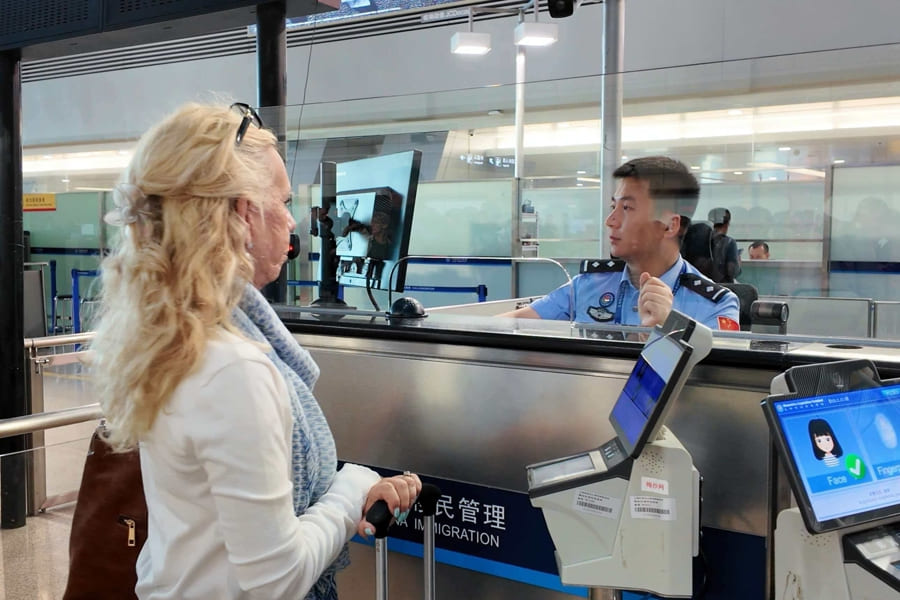
Use the “Transit Without Visa” lane. Present your passport, onward ticket (printed or on mobile), and the arrival QR code. The officer will check your route and purpose.
Step 4 — Entry Stamp Validation
The officer will issue a stamped entry with a permitted stay window (usually 240 hours from the time of entry). Keep this stamp – it serves as your temporary stay permit.
Step 5 — Accommodation Registration
Hotels automatically register foreign guests with the Public Security Bureau (PSB). If staying in private residences, you must register at the local police station within 24 hours of arrival. Failure results in fines up to 2,000 RMB.
06 / Common Mistakes That Lead to Denial
Most entry refusals occur due to documentation or routing errors:
07 / Special Regional Program: Guangdong 144‑Hour Group Transit (from Hong Kong / Macau)
Separate from the 240‑hour TWOV, foreign tourists (any nationality) may enter Guangdong province visa‑free for 144 hours (6 days) under the following conditions:
- Must enter as an organized group of at least 2 persons through a licensed travel agency in Hong Kong or Macau.
- Valid for 10 cities: Guangzhou, Shenzhen, Zhuhai, Foshan, Dongguan, Zhongshan, Jiangmen, Zhaoqing, Huizhou, Shantou.
- Must enter and exit as a group from/to Hong Kong or Macau (no independent travel).
- Permitted activities: tourism only.
This program operates in parallel with the 240‑hour policy and is ideal for cruise passengers or day‑trip groups from Hong Kong.
08 / Operational Notes & Edge Cases
🎒 VoyRay Pro Tip
Always carry a printed copy of your onward ticket and hotel reservation. Airport Wi‑Fi in China often requires SMS verification, which may not work with foreign SIM cards before you pass immigration. Having offline documents prevents a “captive portal lockout” situation. Also, take a photo of your entry stamp – you will need it for hotel check‑ins and domestic flights.