Lingyin Temple

Build a trip to Hangzhou
About
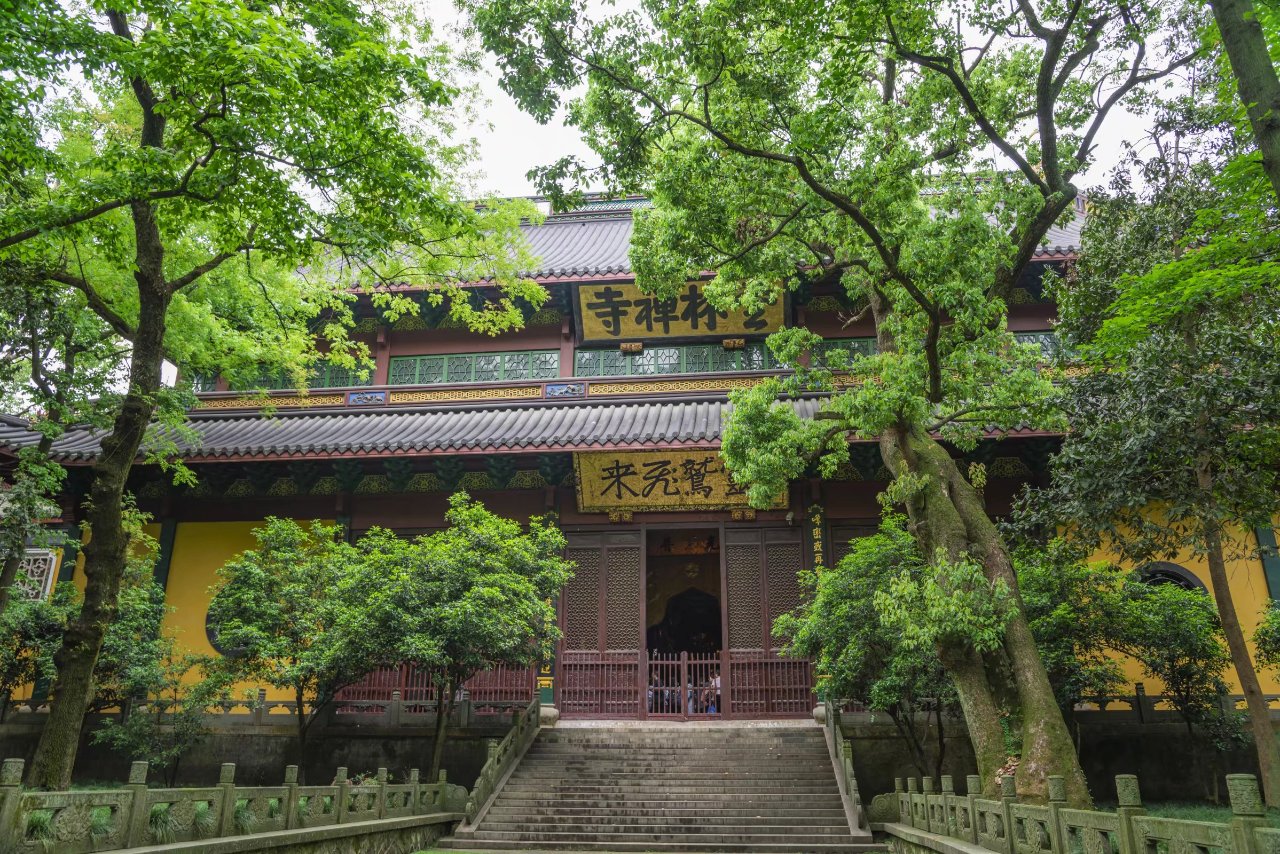
Lingyin Temple is one of China’s most renowned Buddhist monasteries, founded in 326 by the Indian monk Huili in a wooded valley west of West Lake. Its name, often translated as Temple of the Soul’s Retreat, reflects an enclosed landscape of forest, springs and steep hills that has attracted monks, scholars and pilgrims for nearly seventeen centuries. The principal axis rises through the Hall of the Heavenly Kings, the Great Hall of the Buddha and later halls containing monumental images, painted ceilings and richly carved Buddhist narratives. The monastery’s history includes patronage by Wuyue rulers, imperial recognition, fires, warfare and repeated rebuilding, so its significance rests on religious continuity rather than untouched ancient fabric. Across the stream, Feilai Peak’s grottoes add hundreds of medieval rock carvings to the sacred setting, while nearby monasteries extend the Buddhist community through the valley. Incense, bells, timber halls and dense vegetation create a powerful union of ritual and landscape. Lingyin remains an active center of Chinese Buddhism as well as a monument to Hangzhou’s long role in transmitting religious art and learning.
Highlights
- One of China's largest temples
- Magnificent Hall of Great Heroes
- Ancient Buddhist mountain setting
- Spiritual pilgrimage destination
Amenities
Why go
- Visit Lingyin Temple to experience one of china's largest temples.
- Spend time on magnificent hall of great heroes rather than treating it as a quick photo stop.
- The experience is rounded out by ancient buddhist mountain setting.
Know before you go
- Allow about 120m on site, excluding transfers and queues.
- Confirm current opening hours, ticket rules, temporary closures, and entry restrictions before departure.
- Carry the local-language name and address for navigation, taxi, or entrance checks.
Tips
- Morning is the most practical general visit period for this stop.
- Group the stop with nearby places to reduce backtracking and keep a realistic transfer buffer.
- Carry water, weather protection, and the local-language place name when conditions require them.
Nearby Attractions

Feilai Peak
A unique limestone peak adjacent to Lingyin Temple, famed for its caves and over 470 ancient Buddhist rock carvings.

Hangzhou Botanical Garden
A massive botanical research sanctuary with lush bamboo groves and thousands of blooming winter plum trees.
Double Peak Piercing the Clouds
One of West Lake's classic scenes, featuring two scenic mountain peaks that pierce through the morning mist and tea plantations.

Longjing Tea Village
The picturesque spiritual home of Longjing green tea, surrounded by beautiful terraced mountain plantations.
Reviews
Visited this place? Share your experience and help other travelers.