Chinatown Manhattan

Build a trip to New York City
About
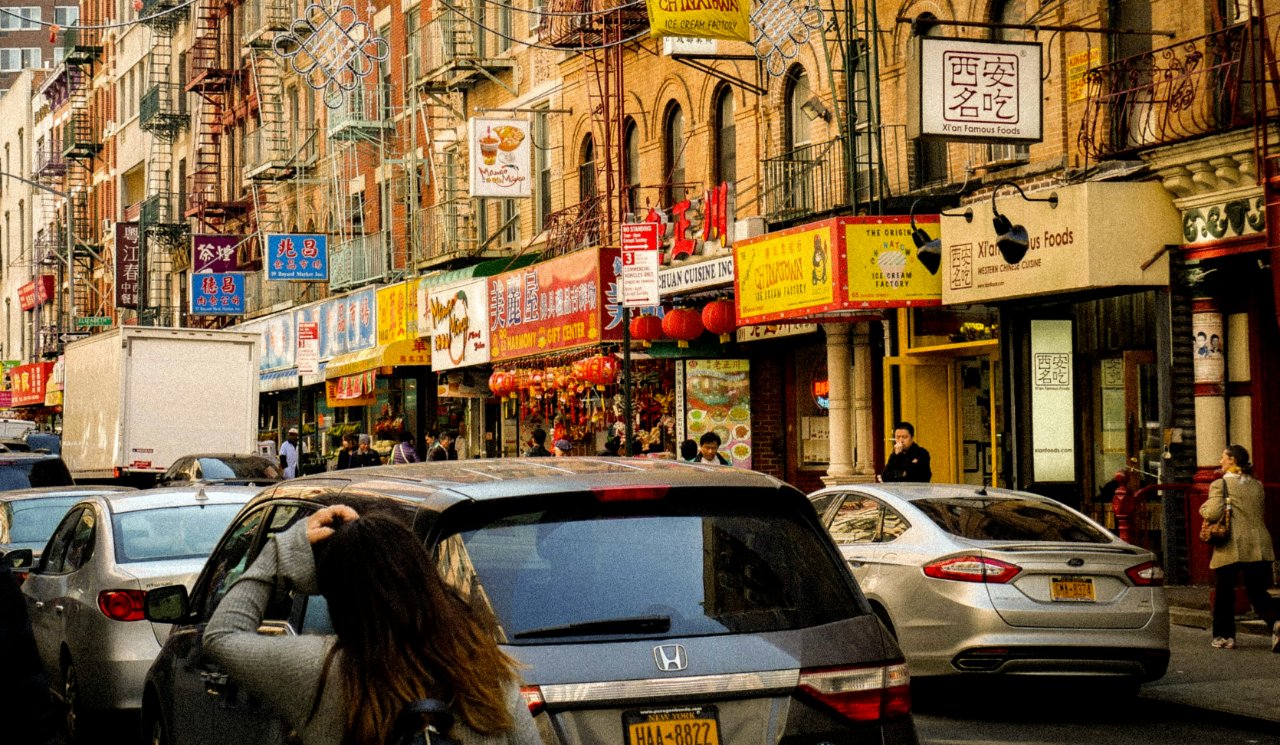
Manhattan's Chinatown doesn't perform itself for visitors. The streets around Canal and Mott are narrow and loud and slightly chaotic, and the people moving through them are mostly there to shop, eat, and get things done. That's what makes it worth going. The open-air stalls along Canal sell live fish, roast duck hanging by the neck, and vegetables that most grocery stores don't carry. Bring cash — the best dumpling shops and bakeries don't take cards, and the prices are low enough that it doesn't matter. Nom Wah Tea Parlor on Doyers Street has been serving dim sum since 1920 and still feels like it. Doyers itself is worth the detour: a short, curved street that once had a violent enough history to earn the name "The Bloody Angle," now quiet enough that the name seems impossible. Columbus Park, a few blocks west, is where the neighborhood actually lives in the morning. Older men play Chinese chess at the stone tables; groups gather for Tai Chi along the edges. It's not a performance — it's just what happens there before the rest of the city wakes up.
Highlights
- Authentic dim sum parlors
- Bustling street markets
- Traditional Chinese herbalists
- Canal Street shopping
Amenities
Nearby Attractions

Little Italy
Little Italy is smaller than it used to be. At its peak in the early 20th century, the neighborhood stretched for blocks in every direction, home to tens of thousands of immigrants from southern Italy. Now it's essentially one street — Mulberry, between Canal and Broome — and most of the Italians are long gone. What remains is the idea of the neighborhood, which is not nothing. Mulberry Street is unapologetically touristy. Restaurants post men outside to pull you in, the menus are laminated, and the red-white-and-green bunting never comes down. Go in knowing that and it's fine — the food is decent, the atmosphere is lively, and in September the Feast of San Gennaro takes over the street entirely for eleven days. Ferrara Bakery, open since 1892, is the real thing: get a cannoli and eat it standing up. The blocks immediately north — now called NoLIta — tell a different story. The storefronts are independent, the restaurants are quieter, and the streets feel like they belong to people who actually live there. The two neighborhoods share a border but not much else.

Lombardi's Pizza
Recognized by the Pizza Hall of Fame as the first pizzeria in the United States (founded in 1905), Lombardi's is a slice of American history. Located in Little Italy, it still uses a coal-fired oven to produce smoky, charred-crust pizzas. The walls are covered in red checkered patterns and photos of its long history. The vibe is nostalgic, unpretentious, and bustling. Expert recommendation: The 'Original Margherita' or the 'Clam Pie' are the signature choices. Pro tip: They do not sell slices; you must order a whole pie. Like many old-school Italian spots in the area, it is cash only, though there is an ATM on-site. It can be very touristy, so visit during off-peak hours (like 3:00 PM) to get a booth without a long wait.
Attaboy
Located in the former space of the legendary Milk & Honey, Attaboy is a speakeasy that eschews menus entirely. Instead, bartenders interview guests about their preferences and craft bespoke cocktails on the spot. The space is narrow, industrial, and lit by low-hanging bulbs, creating an intimate, focused atmosphere. The sound of ice being hand-cracked is the soundtrack here. Expert recommendation: Trust the process—tell them your favorite base spirit and mood, and let them surprise you with a 'Penicillin' or a custom creation. Pro tip: They do not take reservations. To get a seat, knock on the unmarked door with the 'A' and give your number; they’ll text you when a spot opens. Expect waits of 1-2 hours on weekends.
Balthazar
Since opening in 1997, Keith McNally’s Balthazar has defined the SoHo dining scene. This bustling French brasserie captures the authentic soul of Paris with its aged mirrors, red leather banquettes, and golden-hued lighting. It is a place to see and be seen, serving everyone from tourists to Vogue editors. The sound of the raw bar being replenished and the constant clatter of plates creates a rhythmic urban energy. Expert recommendation: Their 'Balthazar Salad' and the 'Steak Au Poivre' are timeless. Pro tip: If you can't get a dinner table, their breakfast is one of the best in the city—try the almond croissants from the adjacent bakery. It is an excellent spot for a late-night supper as the atmosphere remains electric well past midnight.
Reviews
Visited this place? Share your experience and help other travelers.