Gongchen Bridge

Build a trip to Hangzhou
About
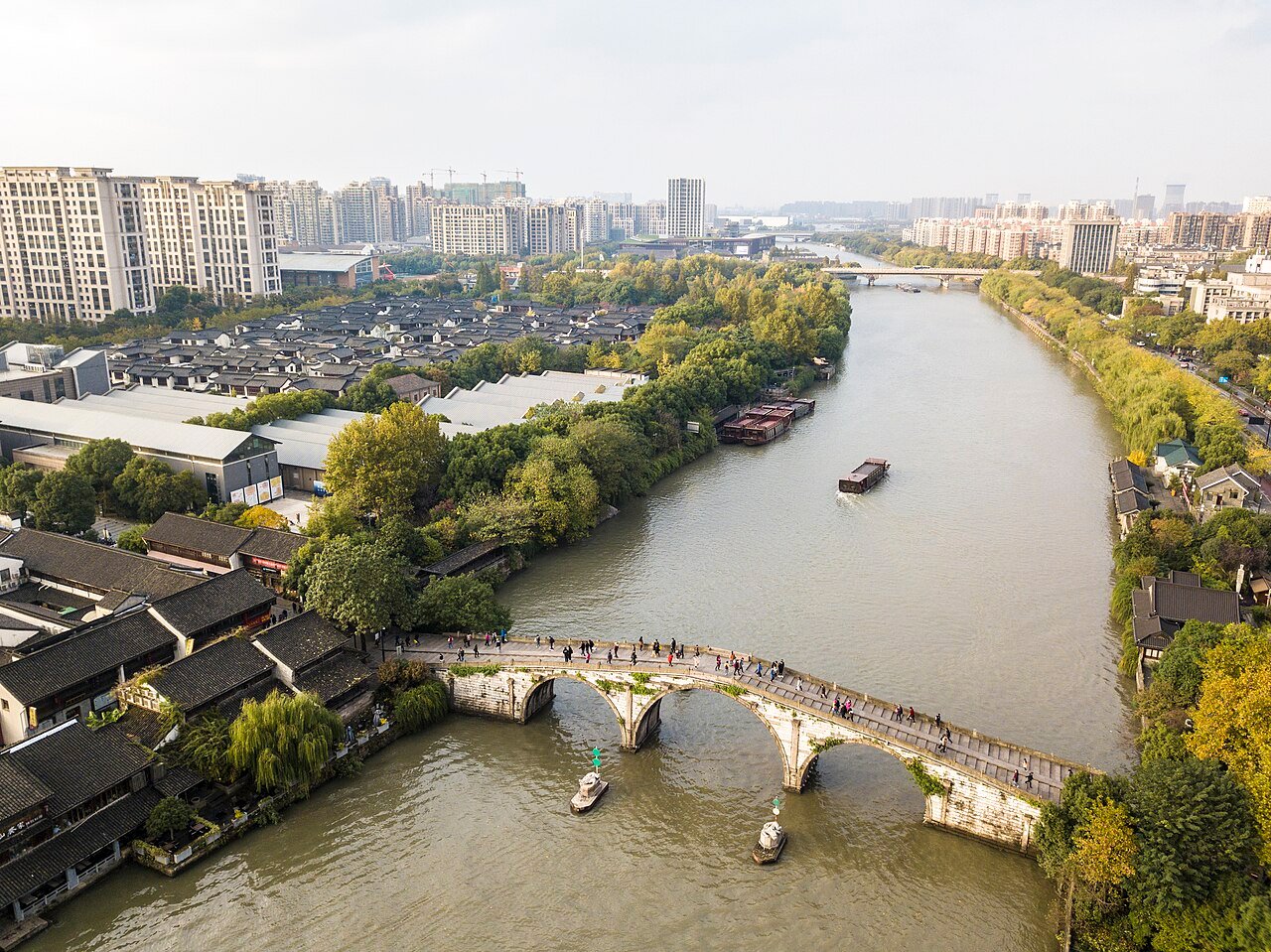
Gongchen Bridge spans the Grand Canal in northern Hangzhou with three massive stone arches and a steep stepped profile. First built in the seventeenth century and reconstructed after repeated damage, it marked the ceremonial approach to the city for officials and imperial travelers arriving from the north. The name suggests respectfully greeting the emperor, while the central arch was made high enough for canal traffic to pass beneath. Weathered masonry, carved parapets and the broad canal give the bridge a monumental presence distinct from the smaller crossings of Jiangnan water towns. The surrounding Qiaoxi district preserves the industrial and commercial history that developed around the canal terminus. Warehouses, workshops, guild traces, residences and former factories have been adapted into museums and cultural spaces, yet working boats still connect the setting to the waterway’s practical life. From the crest of the bridge, the canal can be read as both infrastructure and historic urban axis. Gongchen Bridge therefore symbolizes Hangzhou’s role at the southern end of the Beijing–Hangzhou Grand Canal and the movement of grain, crafts, people and ideas that sustained the city for centuries.
Highlights
- Ancient stone arch canal bridge
- Grand Canal historic landmark
- Vibrant old street surroundings
- Evening river lighting effects
Amenities
Why go
- Visit Gongchen Bridge to experience ancient stone arch canal bridge.
- Spend time on grand canal historic landmark rather than treating it as a quick photo stop.
- The experience is rounded out by vibrant old street surroundings.
Know before you go
- Allow about 45m on site, excluding transfers and queues.
- Confirm current opening hours, ticket rules, temporary closures, and entry restrictions before departure.
- Carry the local-language name and address for navigation, taxi, or entrance checks.
Tips
- Plan this stop after dark and confirm the final return transport in advance.
- Group the stop with nearby places to reduce backtracking and keep a realistic transfer buffer.
- Carry water, weather protection, and the local-language place name when conditions require them.
Nearby Attractions

Hangzhou Arts and Crafts Museum
An interactive canal-side museum located in an industrial warehouse, showcasing traditional master crafts and DIY workshops.

Grand Canal (Hangzhou Section)
The southern end of the world's oldest man-made waterway, offering scenic walks, historic bridges, and river bus cruises.

Xiaohe Straight Street
An authentic, historic riverside neighborhood with late Qing Dynasty architecture, hidden artisan cafes, and charming night views.

Zhejiang Museum of Natural History
A massive natural history museum renowned for its life-sized dinosaur skeletons and interactive regional biodiversity displays.
Reviews
Visited this place? Share your experience and help other travelers.