Eight Trigrams Field

Build a trip to Hangzhou
About
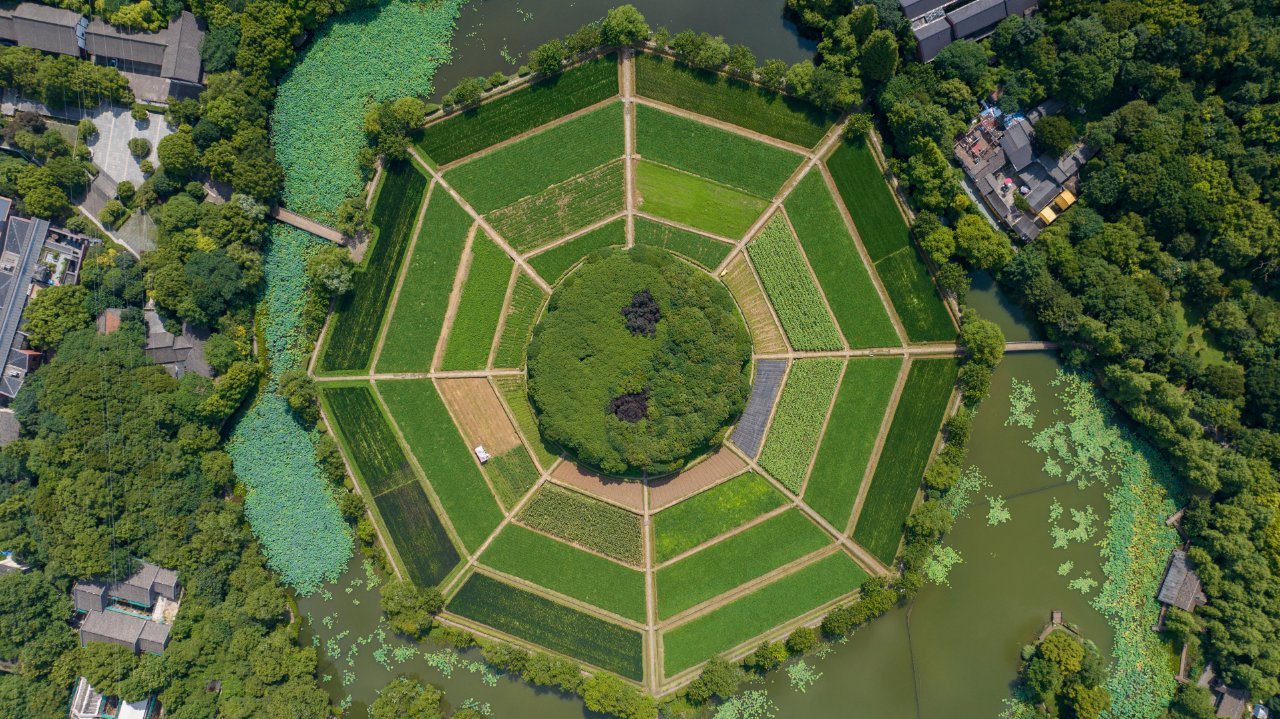
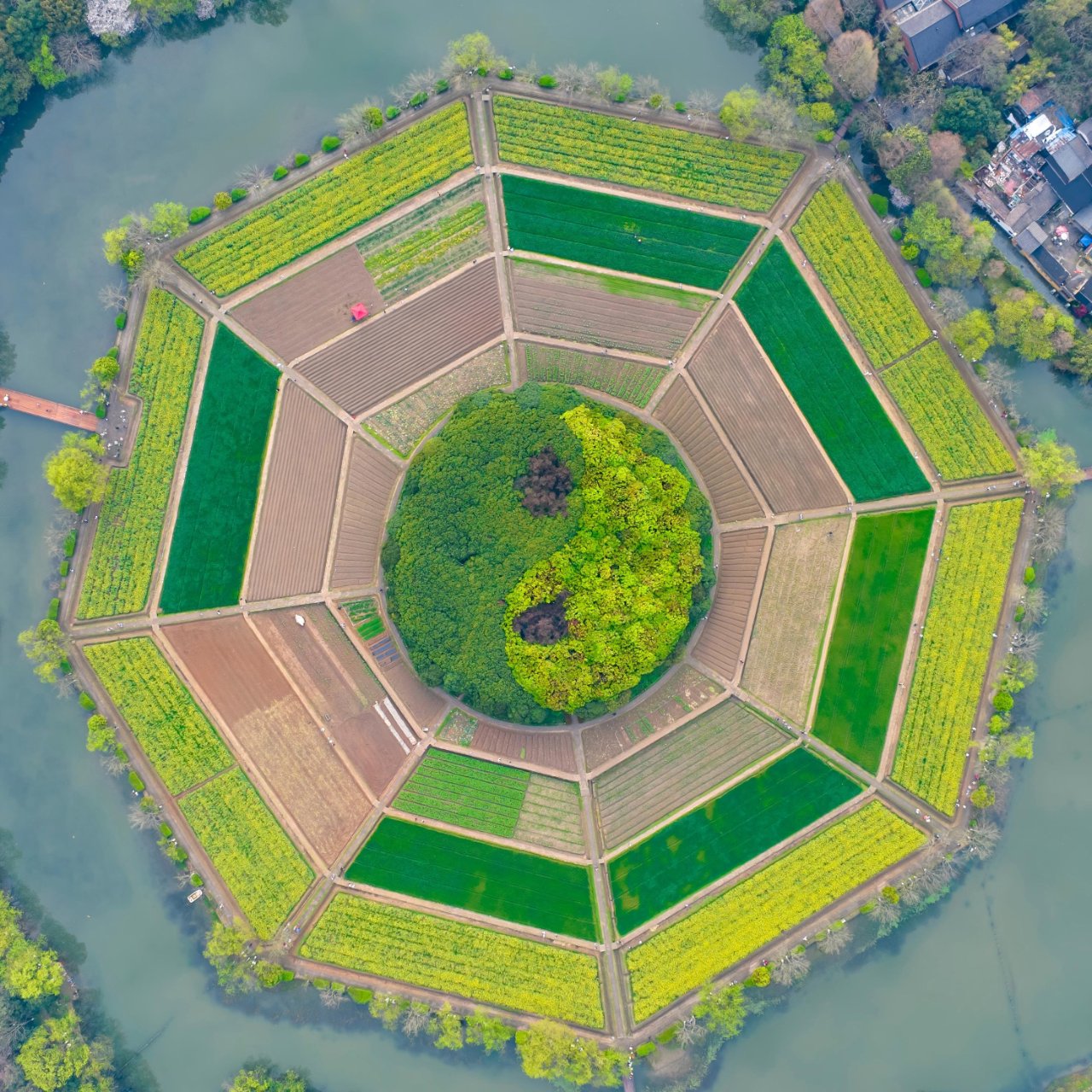
Eight Trigrams Field is a geometric agricultural landscape below Yuhuang Mountain, traditionally identified with the imperial ploughing grounds of the Southern Song dynasty. Wedges of cultivated land radiate around a circular center in a pattern resembling the bagua, or Eight Trigrams, a cosmological diagram associated with change and the ordering of natural forces. Seasonal crops give each section different colors and textures, so the figure becomes most legible when seen from the surrounding slopes rather than from ground level. The field commemorates the emperor’s symbolic duty to agriculture after the Southern Song court established its capital at Lin’an. Ritual ploughing affirmed that grain production stood at the foundation of state and society, even within an urban imperial setting. Although the present planting scheme and park environment have been repeatedly restored, the site preserves a rare visual connection between court ceremony, farming and classical cosmology. Nearby wetlands, ponds and foothills soften the strict geometry, placing the cultivated emblem within the same green southern landscape that supported Hangzhou’s historical population.
Highlights
- Geometric ancient royal farmland
- Seasonal crop patterns
- Southern Song dynasty history
- Outdoor educational farm landscape
Amenities
Why go
- Visit Eight Trigrams Field to experience geometric ancient royal farmland.
- Spend time on seasonal crop patterns rather than treating it as a quick photo stop.
- The experience is rounded out by southern song dynasty history.
Know before you go
- Allow about 60m on site, excluding transfers and queues.
- Confirm current opening hours, ticket rules, temporary closures, and entry restrictions before departure.
- Carry the local-language name and address for navigation, taxi, or entrance checks.
Tips
- Autumn is the preferred season; seasonal highlights and crowd levels can change quickly.
- Group the stop with nearby places to reduce backtracking and keep a realistic transfer buffer.
- Carry water, weather protection, and the local-language place name when conditions require them.
Nearby Attractions

China National Silk Museum
The world's largest silk museum, chronicling 5,000 years of Chinese silk trade, weaving heritage, and ancient textiles.

Hangzhou Zoo
A scenic mountain-side zoo housing Giant Pandas and Golden Monkeys along shaded, park-like forest trails.

Prince Bay Park
A highly romantic European-style garden park famed for its sweeping spring tulips and cherry blossoms.

Hupao Spring
A lush, forested park famous for its high-surface-tension spring water, traditionally paired with Longjing tea.
Reviews
Visited this place? Share your experience and help other travelers.