
Rome 5-Day Deep Tour
Rome 5-Day Deep Tour
Five days in Rome is enough time to learn that the Colosseum isn't the best thing in the city. It's one of twelve or fifteen best things. You can say the same for the Vatican. The city's density of serious content — archaeological, artistic, culinary — is genuinely uncomfortable once you stop trying to rank it and accept that the ranking is arbitrary.
The itinerary works outward from Rome's less-visited perimeter. The first day stays off the tourist circuit: the Aventine's keyhole view of St. Peter's three kilometers away, the Testaccio slaughterhouse neighborhood that invented Rome's offal-forward cooking. The ancient city comes second — Colosseum at 08:30, Forum, Palatine, and a rooftop dinner looking down at the arena. The Jewish Ghetto, one of Europe's oldest continuously inhabited Jewish neighborhoods, holds the third day. The Vatican compound and baroque axis occupy the fourth. The Borghese Gallery and Trastevere's medieval alleys close the trip.
VoyRay Trip Planner
Make this itinerary your own
Start a new editable trip for Rome, then adjust the dates, route, places, budget, and travel pace to fit you.
Contents
Day 1
Day 1 — Aventine + Testaccio
The non-standard Rome opening. The Aventine Keyhole compresses a famous view through a garden gate: St. Peter's dome framed precisely at the end of a privet hedge avenue, 3km away. The Orange Garden terrace faces west. Below all of it is Testaccio, the former slaughterhouse district where workers' wives invented cacio e pepe and coda alla vaccinara. Flavio al Velavevodetto for lunch; Felice a Testaccio for dinner.
.jpg)
On the quiet Aventine Hill, the Priory of the Knights of Malta features a nondescript green door with a famous secret. Looking through the keyhole, you see a perfectly framed view of the dome of St. Peter's Basilica at the end of a manicured garden hedge. This architectural 'optical illusion' is a testament to 18th-century design by Giovanni Battista Piranesi. Expert recommendation: notice the sovereign status of the site; you are looking across three territories—the Sovereign Military Order of Malta, the nation of Italy, and the Vatican. Pro tip: expect a queue even in the off-season. Visit during the 'Golden Hour' for a glowing view of the dome, but ensure your camera lens is small enough to fit against the keyhole.

Formally known as Parco Savello, this walled garden is famous for its fragrant bitter orange trees and its terrace overlooking the Tiber River. It offers one of the most serene and cinematic vistas of Rome, stretching from the river to St. Peter's. The atmosphere is tranquil, often accompanied by the sound of a street harpist or guitarist. Expert recommendation: it’s the ultimate sunset spot in the city; the light hitting the St. Peter's dome is magical. Pro tip: it is located just a few minutes' walk from the Aventine Keyhole, so combine these two. Visit in late spring when the orange blossoms scent the entire garden, making for a truly immersive sensory experience.
_-_2021-08-29_-_3.jpg)
Built around 18–12 BC as a tomb for Gaius Cestius, this 36-meter high white marble pyramid reflects the Roman obsession with Egyptian culture following the conquest of Egypt. It was later incorporated into the Aurelian Walls, which helped its preservation. The sharp, angular silhouette creates a striking contrast against the surrounding Roman brickwork and modern traffic. Expert recommendation: visit the adjacent Non-Catholic Cemetery (Cimitero Acattolico), where poets Keats and Shelley are buried, for the best view of the pyramid's side. Pro tip: interior tours are rare and require special advance booking through the Soprintendenza, but the exterior is easily viewed from the Piramide metro station area.
Moving from its old open-air location to a modern, bright facility, this market is the culinary heart of the Testaccio district. It is a sensory delight of fresh seasonal produce, gourmet cheeses, and innovative street food stalls. Unlike the more touristy Campo de' Fiori, this is where locals shop. Expert recommendation: head to 'Mordi e Vai' for a traditional 'Allesso di Scottona' (simmered beef) sandwich—a legendary local favorite. Pro tip: the market is closed on Sundays and starts winding down after 2:30 PM. Go for an early lunch around 11:30 AM to beat the office crowds and secure a seat in the central seating area to enjoy your finds.
Built directly into the side of Monte Testaccio—an ancient Roman mound made of discarded amphorae fragments—the restaurant's glass windows actually reveal the layers of ancient pottery. This unique setting provides a cool, cave-like atmosphere perfect for enjoying heavy Roman fare. Expert recommendation: Flavio is widely considered a master of 'Cacio e Pepe' and 'Carbonara.' His 'Polpette di Bollito' (fried beef croquettes) are also essential. Pro tip: the restaurant is quite large, but the terrace is the place to be in summer. It’s located in the heart of Testaccio’s nightlife district, making it a great starting point for an evening out.
Operating since 1936, Felice is a temple of Roman gastronomy in the historic working-class district of Testaccio. The restaurant is world-famous for its 'Cacio e Pepe,' which is ritually tossed by the waiter at your table to ensure the perfect emulsion of cheese and pasta water. The decor is a blend of traditional brick and modern polished design. Expert recommendation: the 'Cacio e Pepe' is mandatory, but their 'Stinco di Agnello' (lamb shank) is also exceptional. Pro tip: despite its size, it is perpetually booked out. You must reserve several weeks in advance. If you can't get a table, they recently opened a location in Milan, but the Testaccio original remains the definitive experience.
Day 2
Day 2 — Ancient Rome
The canonical ancient Rome day at its most complete. Colosseum at 08:30 before the first tour buses, the Forum's two-thousand-year-old ground level, Palatine Hill's House of Augustus frescoes on the same combined ticket. The Circus Maximus — a 600-meter track that seated 250,000 people — closes the sightseeing. Aroma at Palazzo Manfredi puts the Colosseum in the dining room window at 19:30.

The largest amphitheatre ever built, the Colosseum was constructed between 72-80 AD under emperors Vespasian and Titus and held between 50,000-80,000 spectators for gladiatorial combat, public spectacles, animal hunts, and re-enacted naval battles—the entertainment industry of the ancient world operated at a scale of brutality and spectacle that still staggers modern visitors. The four-story elliptical structure of travertine limestone, tuff, and concrete, built using the forced labor of Jewish slaves following the destruction of Jerusalem, was partially dismantled over the centuries to build other Roman structures but remains one of the greatest architectural achievements of any civilization. Pre-booked timed entry tickets are essential to avoid multi-hour queues, and the underground Hypogeum tour revealing the network of tunnels where gladiators and animals waited before being raised by elevators into the arena is particularly gripping.
.jpg)
Triumphs were the ultimate honor for Roman generals, and this massive three-arched structure, erected in 315 AD, celebrates Constantine I’s victory at the Milvian Bridge. Interestingly, much of its decorative relief was 'recycled' from earlier monuments of Trajan, Hadrian, and Marcus Aurelius. Standing between the Colosseum and the Palatine Hill, it serves as a gateway to the ancient ceremonial heart of Rome. Expert recommendation: examine the different styles of carving to see the transition from classical to late-antique art. Pro tip: because it’s in a public open space, you can view it for free 24/7. It is beautifully lit at night, making it a great stop for late-evening strolls after the Colosseum crowds have left.

Once the beating heart of ancient Rome, the Forum served as the city's central hub for political, religious, and commercial life for centuries. Walking down the Via Sacra, you encounter the ruins of the Curia, the Temple of Saturn, and the Arch of Titus, evoking a sense of the immense power held by the Republic. The sensory experience is one of dusty majesty, where white marble fragments contrast against the deep green Mediterranean pines. Experts suggest starting at the Capitoline Hill overlook for a comprehensive layout view before descending. Pro tip: wear sturdy walking shoes as the ancient basalt stones are uneven; your Colosseum ticket includes entry here, so visit both on the same day.

The centermost of the Seven Hills of Rome, the Palatine is where the city was founded by Romulus according to legend. It became the exclusive domain of emperors, housing the sprawling ruins of the Domus Flavia and the Stadium of Domitian. The environment is lush with wildflowers and ancient pines, offering a more serene experience than the Forum below. Expert recommendation: visit the Palatine Museum to see artifacts found on-site and the House of Augustus for well-preserved frescoes. Pro tip: enter via the Via di San Gregorio entrance rather than the Colosseum side to drastically reduce your wait time for security checks.

Once the premier chariot-racing stadium of ancient Rome, this vast green valley could hold over 150,000 spectators. While most of the original structure is gone, the scale of the site remains impressive, flanked by the Palatine and Aventine Hills. Today, it serves as a public park and a venue for massive concerts and celebrations. Expert recommendation: visit the 'Circus Maximus Experience,' an augmented reality tour that reconstructs the ancient stands and shops using VR goggles. Pro tip: it is one of the best places in Rome for a morning jog or a sunset walk, offering a majestic view of the Imperial Palaces on the hill above.
Perched on the top floor of the Palazzo Manfredi, Aroma offers what is arguably the most spectacular dining view in the world, directly overlooking the Colosseum. Chef Giuseppe Di Iorio serves sophisticated, Michelin-starred Mediterranean cuisine. The sensory experience is unparalleled as the ancient monument is lit up at night, seemingly within arm's reach of your table. Expert recommendation: the tasting menu provides a journey through refined Italian flavors, but the view is the true headliner. Pro tip: this is a prime spot for proposals and special occasions; book the 'front row' tables along the glass railing months in advance. Dress code is elegant; men should wear a jacket.
Day 3
Day 3 — Jewish Ghetto + Tiber Island
The Rome that predates the tourist circuit by four centuries. The Jewish Ghetto was walled by papal decree in 1555 and the community has been here since the 2nd century BC. Largo Argentina's four Republican-era temples — where Julius Caesar was assassinated — are now a cat sanctuary, which is either the most Roman possible afterlife or the least dignified. Nonna Betta for carciofi alla giudia and fried salt cod.

Pre-dating the Colosseum, this open-air theatre was commissioned by Julius Caesar and finished by Augustus in 13 BC. It is a fascinating 'architectural lasagna,' featuring ancient Roman arches at the base, medieval fortifications in the middle, and Renaissance apartments on top that are still inhabited today. The sensory experience is one of layered time, where ancient stone meets modern laundry hanging from windows. Expert recommendation: walk around the back toward the Portico d'Ottavia for a view of the Jewish Ghetto's edge. Pro tip: while the interior is closed to the public (due to private residents), the site often hosts classical 'Tempietto' concerts on summer evenings in the surrounding ruins, which are incredibly atmospheric.
.jpg)
This archaeological site contains four Republican-era temples and the remains of Pompey's Theatre, where Julius Caesar was assassinated in 44 BC. Today, it is equally famous for being a protected sanctuary for hundreds of Rome's stray cats, who roam freely among the ancient ruins. The sensory experience is unique, blending tragic history with the charm of feline residents lounging on millennia-old marble. Expert recommendation: visit the underground cat sanctuary in the corner of the square to meet the volunteers or adopt a cat 'at a distance.' Pro tip: a new walkway recently opened (2023), allowing visitors to walk through the ruins at ground level for a small fee; previously, it could only be viewed from the street level.

Established in 1555, the Roman Ghetto is one of the oldest in the world. Today, it is a thriving, resilient neighborhood known for its unique 'Cucina Ebraica' (Jewish-Roman cuisine) and significant landmarks like the Great Synagogue and the Portico d'Ottavia. The sensory experience is defined by the aroma of fried artichokes and the somber 'stumbling stones' (Stolpersteine) commemorating Holocaust victims. Expert recommendation: try the 'Carciofi alla Giudia' (Jewish-style artichokes) at one of the local trattorias. Pro tip: the area is best explored on foot. Visit the Jewish Museum inside the Synagogue for a deep dive into the 2,000-year history of Jews in Rome. The neighborhood is particularly atmospheric on Friday afternoons before Shabbat begins.

This boat-shaped island in the middle of the Tiber has been associated with healing since ancient times, formerly housing a temple to Aesculapius and now a major hospital. It is connected to the mainland by the Pons Fabricius, the oldest original bridge in Rome (62 BC). The atmosphere is cool and refreshing, with the sound of the river rushing over the weirs. Expert recommendation: walk down the stairs to the river level to see the island's 'prow' carved in stone. Pro tip: during summer, the island hosts 'L'Isola del Cinema,' an outdoor film festival with bars and stalls along the riverbanks. It’s a great shortcut when walking between the Jewish Ghetto and Trastevere.

Located in the portico of the Santa Maria in Cosmedin church, this massive marble mask is believed to be an ancient drain cover, possibly depicting the god Oceanus. Medieval legend holds that if a liar places their hand in its mouth, it will be bitten off—a myth immortalized by Audrey Hepburn and Gregory Peck in 'Roman Holiday.' The sensory experience is defined by the contrast between the ancient stone and the lively, anxious chatter of tourists waiting their turn. Expert recommendation: while here, don't miss the beautiful 12th-century Cosmatesque mosaic floor inside the church. Pro tip: the line can be very long for a 10-second photo; arrive 15 minutes before the 9:30 AM opening to be among the first in line.
Situated in the historic Jewish Ghetto, Nonna Betta is a guardian of 'Cucina Ebraica Tripolina' and traditional Roman-Jewish recipes. The interior is decorated with murals depicting the ancient ghetto, creating a deeply cultural dining environment. The menu strictly follows the dual tradition of 'Kosher-style' meat or fish sections. Expert recommendation: the 'Carciofi alla Giudia' (deep-fried Jewish-style artichokes) are legendary here, blooming like golden sunflowers. Pro tip: this is one of the few places where you can try authentic 'Casher' (Kosher) versions of Roman pasta. It's an excellent choice for a Friday lunch before the neighborhood slows down for the Sabbath.
Day 4
Day 4 — Vatican + Centro Storico
The papal city, full day. Vatican Museums at 08:00 to front-run the queues; St. Peter's afterward when the line has cleared. The Ponte Sant'Angelo's ten Bernini angels lead south into a neighborhood where Michelangelo, Bramante, Borromini, and Bernini all worked simultaneously — the density of serious architecture per block is disorienting. Piazza Navona, the Pantheon, Il Pagliaccio's two Michelin stars to close.
The world's greatest collection of art accumulated over five centuries of papal patronage fills 54 galleries in the Vatican Palace, culminating in Michelangelo's Sistine Chapel ceiling painted between 1508-1512 while lying on scaffolding 20 meters above the floor—a physical and artistic feat that produced the most influential paintings in Western art history, including the iconic Creation of Adam. The Museum's Gallery of Maps with its stunning 16th-century cartographic frescoes, the Rafael Rooms with the School of Athens, the ancient Greek and Roman sculptures of the Laocoön group and the Apollo Belvedere, and the modern art collection added by recent popes create a day-long journey through the entirety of Western artistic tradition. Pre-booked tickets with early morning access significantly reduce the overwhelming crowds.

As the spiritual center of the Catholic world, this Renaissance masterpiece features contributions from Bramante, Michelangelo, and Bernini. Standing on the site of St. Peter's burial, the basilica's interior is overwhelmingly vast, housing Michelangelo’s poignant 'Pietà' and Bernini’s bronze Baldacchino. The sensory experience is profound, from the smell of incense to the golden light filtering through the dome. Expert recommendation: climb the 551 steps to the Cupola (dome) for the most iconic bird's-eye view of St. Peter's Square. Pro tip: strict dress codes apply (no bare shoulders or knees); arrive before 7:30 AM to clear security before the lines extend several hours long.
.jpg)
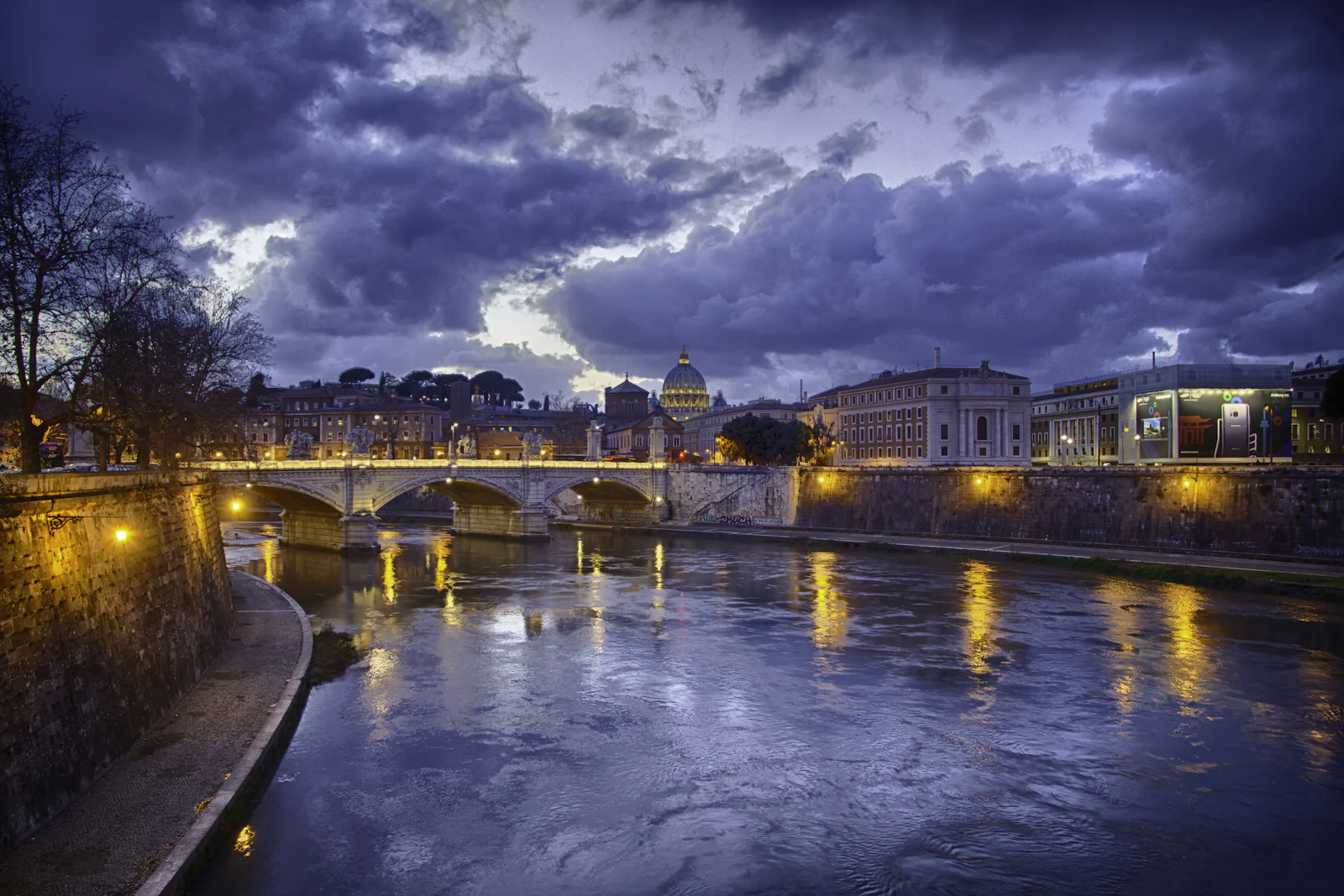
Originally built as a mausoleum for Emperor Hadrian, this cylindrical fortress later served as a papal residence and prison, connected to the Vatican by the Passetto di Borgo secret passage. The structure offers a layered history of Rome, from ancient tombs to Renaissance apartments decorated with lavish frescoes. The terrace under the bronze angel statue provides one of the city's best 360-degree views, especially overlooking the Tiber. Expert recommendation: look for the weapon collections and the historical prison cells. Pro tip: visit during the 'blue hour' just after sunset to see the bridge's angel statues glowing against the darkening sky; the rooftop cafe is surprisingly good for a scenic rest.

Originally built by Hadrian as a passage to his mausoleum, this pedestrian bridge was transformed by Bernini, who added ten monumental angel statues carrying the instruments of Christ's Passion. Each angel represents a different stage of the crucifixion. Walking across it toward the Castel Sant'Angelo at night is one of Rome's most romantic and spiritual experiences. Expert recommendation: the 'Angel with the Cross' and 'Angel with the Crown of Thorns' are the most emotionally charged. Pro tip: the bridge is a prime spot for street musicians, particularly in the evening. Be wary of tourist 'bracelet' scams on the bridge; a firm 'no' is usually sufficient. It offers the best angle for photographing the castle.
_-_BEIC_6329173.jpg)
Built on the site of the Stadium of Domitian, this elegant plaza preserves the elliptical shape of ancient Roman athletic contests. It is the quintessential Baroque square, dominated by Bernini’s Fountain of the Four Rivers and Borromini’s Sant'Agnese in Agone. The atmosphere is vibrant, filled with street artists, musicians, and terrace cafes. Expert recommendation: visit the underground ruins of the original stadium (Stadio di Domiziano) located below the street level. Pro tip: while the cafes on the square are perfect for people-watching, they are overpriced for meals; grab a gelato nearby at Frigidarium and enjoy it while admiring the central obelisk.

Originally built by Hadrian around 126 AD, the Pantheon is a marvel of ancient engineering, boasting the world's largest unreinforced concrete dome. Its transformation into a church in 609 AD ensured its preservation. The interior is defined by the dramatic oculus, a circular opening that invites a beam of sunlight—or rain—to dance across the polychrome marble floors. Cultural highlights include the tombs of Raphael and Italian kings. Best viewed during the 'Pentecost Rose Petal Drop' or exactly at noon for the light beam effect. Pro tip: as of 2023, a paid entry ticket is required; book your weekend slot online at least 48 hours in advance to bypass the massive lines winding around the piazza.
Chef Anthony Genovese holds two Michelin stars at this intimate, avant-garde restaurant. The name (The Clown) belies the serious, high-concept fusion of Italian techniques with Asian influences, reflecting the chef's travels. The decor is minimalist and sober, focusing all attention on the theatrical, multi-course tasting menus. Expert recommendation: opt for the full 'Parallels' tasting menu for the complete sensory journey. Pro tip: this is a temple of gastronomy, not a quick meal—expect to spend 3 hours here. It is ideal for foodies looking for something beyond traditional pasta; reservations are essential and can be made via their website.
Day 5
Day 5 — Borghese + Trastevere
The Roman aristocratic north to the medieval south. The Borghese Gallery's mandatory 2-hour window should be the day's anchor: twelve Berninis and three Caravaggios in a 17th-century casino. Walk south through Villa Borghese to Piazza del Popolo and the Spanish Steps, then cross the Tiber to Trastevere's cobblestones. Antica Pesa on Via Garibaldi closes the trip: the 1922 converted grain-weighing station that became Rome's fine-dining Trastevere benchmark.

Housed in the former Villa Borghese Pinciana, this gallery hosts one of the world's most prestigious private art collections. It is famous for Bernini's breathtaking marble sculptures, such as 'Apollo and Daphne,' which seem to transform from stone to flesh, and Caravaggio's masterful use of chiaroscuro. The intimate setting restricts visitors to two-hour slots, ensuring a high-quality viewing experience. Expert recommendation: pay close attention to Canova’s 'Paolina Bonaparte' as Venus. Pro tip: tickets must be booked weeks in advance as they sell out consistently; arrive 30 minutes early to check your bags, as almost everything except your phone/camera must be stored before entry.

This landscape garden, designed in the naturalistic English style, is Rome's third-largest park and offers a peaceful escape from the urban chaos. It contains various villas, museums, and a picturesque lake with a temple dedicated to Aesculapius. The Pincio Terrace at the park's edge offers a legendary view over Piazza del Popolo. Expert recommendation: rent a rowing boat on the lake for a classic Roman romantic experience or hire a 'risciò' (bicycle carriage) to explore the vast grounds quickly. Pro tip: it’s the perfect spot for a picnic; pick up supplies from a local 'alimentari' and head to the shaded lawns near the Temple of Diana.

This grand neoclassical square served as the northern gateway to Rome for centuries. In its center stands an Egyptian obelisk of Ramesses II, flanked by symmetrical fountains and the 'Twin Churches' (Santa Maria dei Miracoli and Santa Maria in Montesanto). The atmosphere is open and airy, often hosting public events. Expert recommendation: step inside the Basilica of Santa Maria del Popolo to see two masterpieces by Caravaggio in the Cerasi Chapel. Pro tip: climb the stairs on the eastern side of the square leading up to the Pincio Hill just before sunset for a panoramic view of the city’s domes silhouetted against the sky.

Connecting the Piazza di Spagna with the Trinità dei Monti church, these 135 steps were built in 1723 to celebrate the peace between France and Spain. The area became a cultural hub for the Romantic poets, including Keats and Shelley. The atmosphere is one of refined elegance, especially in spring when the steps are draped in blooming pink azaleas. At the base lies Bernini’s 'Barcaccia' fountain. Experts recommend climbing to the top for a stunning sunset view over the rooftops of Via dei Condotti. Pro tip: sitting on the steps is now strictly prohibited by law and monitored by police; keep moving to avoid fines while enjoying the high-fashion window shopping nearby.
A labyrinthine medieval neighborhood across the Tiber, Trastevere is known for its narrow cobblestone streets, ivy-clad ochre buildings, and bohemian spirit. Originally a working-class district, it has become the heart of Roman nightlife while retaining its village-like charm. The sensory experience is a mix of drying laundry overhead and the smell of wood-fired pizza. Expert recommendation: visit the Basilica of Santa Maria in Trastevere to see its glittering 12th-century mosaics. Pro tip: explore the quiet alleys during the morning for authentic photography, but return after 8 PM when the area transforms into a lively hub of bars and trattorias; avoid the main squares for dining to find better prices and quality.
Located in a former 17th-century customs house in Trastevere, this restaurant has been a staple for the global elite and Hollywood stars since 1922. The interior features contemporary art and exposed brick, creating a chic yet historic atmosphere. The cuisine focuses on elevated Roman classics using locally sourced ingredients. Expert recommendation: the 'Cacio e Pepe' is widely considered one of the most refined versions in the city. Pro tip: it is a high-profile spot, so booking is essential. It is perfect for a celebratory dinner; request a table in the garden during the summer months to enjoy the ivy-covered courtyard.