
Paris Travel Guide
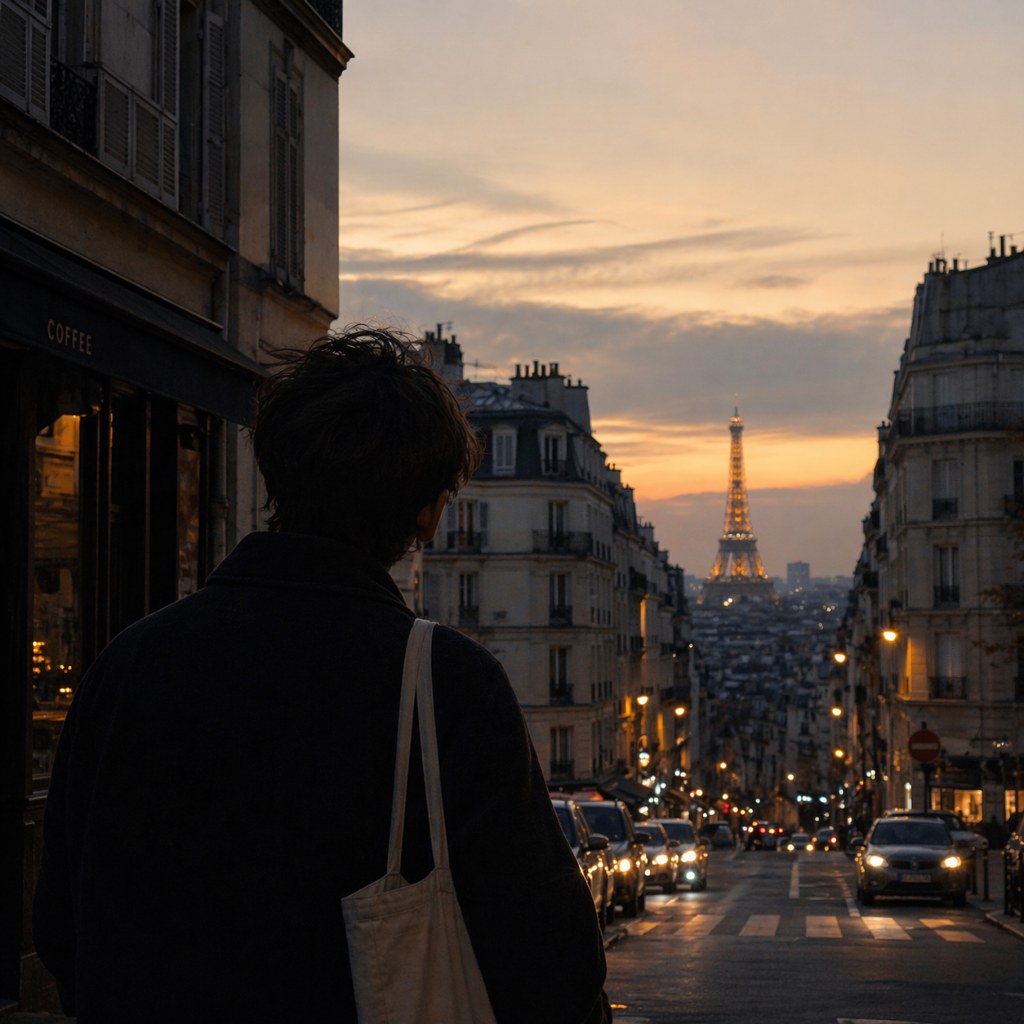
Paris has a reputation for rudeness that is, in practice, almost entirely a misunderstanding about a single word. Every transaction in this city — entering a shop, asking a question, ordering a coffee — is supposed to begin with <em>bonjour</em>. Skip it and you've broken the social contract before you spoke. Say it and the city becomes warmer than the mythology promises. The shortlist below is the sights, tables, and rooms I keep returning to. The logistics layer at the back is the part that actually saves a Paris trip: the bonjour rule, the museum reservations you absolutely need, when to walk and when to take the métro, the dining-hour windows, and where tourists reliably get stung.
VoyRay Trip Planner
Turn this guide into a real trip
Start an editable trip for Paris and use this guide as inspiration while choosing places and shaping each day.
12 places
**Book summit tickets online 30–60 days in advance** — walk-up stairs-only tickets are sometimes available but the lift queues without a reservation run 2+ hours in peak season. My preferred visit: photograph it first from Trocadéro across the Seine for the iconic full-tower frame, then ride to the 2nd floor (best view/price ratio), skip the summit crush. The tower sparkles on the hour for 5 minutes every night from sunset to 01:00 — the best view of this is from the Champ de Mars lawn, not from the tower itself.

The single largest museum in the world — you're not 'seeing the Louvre' in one visit, you're picking a wing. **Book a timed entry online** via ticketlouvre.fr; the Mona Lisa queue itself is 45 min even with a reservation. My route: enter via the Carrousel (quieter than pyramid), head straight to the Italian Renaissance galleries (Denon wing, 1st floor) for Mona Lisa + Veronese's Wedding at Cana + Caravaggio in 90 minutes. If you have an extra hour, the Winged Victory of Samothrace on the staircase is genuinely astonishing. **Wednesdays and Fridays open until 21:45** — evening visits are noticeably calmer.

The Impressionist / Post-Impressionist mothership, housed in a converted 1900 Beaux-Arts railway station. The 5th-floor Impressionist galleries (Monet's Gare Saint-Lazare, Manet's Olympia, Renoir's Bal du Moulin de la Galette, Degas's ballet dancers, all within 4 rooms) are the unmissable core. Van Gogh's self-portrait and the Église d'Auvers hang on the same floor. **Go Thursday evening** — open until 21:45, half the crowd. Cafe Campana on the 5th floor is a beautiful glass-ceilinged lunch room.

Reopened December 2024 after the 2019 fire. The reconstruction is extraordinary — restored medieval stonework brighter than it's looked in 200 years, fresh gilding on the altar, the famous rose windows cleaned and re-leaded. **Entry is free but timed** (reserve a slot online to skip the long walk-up queue). The tower climb (separate ticket, up 422 steps) for gargoyle-level views is being reopened in phases; check current status. Sunday 10:00 Mass is worth hearing even if you're not religious — the organ is a recently-restored Cavaillé-Coll.

The 13th-century royal chapel on Île de la Cité, hidden inside a courthouse complex — and to my mind the single most transporting medieval interior in Europe. 15 stained-glass windows, each ~15m high, narrating the Bible in 1,113 panels. **Go on a sunny afternoon between 14:00-16:00** when the sun hits the west rose window; cloudy days lose half the effect. Combo ticket with the Conciergerie next door saves a few euros. The queue goes through security so budget 30 min for entry even with an advance ticket.

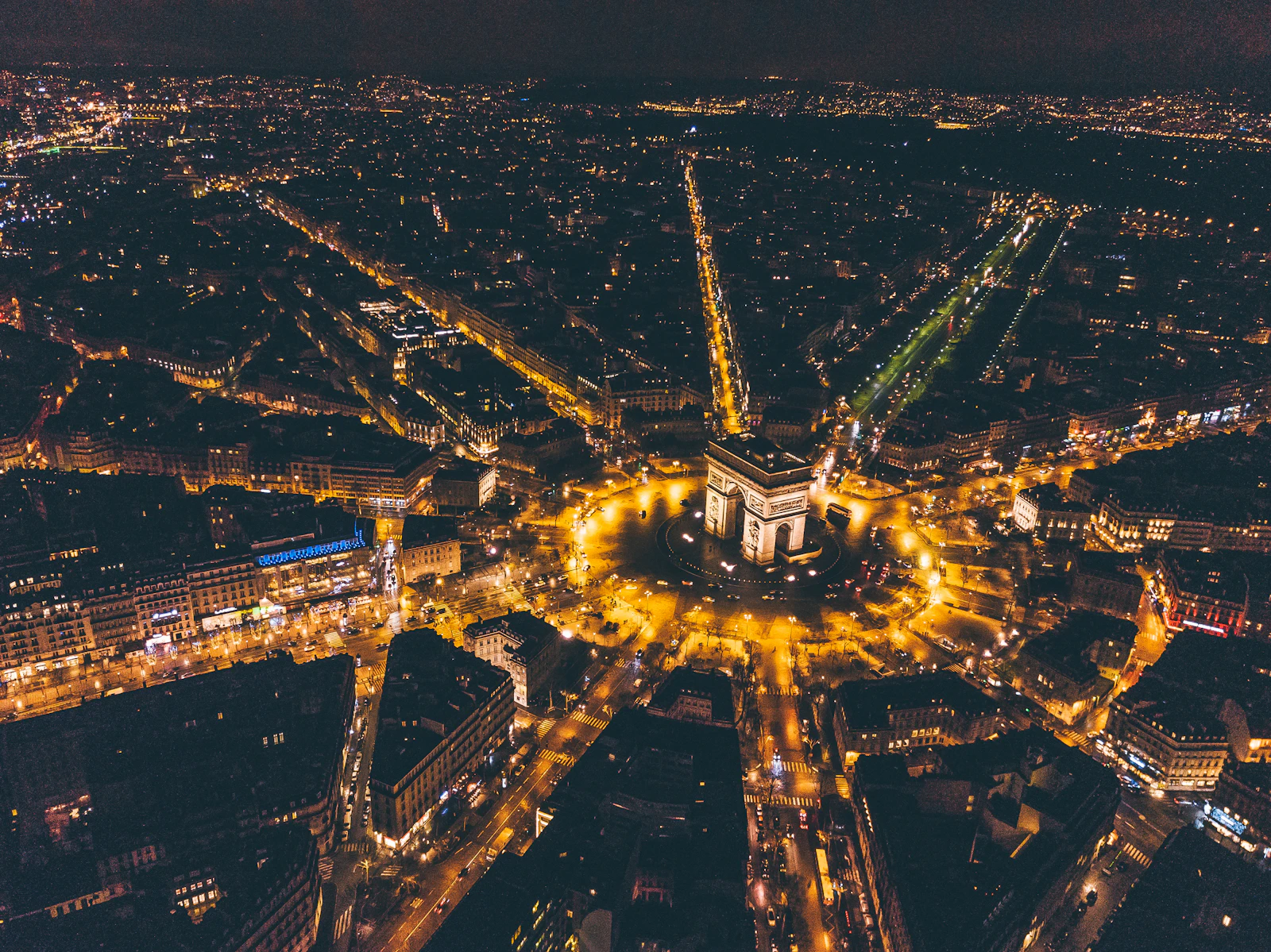
The imperial monument closing the west end of the Champs-Élysées, at the top of Charles de Gaulle traffic roundabout. **Climb it at sunset** (284 steps, elevator available) for the Axe Historique view down to La Défense one way and through the Tuileries to the Louvre the other — arguably the best urban-axis view in Europe. Cross the roundabout only via the underpass at the north-east corner; crossing the 12-lane circle at ground level is a tourist-kills-self move. The Tomb of the Unknown Soldier rekindling ceremony at 18:30 daily is worth 10 minutes.

Two oval rooms on the west end of the Tuileries, built to Monet's exact specifications to display eight panoramic Water Lilies panels he painted in his 80s specifically for these rooms. The lower level houses the Walter-Guillaume collection — Cézanne, Matisse, Picasso, Modigliani, Renoir — small but exquisite. Compared to the Orsay's Impressionist rooms this is the museum where you can actually sit quietly with a Monet for 15 minutes. 90 minutes end-to-end. **Book online**, and go weekday afternoon for the quietest sitting rooms.

The 17th-century formal garden behind the French Senate — and the working Parisian park. The sailboat basin where children rent wooden toy boats with sticks, the 100 wrought-iron chairs you drag to your preferred spot, the regular free chess and boules games at the north-west corner, the bandstand concerts in summer. A proper Paris afternoon: sandwich from Pierre Hermé down the street, find a chair, read. The Medici Fountain in the east corner is the best single photograph of the garden. Open dawn to dusk.

The 130m-high hill with the white basilica at its crown — oldest bohemian quarter in Paris, former haunt of Picasso, Van Gogh, Toulouse-Lautrec. **Climb via the funicular** from Anvers metro (included with regular metro ticket) or walk the stairs for the full pilgrimage. Sacré-Cœur's dome climb (300 steps) gives the second-best city view after the Eiffel Tower. **Warning**: the 'friendship bracelet' scammers on the lower steps are aggressive — walk past fast, don't make eye contact, never let them touch your wrist. Visit at dawn (07:00-08:30) for the view with almost no one there.

The medieval quarter that Haussmann's 19th-century rebuilding skipped — a warren of narrow streets, 17th-century mansions now museums, the historic Jewish quarter along Rue des Rosiers, and since the 1980s the city's gay heart. Essential walks: Rue des Francs-Bourgeois (boutiques), Place des Vosges (the oldest planned square in Paris, 1612), Rue Vieille-du-Temple (galleries), Rue des Rosiers (falafel + Jewish delis). The Musée Carnavalet (Paris history) and Musée Picasso are both excellent Marais museums. **Sunday afternoon is Marais's peak moment** — many boutiques stay open here when the rest of Paris closes.
The most photographed bridge in Paris, named for Russian Tsar Alexander III and gifted by his son in 1896 to celebrate Franco-Russian alliance. Four gilded bronze Pegasus statues, ornate Art Nouveau lampposts, a single 40m steel arch designed to keep the Seine view unobstructed. Best light is golden hour; the Eiffel Tower is visible down the river to the west, the Grand Palais across the bridge. Standing at the center looking west gives you the 'Paris in a postcard' shot. Walking across from Invalides to Grand Palais is a 5-minute moment that stays with you.

Charles Garnier's 1875 opera house — the setting for Phantom of the Opera, with the actual 'lake' beneath the stage (a water cistern for fire suppression, genuinely there). **Self-guided tours** are 15€ and include the main staircase, the foyer with Chagall's 1964 ceiling, and the auditorium. For the full experience, see an actual performance (ballet is more flexible dress-wise than opera). The Grand Escalier is one of the three most spectacular staircases in Europe — dress well, you'll want to be photographed on it.

6 places
The benchmark Paris bakery — a 150-year-old shop on Rue Yves Toudic in the 10th, preserved wood-paneled interior, short queue of neighborhood regulars and pilgrims. The **pain des amis** is the flagship (a naturally-leavened wheat loaf you'll think about for weeks); the **escargot chocolat-pistache** is the cult pastry (spiral puff pastry, dark chocolate and candied pistachio). Closed weekends (Parisian paradox — the best bakery is shut for weekend brunch). Takeaway only; go at 09:00-10:30 for the freshest bake.
Since 1896 — the original 'bouillon,' a Belle Époque workers' canteen with listed-historical-monument status, 400 seats on two levels of vintage brass and mirror. Mains run 10-14€, starters 3-5€, three-course dinner for two under 50€. Classic orders: oeuf mayonnaise (egg halves in herbed mayo, 3€), steak frites, poulet roti, floating island. **No reservations** — queue starts forming by 18:30, moves fast. Shared tables are standard, neighbors become part of the meal. A proper piece of unchanged old Paris.

Bertrand Grebaut's 11th-arr bistro, routinely on world's-best lists — the flagship of the 2010s Paris 'bistronomie' movement, where young chefs from Michelin-starred backgrounds opened smaller rooms with daily-changing tasting menus at accessible-ish prices. Now 1 Michelin star; 7-course menu around 135€. **Book 3 weeks ahead** at septime-charonne.fr the minute the calendar opens (exactly 3 weeks before at 10:00 Paris time). Adjacent Clamato (no reservations, natural wine + seafood) and Septime La Cave (wine bar) complete the block. The benchmark for modern Paris cooking.
The Saint-Germain-des-Prés café where Sartre and de Beauvoir spent most of the 1940s, across the street from where Camus also camped at Les Deux Magots. Yes it's a tourist institution now; yes the coffee is 8€; yes you're there for the seat, not the menu. The unwritten rule: order something (chocolat chaud is a genuine specialty, the croque-monsieur is correct), claim a corner table at 10:00, stay for two hours with a book, leave a coin. Upstairs has a much quieter writing room most tourists don't discover.

Pierre Hermé is the patissier who reinvented the macaron in the early 2000s — Ispahan (rose-lychee-raspberry), Mogador (passion fruit-milk chocolate), Infiniment Vanille. The Rue Bonaparte shop in the 6th is the original and the best. A box of 6 macarons runs ~25€; the whole-cake Ispahan is a Saint-Germain pilgrimage item. Closed Mondays. Skip the Galeries Lafayette outpost, go to the shop.
3 Michelin stars; Bernard Pacaud's classical-French temple on Place des Vosges since 1986 — the kind of restaurant where chefs from other top kitchens come to eat on their days off. Signature dishes barely change: feuillantine de langoustines in curry butter, turbot in tarragon, the famous chocolate tart. Dinner is 500+ euros per person excluding wine; lunch the same (no lunch tasting discount, notoriously). **Book 2-3 months ahead** by phone (not email) — the reservation conversation is itself part of the process. Jacket required, phones away, this is serious.
.JPG)
5 places
The luxury benchmark since 1898. On Place Vendôme — the Ritz bar was Hemingway's personal project to 'liberate' in 1944; Coco Chanel lived in Room 302 for 30 years; Princess Diana's last dinner. A 200-million-euro 2012-2016 renovation kept the grand salons intact while gutting and rebuilding the rooms (Ritz rooms are now genuinely among the most luxurious in Paris, not just most famous). Breakfast at Salon Proust is a ritual. Afternoon tea at Salon Vendôme is three seasons of your life later still perfect.

The best Eiffel Tower view of any hotel in Paris. Converted from Prince Roland Bonaparte's 1896 mansion — half the rooms face the tower directly, and the corner Eiffel View suites are calibrated to frame the tower in the window. Rooms are 52m² entry-level (spacious for Paris luxury). Michelin 2-star **L'Abeille** (French cuisine) and 1-star **Shang Palace** (Cantonese — the only Chinese Michelin restaurant in France) are both destination-quality. If seeing the Eiffel Tower from bed matters to you, this is the choice.

The most ambitious Paris hotel opening of the last decade — LVMH's 2021 ultra-luxury conversion of the La Samaritaine department store, with 72 rooms averaging ~70m² (the largest entry-level rooms among Paris palace hotels), an Evian spa in the basement, and views over the Seine and Pont Neuf. Alain Ducasse's **Plénitude** (3 Michelin stars) is in-house. Dior spa collaboration. Rates start at 1,500€ in low season, 2,500€+ in summer. The new benchmark if budget is no object.

The design-forward mid-luxury pick — set in an 18th-century former home of Nicolas Beaujon, between the 2nd and 3rd arrondissements. Rooms are compact (the smallest ~15m²) but smart: custom Hoxton furniture, fireplaces in original grand rooms, good curation throughout. The Rivié courtyard bar is a proper Paris summer-evening destination. Location is central for the Marais + Grands Boulevards area. 250-400€/night depending on season — notably good value for the location.
The romantic boutique pick — 18 rooms in a small 10th-arr townhouse, each individually designed with patterned wallpaper, velvet furniture, and a working mini-bar cabinet in every room. The downstairs bar is moody and genuinely good (a favorite of the neighborhood's design crowd, not a hotel-only venue). Location is Canal Saint-Martin / Grands Boulevards adjacent — 15 min to the Marais on foot, 5 min to Gare du Nord by taxi. 180-280€/night. The best 'first romantic Paris trip' choice under 300€.