
Vienna 2-Day Innere Stadt + Palace Loop
Vienna 2-Day Innere Stadt + Palace Loop
Vienna arranges itself by what survived the 19th century and what it built during it. The medieval Innere Stadt sits inside the Ringstrasse — the 5.3-km circular boulevard Franz Joseph ordered built in 1857 after demolishing the old walls, stitching the Parliament, Rathaus, Votivkirche, Kunsthistorisches, and Naturhistorisches into a single outdoor architectural argument. Inside the ring, at the center, the Hofburg winter palace occupies 240,000 m² across 19 courtyards and 18 wings, with a Sisi Museum built around an empress who spent her life fleeing the institution she was married into.
The two summer palaces outside the Ring are the version of Vienna that Franz Joseph's bureaucracy justified as necessity. Schönbrunn's 1,441 Rococo rooms and the Gloriette hill behind them were Maria Theresa's; Belvedere's twin Baroque palaces were Prince Eugene's trophy residence. The Klimt Room in the Upper Belvedere — 'The Kiss,' 'Judith I,' and eighteen other canvases in one room — is the most concentrated gathering of Klimt in existence. Zum Schwarzen Kameel's standing counter on Bognergasse, operating since 1618, is where the day ends.
VoyRay Trip Planner
Make this itinerary your own
Start a new editable trip for Vienna, then adjust the dates, route, places, budget, and travel pace to fit you.
Contents
Day 1
Day 1 — St. Stephen's Cathedral + Figlmüller Wollzeile
Stephansdom at 09:00 is the inside of twelve centuries of Vienna: a Romanesque foundation, a Gothic south tower that took 65 years to complete, and a north tower abandoned in 1511 where it has remained. The Graben west of it is the Roman moat paved over and given a 1693 plague column; the Hofburg to the southwest is where the Sisi Museum makes its argument through absence — the obsessive exercise records, the 8-hour hair procedure, the private poetry written against the institution. Figlmüller Wollzeile closes it: the schnitzel is 24cm, the potato salad is oil-not-mayo, and the second Grüner Veltliner is expected.
.JPG?width=1280)
St. Stephen's Cathedral, known as Stephansdom, is Vienna's defining landmark and the seat of the Archbishop. Construction began in 1137 and continued over centuries, resulting in a Gothic masterpiece with a distinctive multicolored geometric tile roof featuring the Habsburg double eagle. The South Tower, climbed by 343 steps, offers panoramic city views, while catacombs beneath the cathedral house skeletal remains of plague victims and Habsburg organs in copper urns. The cathedral's interior contains remarkable works of Gothic art including the carved pulpit by Anton Pilgram and the marble tomb of Emperor Frederick III. Daily masses continue in this living church.
The Graben is Vienna's most elegant and storied shopping boulevard, tracing its origins back to the Roman encampment of Vindobona. Today, it is lined with high-end boutiques and historic facades. In the center stands the 'Pestsäule' (Plague Column), a Baroque masterpiece commissioned after the 1679 epidemic. The sensory experience is one of luxury, from the scent of high-end perfumes to the clatter of horse-drawn carriages. Expert recommendation: Look for the 'Ankerhaus,' designed by Otto Wagner, and the ultra-luxury grocery store Julius Meinl am Graben. Practical pro tip: The public toilets at the Graben are famous for their Art Nouveau design and are worth the small fee just to see the historic fixtures.
This is Vienna’s primary pedestrian shopping artery, connecting the State Opera to Stephansplatz. While now dominated by international brands, it still retains several traditional Viennese establishments, such as J. & L. Lobmeyr glassware. The street is always bustling with street performers and tourists. Expert recommendation: Duck into the small side streets (like Annagasse) to find quieter, more authentic medieval architecture and charming coffee houses. Practical pro tip: Avoid the tourist-trap souvenir shops on the main drag; for more authentic Viennese crafts, visit the Dorotheum auction house nearby. The street is best visited in the early evening when the shops are still open and the streetlights come on.

Once the seat of the Austro-Hungarian Empire, the Hofburg is a sprawling complex of palaces, museums, and administrative offices. Spanning seven centuries of architectural history from Gothic to Classicism, it served as the winter residence for the Habsburgs. The sensory experience is dominated by the weight of imperial history, visible in the Swiss Wing and the opulent Sisi Museum. Expert recommendation: Prioritize the Imperial Treasury (Schatzkammer) to see the Holy Roman Empire's crown jewels. Practical pro tip: The complex is massive; don't try to see everything in one day. Focus on the Sisi Museum and Imperial Apartments for the best insight into royal life, and use the audio guide included in the ticket price.
Café Central is Vienna's most celebrated grand café, housed in a palatial neo-Gothic building in the heart of the first district. Opening in 1876, it became the meeting place of Vienna's intelligentsia — Lenin, Freud, Trotsky, and the young Adolf Hitler all frequented these marble-topped tables. Today, expertly dressed waiters in bow ties serve an extensive menu of coffees, from melange to einspänner, alongside elaborate Viennese pastries and light meals. The towering vaulted ceilings, marble columns, and grand piano accompaniment transport visitors to the golden age of Viennese café society.

Housed in a former Habsburg residential palace atop one of the last remaining stretches of Vienna's fortifications, the Albertina combines imperial state rooms with one of the world's most important print rooms. Its collection spans from Dürer to Picasso and contemporary art. The museum's exterior is marked by a striking modern wing (the Soravia Wing) that juxtaposes beautifully with the classical facade. Expert recommendation: Don't miss Dürer's 'Young Hare' if it's on display, though it's often kept in dark storage for preservation. Practical pro tip: Use the long escalator at the front for a great photo op of the State Opera. The museum is open daily, making it a great Monday option when others are closed.
Figlmüller has been serving Vienna's most famous schnitzel since 1905, and the Wollzeile location carries that century-old tradition with pride. The restaurant's signature Wiener Schnitzel, made from hand-pounded veal, arrives wider than the plate — a theatrical presentation that has delighted generations of diners. Crispy golden breadcrumbs encase the tenderest veal, traditionally accompanied by potato salad and a slice of lemon. The rustic wooden interior with traditional Austrian decor creates an authentic beisl atmosphere. Located just steps from the cathedral in a historic vaulted cellar, this is the quintessential Viennese dining experience.
Day 2
Day 2 — Schönbrunn Palace + Zum Schwarzen Kameel
Schönbrunn at 09:00 is the correct entry — the Grand Tour covers 40 of the 1,441 rooms, and the Great Gallery where Mozart played at age 6 in 1762 holds more documented history per square meter than almost anywhere in Europe. The Gloriette behind the palace is the 15-minute uphill walk that Maria Theresa designed to be descended from, the parterre and the palace facade composing themselves below. Belvedere in the afternoon is Klimt's room — 'The Kiss' in its glass vitrine, 'Judith I' on the adjacent wall, eighteen other canvases no other museum matches. Zum Schwarzen Kameel at 20:00 has been on Bognergasse since 1618; Beethoven ran a tab here.

Schönbrunn Palace is the Habsburg Empire's crown jewel, a UNESCO World Heritage baroque palace with 1,441 rooms set in 186 acres of manicured gardens. Built in the early 18th century as the imperial summer residence, it served emperors from Maria Theresa to Franz Joseph I. The Grand Tour reveals opulently decorated state rooms including the Great Gallery and Hall of Mirrors where Mozart performed at age six. The palace gardens rise to the Gloriette, a hilltop monument offering panoramic views over Vienna. The on-site coach museum, mazes, and Palm House make this a full-day destination.

Perched on the crest of a 60-meter hill overlooking the palace, the Gloriette was built in 1775 as a 'temple of fame' and a viewing terrace. It serves as the crowning glory of the Schönbrunn gardens. The Neo-Classical colonnade offers a majestic framing of the city. Expert recommendation: The central glazed hall now houses a café where you can enjoy a 'Sisi Torte' with a view fit for an emperor. Practical pro tip: While the climb up the hill is free and provides great views, you have to pay a small fee to access the rooftop viewing platform of the Gloriette itself. It’s particularly beautiful at sunset.
Plachutta is the world’s foremost authority on Tafelspitz, the boiled beef dish that was a favorite of Emperor Franz Joseph. The restaurant is elegant yet bustling, marked by its signature green branding. The service follows a strict ritual of serving the soup first, then the marrow on toast, and finally the beef with apple-horseradish and chive sauce. Expert recommendation: The Tafelspitz is the only thing to order here; ask the waiter to show you the 'correct' way to eat the bone marrow. Practical pro tip: It is a very popular spot for business lunches and family celebrations, so booking is essential. If you are traveling solo, they are very accommodating and have smaller portions for the beef dishes.

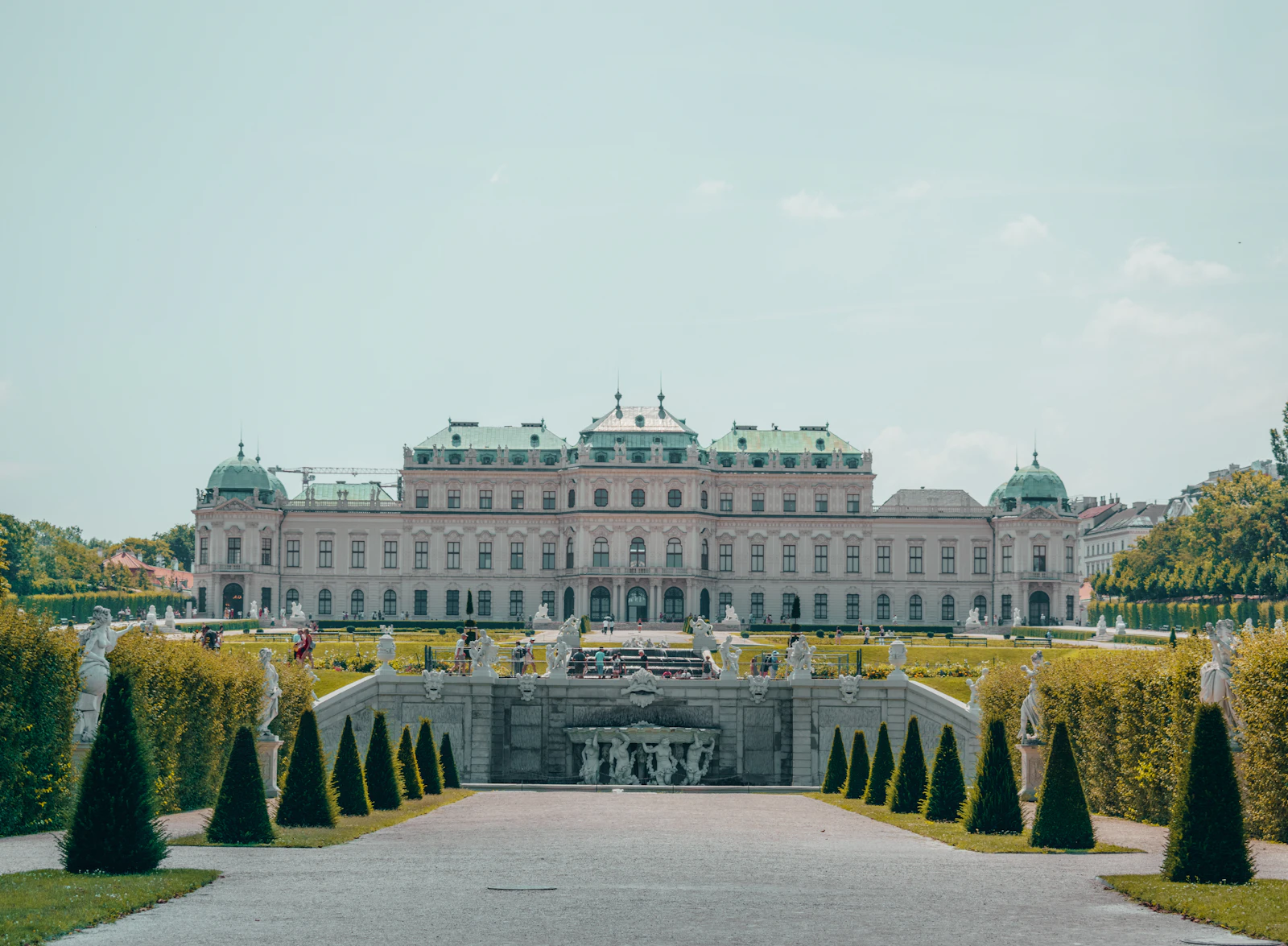
The Belvedere is a magnificent Baroque palace complex built for Prince Eugene of Savoy in the early 18th century. Today it houses one of the world's finest art collections, most famous for Gustav Klimt's The Kiss — arguably the most recognized painting in Austria. The Upper Belvedere museum displays Austrian art from the Middle Ages through the 20th century, while the Lower Belvedere hosts temporary exhibitions in equally stunning baroque interiors. The formal French gardens connecting the two palaces, with fountains, sculptures, and geometric hedges, are among Vienna's most photogenic spaces year-round.

A masterpiece of Baroque architecture, Karlskirche was built by Emperor Charles VI to fulfill a vow made during a plague epidemic. Its unique facade features two massive columns inspired by Trajan's Column in Rome, covered in relief carvings of the life of St. Charles Borromeo. The interior is famous for its vibrant frescoes and incredible light. Expert recommendation: Take the panoramic elevator inside the church to the platform under the dome to see the frescoes up close. Practical pro tip: The square in front of the church, Karlsplatz, is a hub for student life and hosts a charming, art-focused Christmas market in December. The church also regularly hosts Vivaldi's 'Four Seasons' concerts.
Dating back to 1618, 'The Black Camel' is a vibrant mix of a high-end delicatessen, a wine bar, and a formal restaurant. The Art Nouveau interior is stunning, but the real action happens at the standing-room-only sandwich counter. It is the place to see and be seen for Vienna’s social elite. Expert recommendation: Try their legendary open-faced sandwiches (Brötchen)—the spicy egg or the ham with horseradish are favorites. Practical pro tip: Do as the locals do: grab a glass of Austrian Sekt (sparkling wine) and a couple of sandwiches at the bar for a quick, sophisticated snack. It’s perfect for a mid-shopping break near the Graben.