
Paris 3-Day Classic Itinerary
Paris 3-Day Classic Itinerary
Paris resists the itinerary. Distances look short on the map but every corner has a patisserie, every square a terrace, and you will sit down. Budget more time than you think for the museums — the Louvre is a building designed to slow you down. Don't skip lunch for sightseeing. Don't wear uncomfortable shoes. The city's etiquette isn't snobbism; it's the operating system. Learn it fast and the whole thing opens.
Three days traces the city's most legible axis. The Left Bank opens with the tower itself and the 7th-arrondissement circuit: Trocadéro, Invalides, Rodin, the gilded bridge of Pont Alexandre III. The Right Bank center handles the great ceremonial corridor — Orangerie, Tuileries, Concorde, Champs-Élysées, Arc — with Ladurée as the mandatory afternoon interruption. The final day crosses to the islands: Sainte-Chapelle, Notre-Dame reopened, Shakespeare and Company, then the Marais and its Place des Vosges courtyard with L'Ambroisie for dinner — three stars, unchanged since 1981, and that's the point.
VoyRay Trip Planner
Make this itinerary your own
Start a new editable trip for Paris, then adjust the dates, route, places, budget, and travel pace to fit you.
Contents
Day 1
Eiffel views, the Arc rooftop, Champs-Élysées, and a tower dinner
The western axis that every photographer has tried and failed to exhaust. Trocadéro for the photograph, the Arc's rooftop for the radiating street geometry, the avenue as a long walk rather than a shopping destination. The Eiffel Tower in the afternoon when the light has direction. Dinner at Le Jules Verne requires the Pilier Sud private elevator and a reservation made weeks in advance — the view from the second-floor restaurant alone justifies both.

Built for the 1937 International Exhibition, the Palais de Chaillot consists of two curved wings housing several museums, separated by the Esplanade du Trocadéro. This esplanade provides the single most famous and unobstructed view of the Eiffel Tower and the Fountain of Warsaw. The architecture is a prime example of monumental Art Deco style, featuring heroic sculptures and gilded bronze figures. The atmosphere is vibrant, often filled with street performers and tourists. Expert recommendation: Visit at sunrise to capture the Eiffel Tower without the crowds and with the perfect 'golden hour' glow. Pro tip: Walk down through the Trocadéro Gardens toward the Seine for a closer perspective of the fountains when they are fully operational during the summer.

Commissioned by Napoleon after his victory at Austerlitz in 1805, this monumental arch honors those who fought and died for France. It stands at the center of the Place de l'Étoile, where twelve avenues radiate outward. The structure is adorned with heroic sculptures, most notably 'La Marseillaise.' Visitors who climb the 284 steps are rewarded with a unique perspective of the Champs-Élysées and the perfect symmetry of the city’s historical axis. Expert recommendation: Visit at 6:30 PM to witness the daily rekindling of the Flame of Remembrance at the Tomb of the Unknown Soldier. Pro tip: Never try to cross the chaotic traffic circle on foot; use the pedestrian tunnel located on the Champs-Élysées for safe access.

Often described as 'the most beautiful avenue in the world,' the Champs-Élysées runs for 1.2 miles from the Place de la Concorde to the Arc de Triomphe. It is a symbol of Parisian prestige, hosting the annual Bastille Day parade and the finish line of the Tour de France. The lower section is lined with gardens and museums, while the upper section is a consumerist paradise of flagship luxury stores and theaters. The atmosphere is high-energy, crowded, and undeniably glamorous. Expert recommendation: Visit the flagship stores of Louis Vuitton or Guerlain for the architecture alone. Pro tip: Avoid eating at the restaurants directly on the avenue as they are overpriced; instead, walk a few blocks into the side streets (like Rue de Ponthieu) for much better quality and prices.

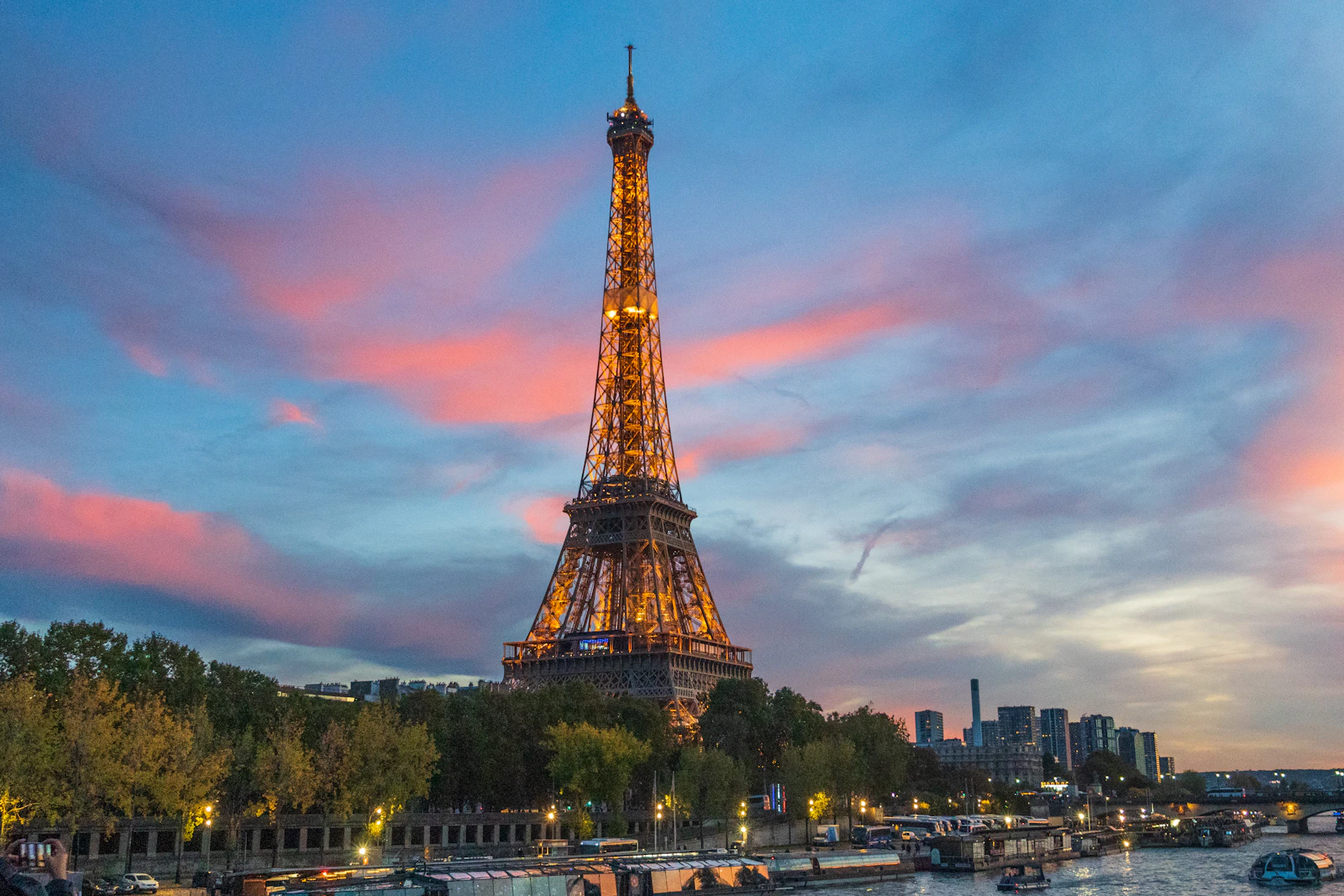
Gustave Eiffel's iron lattice tower constructed for the 1889 World's Fair was initially derided by Parisian intellectuals as a blot on the city's skyline, yet has become the world's most visited paid monument and the defining symbol of France, receiving nearly seven million visitors annually to its three platforms at 57, 116, and 276 meters above the Champ de Mars. The view from the summit platform across the entire Paris basin—the Sacré-Cœur on Montmartre, Notre-Dame's islands, the La Défense business district, and the looping Seine River—rewards the long queues and considerable climb, though the view of the tower itself from below, particularly during the nightly sparkle light show at the top of each hour, may be even more memorable. The Jules Verne restaurant on the second floor provides a Michelin-starred meal with the most extraordinary setting in all of French gastronomy.

Suspended on the second floor of the Eiffel Tower at 125 meters above Paris with sweeping views of the illuminated city through floor-to-ceiling windows, this Alain Ducasse restaurant offers three-Michelin-star French haute cuisine in the most theatrical location in the world, with prix-fixe menus of extraordinary refinement featuring seasonal ingredients from the finest French producers prepared with the technical mastery of a team trained in Ducasse's global empire. The arrival by private elevator on the south pillar, the table settings incorporating miniature Eiffel Tower elements, and the moment when the Tower's lights switch on during the dinner service create a dining experience of unparalleled romance and occasion. Reservations must be made two months in advance and are among the most coveted in French gastronomy.
Day 2
Gilded bridges, formal gardens, the Orangerie's ovals, and Rodin
The Second Empire and Third Republic built for permanence, and it shows. Pont Alexandre III's gilded Pegasuses, the formal garden geometry of the Tuileries, the obelisk at Concorde, the Invalides esplanade. Rodin's former studio-house closes the afternoon with something quieter — The Thinker beside the rose garden, the Burghers of Calais in the courtyard. Stop at Ladurée Rue Royale for macarons in the afternoon; it's the 1862 original, the queue moves.

Widely regarded as the most ornate and extravagant bridge in Paris, Pont Alexandre III was built to celebrate the Franco-Russian Alliance and inaugurated for the 1900 World's Fair. Its Beaux-Arts style features exuberant winged horses in gilded bronze, Art Nouveau lamps, and cherubs. The bridge offers a perfect visual alignment between Les Invalides and the Grand Palais. Crossing it feels like walking through an open-air museum. Expert recommendation: This is the premier 'Instagram spot' in Paris, especially with the Eiffel Tower in the background. Pro tip: To avoid the crowds, visit at sunrise. The lighting is soft, and you’ll have the bridge to yourself. Afterward, walk down the stone stairs to the Berges de Seine for a riverside stroll.

Located in the former orangery of the Tuileries Palace, this museum is the definitive home of Claude Monet’s 'Water Lilies' (Les Nymphéas). Eight massive murals are displayed in two oval rooms designed by the artist himself to provide a 'refuge of peaceful meditation.' The natural light entering through the ceiling creates an immersive, ethereal experience where the colors of the water change throughout the day. The lower level features the Walter-Guillaume collection of modern classics. Expert recommendation: Visit at the very beginning of the day to experience the Monet rooms in silence. Pro tip: Buy a combined ticket with the Musée d'Orsay to save money and skip the separate ticket line; they are only a short walk across the river from each other.
Created by Catherine de' Medici in 1564 and later redesigned by André Le Nôtre, the Tuileries is the quintessential French formal garden. It stretches between the Louvre and the Place de la Concorde, featuring manicured lawns, gravel paths, and classical sculptures. The atmosphere is a blend of historical elegance and casual leisure, with locals reading in the iconic green metal chairs. Sensory highlights include the scent of chestnut blossoms in spring and the symmetry of the central 'Grand Allée.' Expert recommendation: Visit the Musée de l'Orangerie located in the southwest corner. Pro tip: During the summer, a large funfair (Fête des Tuileries) occupies the northern edge, perfect for families, while the ponds are great for renting miniature sailboats for children.

The largest square in Paris, the Place de la Concorde is steeped in history, having served as a site for public executions during the French Revolution, including King Louis XVI. At its center stands the 3,300-year-old Luxor Obelisk, a gift from Egypt. The square is flanked by two magnificent stone buildings and decorated with monumental fountains representing maritime and river navigation. The open space provides a grand visual link between the Tuileries Garden and the Champs-Élysées. Expert recommendation: Visit at night when the fountains and the obelisk are illuminated, creating a cinematic atmosphere. Pro tip: It is a major traffic hub, so stick to the designated crossings and the central island for the safest photo opportunities of the Eiffel Tower in the distance.

This is the original Ladurée boutique, opened in 1862, where the concept of the double-decker macaron was popularized. The interior is a pastel-colored dream of 'Second Empire' style, with wood paneling and celadon green walls. It feels like stepping into a Marie Antoinette-inspired fantasy. The sensory experience is defined by the scent of almond flour and the sight of perfectly stacked pastel cookies. Expert recommendation: The 'Marie-Antoinette' tea paired with classic pistachio or rose macarons. Pro tip: The Rue Royale location is often less chaotic than the Champs-Élysées flagship. The upstairs tea room is a perfect, quiet sanctuary for a rainy afternoon in Paris. Don't forget to take home one of their iconic gift boxes.
.jpg)
Founded by Louis XIV as a hospital and retirement home for war veterans, this massive complex is a masterpiece of French classical architecture. Its golden dome (Dôme des Invalides) is visible across the city and houses the magnificent red quartzite sarcophagus of Napoleon Bonaparte. The complex also contains the Musée de l'Armée, one of the world's best military history museums. The atmosphere is formal and grand, echoing France's martial past. Expert recommendation: Don't miss the collection of ornate cannons in the main courtyard. Pro tip: The ticket includes entry to the Dome Church, the Army Museum, and the Charles de Gaulle monument. It’s a very large site, so allow at least 3 hours for a comprehensive visit.
_à_Paris,_13_juin_2021_01.jpg)
Set in the 18th-century Hôtel Biron where Auguste Rodin once lived and worked, this museum is one of the most romantic spots in Paris. It houses the world's most significant collection of the sculptor's works, including 'The Thinker,' 'The Kiss,' and 'The Gates of Hell.' The true highlight is the sprawling rose garden, where sculptures are integrated into the landscape, allowing art and nature to coexist. The interior galleries are filled with light and wood-paneled elegance. Expert recommendation: Spend most of your time in the garden; it’s a peaceful oasis in the city center. Pro tip: There is a 'Garden Only' ticket available for a few euros if you’ve already seen the interior but want a beautiful place to stroll or sketch.
Day 3
Sainte-Chapelle's colored glass, Notre-Dame reopened, and the Marais
The island churches were built for different kinds of light: Sainte-Chapelle for vertical colored shafts through 13th-century stained glass, Notre-Dame for the full stone nave of a just-reopened cathedral. From there the Left Bank bookshops, then the Louvre's afternoon galleries, then deeper into the Marais until L'Ambroisie at Place des Vosges — Bernard Pacaud's three-star temple has barely changed since 1981, and that is the entire point.

Hidden within the Palais de Justice complex, this 13th-century royal chapel was built by Louis IX to house the Crown of Thorns. It is renowned for its 15 massive stained-glass windows, which depict 1,113 scenes from the Bible and bathe the upper chapel in a kaleidoscopic 'jewel-box' glow. The soaring blue ceilings and intricate stonework create a celestial atmosphere that feels removed from time. Expert recommendation: Visit on a sunny day between 11 AM and 2 PM when the light hits the glass most intensely. Pro tip: Security is very tight because it’s inside a courthouse; avoid bringing metal objects or large bags. Concerts held here in the evenings offer a sublime acoustic and visual experience.

A masterpiece of French Gothic architecture, Notre-Dame has stood on the Île de la Cité since the 12th century, witnessing the coronation of emperors and surviving revolutions. Despite the 2019 fire, its resilient spirit continues to draw millions; the restored spire and facade remain a testament to medieval craftsmanship and modern restoration efforts. The exterior is famous for its intricate portals and grotesque gargoyles that overlook the city. Experts recommend visiting the 'Crypte Archéologique' nearby to see Roman-era foundations. Pro tip: While the interior restoration nears completion, the square in front offers the best view of the flying buttresses. Early morning visits provide the best lighting for photography of the western facade without the heavy crowds.

This legendary English-language bookstore, opened by George Whitman in 1951, serves as a spiritual successor to Sylvia Beach's original shop. It has long been a sanctuary for 'Tumbleweeds'—traveling writers who sleep among the shelves in exchange for work. The interior is a labyrinth of floor-to-ceiling books, narrow wooden stairs, and a resident cat. The sensory experience is defined by the smell of old paper and the view of Notre-Dame across the Seine. Expert recommendation: Visit the upstairs 'Old and Rare' section for a step back in time. Pro tip: The line to enter can be long; try visiting right at opening time or late in the evening. Don't forget to get your books stamped with the famous shop logo at the checkout.

Originally a medieval fortress and later a royal palace, the Louvre is now the world's largest art museum, housing masterpieces like the Mona Lisa and Venus de Milo. The architecture is a stunning blend of French Renaissance and modernism, exemplified by I.M. Pei’s iconic glass pyramid in the central courtyard. Inside, the atmosphere is a dizzying journey through 9,000 years of human history across vast, opulent galleries. Expert tip: Enter via the 'Carrousel du Louvre' underground mall to avoid the main pyramid lines. Visit during late-night openings on Fridays for a quieter, more atmospheric experience. Focus on one wing per visit (like the Richelieu) to avoid 'museum fatigue,' and don't miss the Napoleon III apartments for pure decorative splendor.
Spanning the 3rd and 4th arrondissements, Le Marais is one of the few areas of Paris that retains its medieval and Renaissance architecture, having escaped Haussmann's 19th-century renovations. It is a vibrant tapestry of Jewish heritage, LGBTQ+ culture, and high-end fashion boutiques. Walking through its narrow, winding alleys, visitors encounter 'hôtels particuliers' (grand private mansions) and hidden courtyards. The atmosphere is a chic blend of historical gravity and contemporary trendiness. Expert recommendation: Explore the Rue des Rosiers for the city's best falafel and traditional Jewish pastries. Pro tip: Many boutiques here are open on Sundays when the rest of Paris is closed, making it the ultimate Sunday afternoon destination for shopping and people-watching.
.JPG)
Located in a 17th-century mansion on the Place des Vosges, L'Ambroisie is often cited as the pinnacle of classical French cooking. Chef Bernard Pacaud has maintained three Michelin stars for over 30 years with a philosophy of 'perfect classicism.' The interior features tapestries, marble floors, and intimate lighting, creating a hushed, reverent dining experience. This is not 'trendy' food; it is timeless perfection. Expert recommendation: The sea bass with sliced artichoke and golden caviar is a legendary signature dish. Pro tip: This is one of the hardest reservations to secure in Paris and is exceptionally expensive. There is no website; reservations are made strictly by telephone. Arrive early to walk through the quiet arcades of the Place des Vosges before your meal.