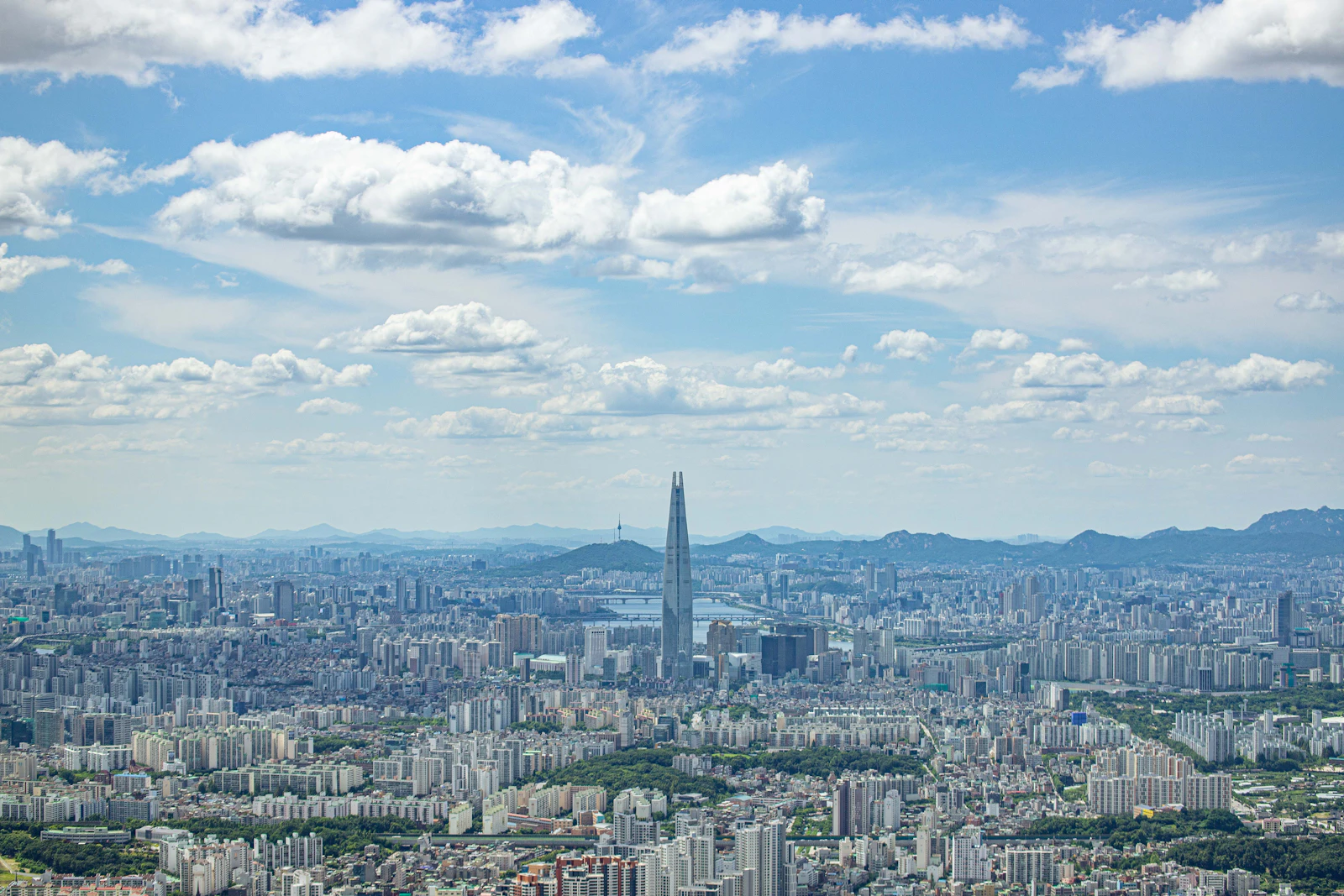

Seoul Travel Guide
Seoul rewards travelers who plan with apps, not maps. Google Maps does not give walking or driving directions in Korea (a national-security restriction on map exports), so Naver Map and KakaoMap are not optional — they are the city's actual operating system. Papago, the Naver translator, handles Korean grammar far better than Google Translate. Kakao T is the local rideshare. The T-money card is the transit card. Sort that kit out before you land and the city opens up at the speed it actually moves at. What makes Seoul different from Tokyo or Kyoto is that the historical layer is the <strong>five royal palaces</strong>, not temples — the Joseon dynasty's architectural footprint is right in the center of the city. The other layer is contemporary: Gangnam's fine-dining scene has redefined what Korean cooking can be in the past decade. This is the shortlist of places I return to, paired with the small etiquette and logistics notes that catch first-timers — the no-tipping rule, the maps-app substitution, the heated-floor shoe rules at hanok cafés, the cherry-blossom and fall-foliage windows.
VoyRay Trip Planner
Turn this guide into a real trip
Start an editable trip for Seoul and use this guide as inspiration while choosing places and shaping each day.
12 places
Seoul's principal Joseon palace — the anchor you have to see first. Time your visit to the 10:00 or 14:00 Royal Guard Changing Ceremony in front of Heungnyemun Gate; it's 20 minutes, fully authentic (no tourist performance additives), and genuinely stirring. **Wearing a rented hanbok gets you in free** — rental shops line the street south of the palace, 10,000–20,000 won for 2 hours. The eastern Jagyeongjeon and the rear Gyeonghoeru pavilion on the pond are the sub-areas most tour groups miss.

The 600-year-old hanok neighborhood between the two main palaces — residents still live here, so the 'viewing spots' are marked 1–8 with signs asking for silence. The famous photo (Bukchon 6, looking down the sloped street with N Seoul Tower in the distance) gets shoulder-to-shoulder crowded by 10am. Go at 07:30–09:00 or after 17:00 for the light and for basic courtesy to residents. Samcheong-dong next door is where the museums and cafés are; Bukchon proper is residential.

UNESCO-listed and in my view the more atmospheric of Seoul's two main palaces. The **Secret Garden (Huwon) requires a separate timed-entry ticket** with a guide — book the English-language slot on the Royal Palace website 2–7 days ahead or risk the walk-up queue. 90-minute guided walk through 30 acres of pavilions, ponds and 400-year-old trees. Autumn foliage (mid-to-late November) is spectacular. Closed Mondays.

The iconic Seoul skyline tower on Namsan (South Mountain). **Three ways up**: the Namsan Cable Car from Myeongdong (3 minutes, 14,000 won round-trip), the Namsan Circular Bus (20 minutes from Chungmuro station), or the 45-minute hike from Myeongdong via the Namsan Stairs (free, genuinely nice). The observation deck itself is solid but the real view is from the base plaza at sunset — same panorama, no queue, no ticket required. The 'love locks' railing is a photo op, not a meaningful tradition.
.jpg)
Seoul's oldest permanent market (since 1905) and the living heart of Korean street food. Go hungry and standing-eat your way through: **bindaetteok** (mung-bean pancake, the market's signature — served with raw onion and makgeolli), **yukhoe** (Korean steak tartare with Asian pear and egg yolk), **mayak kimbap** ('drug' kimbap, so-called because addictive), **sundae** (blood sausage), and **mung-bean jelly with shredded vegetables**. The yukhoe alleyway on the market's east side is where locals eat; Bukeo-dong's yukhoe stall has been Netflix-documentary-famous for a decade and still delivers.

Traditional crafts spine of central Seoul — calligraphy brushes, hanji paper, celadon, 30-year-old tea houses tucked in alleys, and the world's only 'Starbucks' sign written in Korean Hangul. Avoid the main pedestrian stretch on weekend afternoons (pure tourist crush). Go on a weekday morning, wander the Ssamziegil arts complex (spiral up to the rooftop), and have tea at O'sulloc Tea House or Shinyetchatjip (the latter has been serving ginseng tea since the 1950s). 90 minutes is enough.
The young, cafe-dense counterpart to Bukchon — same 100-year-old hanok architecture, but every second house has been converted to a boutique café, jewelry studio or craft dessert shop. Narrower alleys, fewer cars, genuinely photogenic without feeling like a tourist set. Start at Exit 4 of Jongno 3-ga station and just wander; plan 2 hours including a stop at **Onion Anguk** or **Madang Flower Cafe**. Don't go on Sunday afternoon — it's mobbed.

An 11-km daylit urban stream that runs east-west through downtown Seoul — paved over as a highway for 40 years, famously restored as an urban park in 2005 and now one of the city's best walks. Descend to the stream-level path at any bridge point; the ceremonial start at **Cheonggye Plaza** (near City Hall) is worth a photo. Evening illumination plus the **Banpo Bridge Rainbow Fountain** context makes this a great arrival-day stroll to beat jet lag. Don't miss the two-story cascade and the 22 themed bridges — each has a different design story.

The city's tallest at 555m — Seoul Sky observatory is on floors 117–123. The 118F **glass floor** ('Sky Deck') is the novelty; stand on it, do not grip the rail, let the acrophobia do its thing. Morning visits (10:00–12:00) give you the clearest air; sunset slots book out weeks ahead. A 500m east is **Lotte World Mall and Lotte World Adventure** (indoor/outdoor theme park), and right next door is **Bongeunsa Temple** for an old-vs-new contrast in a single afternoon.

Zaha Hadid's parametric-architecture masterwork — the largest 3D free-form building in the world when it opened in 2014. Walk the external curves and the LED rose garden (65,000 LED roses, installed for the 2015 DDP opening anniversary); the design museum exhibitions are hit-or-miss but worth checking. The real reason to come at night is the **Dongdaemun Market** around it — wholesale fashion buildings open until 04:00-05:00, with proper buyers from all over East Asia. The evening architecture + midnight shopping combo is uniquely Seoul.

The head temple of the Jogye Order (Korean Zen Buddhism) — and the only major Buddhist temple in downtown Seoul. Small compared to the palaces but dense with atmosphere: 500-year-old Chinese scholar trees, a giant bodhi tree, daily prayer services you can quietly observe. Free entry, open dawn to dusk. **Lotus Lantern Festival** in early May turns the whole precinct into a glowing labyrinth and is one of Seoul's best seasonal experiences. Across the street is **Balwoo Gongyang**, the temple's Michelin-starred Buddhist-cuisine restaurant.

The youth-and-music epicenter of Seoul, named for the Hongik University (one of Korea's top arts schools) at the top of the street. Afternoons: buskers, street art, K-pop dance groups rehearsing in front of stores. Evenings: underground clubs, craft beer, karaoke rooms, 24-hour cafes. Go once just to absorb the energy but don't expect luxury — this is hoodies and phones and streetwear, not suits. The **Gyeongui Line Forest Park** runs alongside on a decommissioned rail line; worth adding to any Hongdae visit for a quieter adjacent stroll.
6 places
**The** samgyetang — ginseng chicken soup — destination in Seoul, 5 minutes walk from Gyeongbokgung's west gate. A whole small chicken stuffed with rice, garlic, chestnut and fresh ginseng, simmered in a restorative broth. Queue forms by 11:30 any day, 40-60 min at lunch peak; the single-seat counter is the fastest option. Order the **o-sam-gyetang** (aged-ginseng upgrade) for the full pharmaceutical-grade experience. Summer 'Sambok' days (the three hottest days of the year) are the traditional time for this dish — a Korean paradox of eating hot soup to beat the heat.
Treat the whole market as one restaurant: yukhoe alley for steak tartare (around 20,000 won for a generous plate with egg yolk and pear), Soonhee Bindaetteok stall for the bean-pancake + makgeolli combo (12,000 won + 4,000 won), the two mayak-kimbap grannies at the east entrance (3,000 won for a dozen bite-sized rolls), and Hyunsun Restaurant at the north end for sundae-gukbap (blood-sausage stew) if the earlier stops haven't filled you up. Cash is still king at the older stalls; bring 40,000-50,000 won per person and graze for 90-120 minutes.
3 Michelin stars and the restaurant that launched the 'New Korean' fine-dining wave in the 2010s. Chef Jungsik Yim's 15-course tasting is KRW 450,000/head (~USD 340), and lunch is about 40% less for 9 courses — the lunch-in-Gangnam move is the secret. Reserve through **Catch Table** app or hotel concierge 3-4 weeks ahead; walk-ins impossible. Dishes reinterpret Korean staples with French technique: bibimbap arrives as a carved-in-half root-vegetable sphere, a kimchi-ssam course has 11 components plated around a single piece of wagyu. Jacket preferred, not strict.
The iconic **kalguksu** (hand-cut noodle soup) + **mandu** (dumplings) counter in Myeongdong since 1966. The menu has four items — kalguksu, bibim-guksu (spicy cold mixed noodles), mandu, and kongguksu (cold soybean noodles, summer only) — and they're all perfect. Order the kalguksu (12,000 won) with a side of mandu (13,000 won for 10 pieces); the rich anchovy-chicken broth with thick hand-cut noodles and ground pork is the platonic Korean comfort food. Lunch queues 20-30 min; dinner is calmer. Turnover is fast.
The Pyongyang-style **naengmyeon** (cold buckwheat noodle) institution — a 70-year-old family shop preserving the austere, mild Pyongyang-style preparation (deliberately under-seasoned broth, hand-pulled noodles with high buckwheat ratio). This is not the saccharine-sweet bibim-naengmyeon served in most BBQ restaurants — it's a different dish entirely, and not for everyone on the first bite. The **mul-naengmyeon** (cold broth version) is the way in; add a boiled-beef side for a classic pairing. 15,000 won. Summer peak from June through August.
The design-forward Korean cafe in a beautifully preserved 1930s hanok near Anguk station. Industrial-modern intervention inside a traditional Korean house — bare concrete, raw wood, the sound of traffic filtered by courtyard walls. The **Pandoro** (a sugar-dusted mountain of soft bread) is the signature, large enough for two. Expect 20-min wait on weekend afternoons; go on a weekday morning for the full experience of the courtyard light. Four Seoul branches now but Anguk is the original and the best.

5 places