
Seoul 2-Day Food & Palaces
Seoul 2-Day Food & Palaces
Seoul runs at a speed that other Korean cities don't attempt. The Han River divides the old north — Joseon palaces and hanok villages, whatever the 20th century didn't demolish — from the new south, where Gangnam absorbed the economic ambition of the last forty years. The city changes register every subway stop, and the stops themselves are labeled in four languages because every generation added one.
Two days covers the north-south gap. The first works Namsan and the central arc: the tower above the city, Myeongdong's street-food density, and a dinner reservation at La Yeon for Korean cuisine at its most formally composed. The second belongs to the palace district — Gyeongbokgung's enormous grounds, Tosokchon's ginseng chicken soup in the lane behind the west wall, the hanok neighborhoods of Bukchon and Ikseon-dong through the afternoon and evening, and Jogyesa Temple lit after dark.
VoyRay Trip Planner
Make this itinerary your own
Start a new editable trip for Seoul, then adjust the dates, route, places, budget, and travel pace to fit you.
Contents
Day 1
Day 1 — N Seoul Tower (Namsan Tower) + La Yeon (The Shilla)
Seoul's central geography in a half-day circuit. Namsan holds the city's most recognizable tower above a ridge of pine trees; the observation deck takes in twelve million people's worth of metropolitan spread. Myeongdong below is the most concentrated retail and street-food district in the country. The day closes with a La Yeon reservation at The Shilla — three Michelin stars, Korean cuisine at its most architecturally considered.
.jpg)
Perched atop Namsan Mountain at 479 meters above sea level, N Seoul Tower has been Seoul's most recognizable landmark since 1980, offering 360-degree panoramic views of the city from its observation deck that reveals the Han River, surrounding mountains, and the endless urban sprawl in all directions. The tower's lighting changes color based on air quality—a blue light on clear days celebrates good visibility while its presence defines the Seoul skyline. The famous love lock fence surrounding the base is festooned with thousands of padlocks left by couples declaring their eternal affection, and the cable car ride from Myeongdong adds to the romance of the ascent.
Myeongdong is Seoul's ultimate shopping mecca, a high-energy district where global brands meet endless rows of Korean beauty boutiques. Beyond the retail therapy, it is culturally significant as the center of Korean Catholicism, anchored by the nearby Myeongdong Cathedral. The sensory experience is an overload of neon lights, K-pop hits blasting from storefronts, and the mouth-watering aroma of street food like grilled lobster and 'tteokbokki.' Experts suggest visiting the 'K-Beauty' flagship stores for exclusive skin consultations and free samples. Pro tip: Most street food stalls open after 4:00 PM; bring cash for the stalls as many do not accept international cards, and wear comfortable shoes for the heavy foot traffic.

Seoul's oldest and most vibrant traditional market has operated continuously since 1905, and its covered food hall is one of the best places in the country to eat authentic Korean street food at long communal tables surrounded by the electric energy of hundreds of vendors calling out their specialties. The market is famous for its bindaetteok mung bean pancakes sizzled crisp in oil, yukhoe raw beef tartare seasoned with sesame and pear, kimbap rice rolls prepared by elderly grandmothers, and mayak gimbap (addiction rolls) that have their own cult following. A visit here at lunch surrounded by office workers slurping noodles offers an unfiltered window into daily Seoul food culture.
Perched on the 23rd floor of The Shilla Seoul, La Yeon is a temple of traditional Korean haute cuisine (Hansik). It was the first Korean restaurant in the world to receive three Michelin stars, focusing on the most premium seasonal ingredients sourced from across the peninsula. The dining room offers stunning views of Namsan Park, and the service is impeccably formal. The flavors are subtle, clean, and deep, aiming to showcase the natural essence of the ingredients. Experts recommend the 'Ye-Course' for a comprehensive journey through royal-inspired dishes. Practical pro tip: There is a formal dress code (no shorts or sandals). Book a window seat at least a month in advance to enjoy the sunset over Namsan Mountain during your meal.
Day 2
Day 2 — Gyeongbokgung Palace + Jogyesa Temple
The palace district is everything the 20th century left standing. Gyeongbokgung's main audience hall and its enclosing walls are not what photographs prepare you for in scale. Tosokchon's samgyetang in the lane behind the west wall is the proper post-palace lunch. The afternoon drifts east through Bukchon's preserved hanok rooflines to Changdeokgung's UNESCO complex, and the evening ends in Ikseon-dong's converted lantern-lit alleyways.

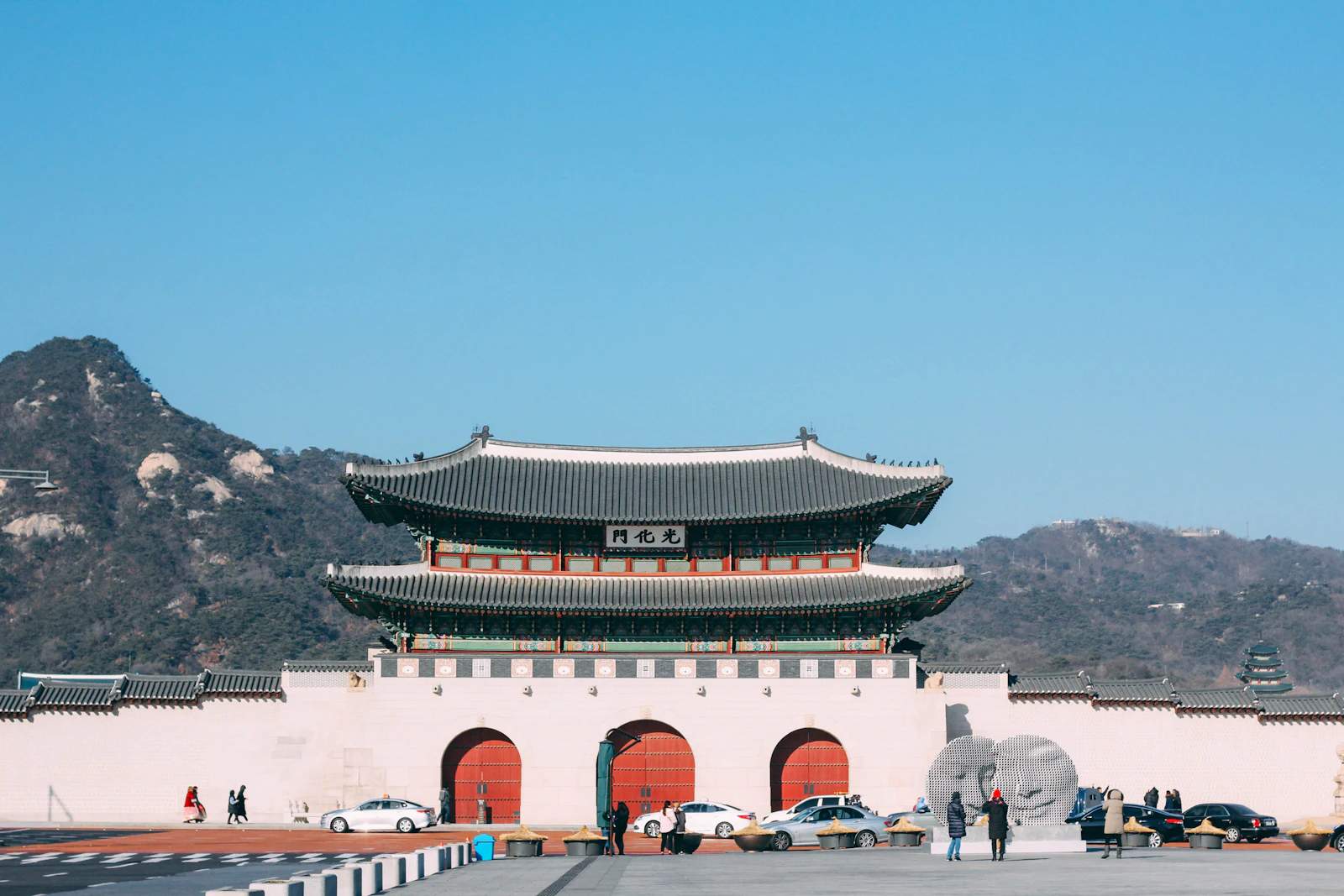
The largest and most magnificent of Seoul's Five Grand Palaces, Gyeongbokgung was built in 1395 as the main royal palace of the Joseon Dynasty and its vast complex of throne halls, banquet pavilions, royal gardens, and secretariat buildings spreads across 40 hectares at the foot of Bugaksan Mountain. The hourly Changing of the Royal Guard ceremony at the Heungnyemun Gate draws crowds with its elaborate Joseon-era uniforms and ceremonial precision, while the National Palace Museum and National Folk Museum of Korea within the grounds provide deep historical context. Renting a hanbok traditional costume grants free entry and transforms any visit into an immersive time-travel experience.
Located in a large, beautiful traditional Hanok building near Gyeongbokgung Palace, Tosokchon is famous for being the favorite 'Samgyetang' (ginseng chicken soup) spot of late President Roh Moo-hyun. The soup features a whole young chicken stuffed with glutinous rice, jujube, ginger, garlic, and a thick, nutty broth made with 30 different herbs and grains. The atmosphere is authentically historic, with diners sitting on floor mats in wooden rooms. Experts recommend drinking the small cup of ginseng wine served with the meal—either as a shot or poured into the boiling soup for extra aroma. Practical pro tip: Lines can be extremely long during lunch and on 'Sambok' (hottest days of summer); try arriving at 10:30 AM right when they open to secure a seat immediately.

Nestled between Gyeongbokgung Palace and Changdeokgung Palace, this hillside neighborhood of 900 traditional Korean hanok houses is one of the best-preserved historic areas in Seoul, offering a fascinating contrast of traditional curved tiled roofs against the modern skyscrapers beyond. The narrow alleyways of Gahoe-dong wind past artisan workshops, small galleries, teahouses, and hanbok rental studios where visitors transform into walking portraits of the Joseon era against the beautiful traditional architecture. Early morning visits before tour groups arrive allow for quiet exploration of the residential streets where locals still live amid this living heritage village.

A UNESCO World Heritage site, Changdeokgung was the favored palace of Joseon kings because its design harmonizes perfectly with the surrounding topography rather than imposing upon it. The crown jewel is the 'Huwon' or Secret Garden, a private woodland retreat featuring lotus ponds, pavilions, and century-old trees that represent the pinnacle of Korean garden design. The atmosphere is profoundly meditative, especially in the garden's deep recesses. Experts suggest booking the Huwon tour weeks in advance, as access is strictly limited. Pro tip: Visit during autumn (late October to early November) when the Secret Garden is transformed into a spectacular canvas of fiery maples and golden ginkgo leaves.

Ikseon-dong is one of Seoul’s oldest neighborhoods, recently revitalized into the city’s trendiest district. While Bukchon is residential and grand, Ikseon-dong is intimate and commercial, with narrow alleys filled with 'Newtro' (new-retro) styled cafes, bars, and craft shops housed inside 100-year-old hanoks. The sensory experience is a delight—the smell of freshly baked soufflé pancakes, the sight of pastel-colored umbrellas, and the charm of weathered wooden beams. Experts recommend 'Solsot' for traditional pot rice or 'Meal Toast' for their famous steamed bread. Pro tip: The alleys are extremely narrow and can become incredibly crowded on weekends; visit on a weekday morning at 11 AM when shops just begin to open for the best experience.

Jogyesa is the chief temple of the Jogye Order of Korean Buddhism and serves as the heart of urban Buddhism in Seoul. Unlike temples tucked away in mountains, Jogyesa is integrated into the city’s fabric, neighboring the Insadong district. The main hall, Daeungjeon, is impressively large and houses three massive golden Buddhas. The courtyard is home to a 500-year-old White Pine tree and an ancient scholar tree. During the Lotus Lantern Festival, the temple becomes a kaleidoscope of color. Experts recommend visiting in October for the Chrysanthemum Festival when the entire grounds are covered in elaborate flower sculptures. Pro tip: Visitors are welcome to enter the hall for prayer, but remember to remove your shoes and walk along the sides rather than the center.