
London 5-Day Deep Immersion
London 5-Day Deep Immersion
Five days is enough time to get a sense of how many Londons are operating simultaneously. The tourist one, yes. But also the one that shows up at Borough Market at 10am on a Saturday with a canvas bag, and the one that has been eating at St. John for twenty years and has opinions about the bone marrow, and the one that takes the DLR to Greenwich on a Tuesday and stands on the Prime Meridian for longer than strictly necessary. The city rewards the specific rather than the comprehensive.
Five days spans the full geography. South Kensington's museum corridor runs west — the Natural History Museum's cathedral entrance, the V&A's permanent collection, the Tate Modern as an evening gallery. The central arc covers the West End and Covent Garden's institutional culture, then the ceremonial Westminster-to-Trafalgar sweep with Hawksmoor for dinner. The City handles the financial district in layers: St Paul's, the South Bank galleries, Leadenhall, the Sky Garden terrace, Duck & Waffle at altitude. Greenwich ends the five days on the hill where time is measured.
VoyRay Trip Planner
Make this itinerary your own
Start a new editable trip for London, then adjust the dates, route, places, budget, and travel pace to fit you.
Contents
Day 1
Kensington Palace, the Natural History Museum, V&A, and Tate Modern at dusk
South Kensington's museum corridor is legitimately one of the great concentrations of free culture anywhere. Kensington Palace in the morning, the Natural History Museum's Romanesque entrance hall, the V&A's permanent collection. Harrods in the afternoon for the food hall (not the atrium). Hyde Park before the light goes, then Tate Modern on the South Bank for the evening — it stays open late on Fridays and the Turbine Hall is always worth seeing.
The birthplace of Queen Victoria and a residence for the British Royal Family for over 300 years, Kensington Palace is a masterpiece of Jacobean architecture. The public can explore the King's and Queen's State Apartments, which are filled with lavish tapestries and royal artifacts. The surrounding Kensington Gardens offer a serene sensory experience, with the manicured Italian Gardens and the bronze Peter Pan Statue. Expert recommendations: Don't miss the 'Victoria: A Royal Childhood' exhibition for a personal look at the monarch's early life. Pro tip: The Orangery serves one of the most elegant afternoon teas in London, but it’s best to book weeks in advance. The gardens are free to enter, while the palace interior requires a paid ticket, which is included in the Historic Royal Palaces pass.

A cathedral to nature, this museum is as famous for its stunning Romanesque architecture as it is for its contents. The Hintze Hall, with 'Hope'—a massive blue whale skeleton suspended from the ceiling—is a breathtaking entry point. The museum houses over 80 million specimens, including Darwin’s personal collections and an extensive dinosaur gallery. The sensory experience of the Victorian 'Waterhouse' building, with its intricate terracotta carvings of plants and animals, is unmatched. Expert recommendations: Visit the Earth Hall and take the escalator through a glowing red metallic globe. Pro tip: It is incredibly popular with families, so visit on a weekday afternoon or during 'Lates' to avoid the noise. Entrance is free, but pre-booking a timed slot is mandatory. Don't miss the wildlife garden if visiting in spring.

The V&A is the world's leading museum of art, design, and performance, housing over 2.3 million objects. Its galleries span 5,000 years of human creativity, from ancient Chinese ceramics to contemporary high fashion. The architecture is a blend of Victorian grandeur and modern innovation. The sensory highlight is the Morris, Gamble, and Poynter Rooms—the first museum restaurant in the world—featuring incredible tilework and stained glass. Expert recommendations: Spend time in the Cast Courts to see full-scale plaster casts of Michelangelo’s David and Trajan's Column. Pro tip: The V&A is free to enter, but popular temporary exhibitions (like those on fashion icons) sell out weeks in advance. The museum courtyard with its shallow pool is a lovely spot for a coffee break on a sunny day.

The world's most famous department store, Harrods is a temple of luxury and excess in Knightsbridge. Its motto 'Omnia Omnibus Ubique' (All things for all people, everywhere) holds true across its 330 departments. The architectural exterior is iconic, especially at night when lit by 12,000 lightbulbs. The sensory highlight is undoubtedly the Food Halls, with their ornate tiled ceilings and displays of gourmet delicacies that look like works of art. Expert recommendations: Visit the Toy Kingdom for a nostalgic trip or the 'Shoe Heaven' for an incredible collection of designer footwear. Pro tip: There is a strictly enforced dress code (no ripped jeans or flip-flops) and large backpacks must be carried by hand or left at the cloakroom. Head to the basement to see the Diana and Dodi memorial. For a more affordable taste of Harrods, visit the gift shop for their famous tins of tea.

The largest of London's Royal Parks, Hyde Park offers 350 acres of green space in the center of the city. Originally the hunting grounds for Henry VIII, it has a rich history as a site for protests and concerts. Sensory experiences range from the peaceful Serpentine Lake, where you can rent pedal boats, to the poignant Princess Diana Memorial Fountain. Expert recommendations: Visit 'Speakers' Corner' on a Sunday morning to hear lively (and often eccentric) public debates. The Rose Garden in the southeast corner is spectacular in June. Pro tip: Renting a 'Boris Bike' (Santander Cycle) is the best way to cover the vast distances within the park. In winter, the park transforms into 'Winter Wonderland,' a massive fair that requires advance booking due to extreme popularity.

Housed in the former Bankside Power Station, Tate Modern is the UK’s national museum of modern and contemporary art. Its industrial architecture, dominated by the massive Turbine Hall, provides a dramatic backdrop for large-scale installations. The collection spans from 1900 to the present, featuring icons like Picasso, Dalí, and Warhol. Expert recommendations: Head to the Blavatnik Building’s 10th-floor viewing terrace for one of the best free 360-degree views of London, including a perfect look at St. Paul’s Cathedral. The sensory experience of the cavernous Turbine Hall is always changing with new commissions. Pro tip: Entry to the main collection is free, but special exhibitions require paid tickets. The riverside path outside is perfect for a stroll toward the Millennium Bridge afterward.
Day 2
Buckingham Palace, British Museum, Sketch cocktails, Hawksmoor Seven Dials dinner
Buckingham Palace and St. James's Park in the morning — the ceremonial London before it gets crowded. Piccadilly Circus as a brief geographic reference point, then the British Museum for the afternoon (the Elgin Marbles are in Room 18, the Rosetta Stone in Room 4, the Lewis chessmen in Room 40). Sketch's egg-shaped cocktail pods in the evening, then Hawksmoor Seven Dials for dinner — the best steak in a city that has recently figured out how to cook steak.

As the official London residence of the UK’s sovereigns, Buckingham Palace is a symbol of the British monarchy's enduring presence. The palace features 775 rooms, and during the summer months, the lavish State Rooms are open to the public, showcasing priceless art from the Royal Collection and exquisite Sèvres porcelain. The sensory highlights include the opulent gold leaf moldings and the vast, manicured Palace Gardens. Expert recommendations: The Changing of the Guard ceremony is a must-see, typically occurring at 11:00 AM, but check the schedule as it doesn't happen every day. Pro tip: If the Royal Standard flag is flying, the King is in residence; if it's the Union Jack, he is away. Tickets for the State Rooms sell out months in advance, so plan your summer visit early.

Often cited as the most beautiful of London's Royal Parks, St. James's Park is bounded by Buckingham Palace, Whitehall, and The Mall. It is famous for its flower beds, which are meticulously replanted for every season, and its lake, home to a famous colony of pelicans. The sensory experience is one of refined tranquility in the heart of political London. Expert recommendations: Stand on the Blue Bridge for a famous view that captures Buckingham Palace to the west and the Horse Guards Parade to the east. Pro tip: Catch the pelican feeding time, usually between 2:30 PM and 3:00 PM daily near Duck Island Cottage. It’s an ideal spot for a quiet stroll before or after visiting the Churchill War Rooms nearby.

Often compared to New York's Times Square, Piccadilly Circus is the neon heart of London’s West End. It is defined by its massive electronic billboards and the iconic Shaftesbury Memorial Fountain featuring the statue of Anteros (often mistaken for Eros). It’s a major meeting point and a gateway to the theater district, Soho, and Regent Street. The sensory experience is one of high energy, buzzing crowds, and glowing lights. Expert recommendations: For a great view and a rest, grab a window seat at the Waterstones bookstore nearby or the rooftop bar at The Londoner. Pro tip: It is a high-traffic area and a hotspot for pickpockets, so keep your belongings secure. It’s best visited at night when the advertisements are most dazzling and the street performers are out in force.
.JPG)
Founded in 1753 as the world's first public national museum, the British Museum's collection of eight million objects representing human history across every continent and civilization since prehistoric times is displayed in a vast Bloomsbury campus anchored by the Great Court's magnificent glass-and-steel roof designed by Norman Foster—the largest covered public square in Europe. The Rosetta Stone that unlocked Egyptian hieroglyphics, the Elgin Marbles from the Parthenon, Lewis Chess pieces of medieval Norse craftsmanship, and Sutton Hoo's Anglo-Saxon treasure are among the objects whose stories span thousands of years and dozens of civilizations, all available to view for free. The Reading Room where Karl Marx wrote Das Kapital and where researchers from around the world continue to pursue scholarly inquiry in the museum's library has a sacred atmosphere of intellectual endeavor.
Located in a former banana warehouse in Covent Garden, Seven Dials Market is a vibrant indoor food hall curated by KERB. The space is split into the 'Cucumber Alley' for snacks and the 'Banana Warehouse' for larger communal dining. The sensory experience is loud, colorful, and social, filled with the clinking of glasses and a variety of international aromas. Expert recommendations: 'Pick & Cheese' features a 25-meter conveyor belt of British cheeses, while 'Nanban' offers incredible fusion ramen. Pro tip: Finding a seat during the lunch rush or Saturday afternoon can be a challenge; try visiting for an early dinner around 5:00 PM. It’s a great spot for groups with differing tastes, as everyone can grab what they like and meet in the central seating area.
The most theatrically designed restaurant in London occupies a magnificent 1779 townhouse near Oxford Circus where each of the five dining and bar spaces is a distinct artistic universe—the Gallery dining room lined with David Shrigley drawings, the Lecture Room with its three-Michelin-star French haute cuisine by Pierre Gagnaire, the extraordinary egg-shaped pod toilets that have become the most photographed loos in the world, and the Glade bar with its enchanted woodland aesthetic. Chef Pierre Gagnaire's avant-garde approach to French cooking in the Lecture Room combines ingredients and techniques in combinations that challenge every culinary expectation while maintaining exquisite flavor, making each visit a genuinely new experience. Afternoon tea in the pink-hued Gallery creates one of London's most Instagram-documented culinary events.
Housed in a former fruit warehouse, Hawksmoor Seven Dials is widely considered to serve the best steaks in London. The subterranean space features dark wood, reclaimed parquet floors, and cast-iron columns, creating a masculine, clubby, and warm sensory atmosphere. Expert recommendations: Order one of the large 'Dictionary Cuts' (like the Chateaubriand or Porterhouse) to share, and don't skip the 'Triple Cooked Chips' or the 'Bone Marrow Gravy.' The 'Sticky Toffee Pudding' is often cited as the city's best. Pro tip: Their 'Monday Steak Club' allows you to bring your own wine for a very small corkage fee. Their cocktails are also world-class, so arrive early for a drink at the bar. Booking is essential for dinner but easier for a late lunch.
Day 3
London Transport Museum, Covent Garden, Southbank Centre, Somerset House, Docklands
The Covent Garden quarter before the matinée crowds arrive — the London Transport Museum's vintage tube carriages and bus collection, then the market hall itself, then west along the river to Southbank Centre. Somerset House's courtyard is the civilised way to spend an afternoon. The DLR east to the Museum of London Docklands closes the day with the city's 18th-century mercantile history, in a converted warehouse on the Isle of Dogs.
.jpg)
Located in the heart of Covent Garden, this museum explores the powerful link between transport and the growth of modern London. It houses an extensive collection of historic vehicles, including the world’s first underground steam train and iconic red double-decker buses. The interactive displays make it a multi-sensory journey through the city's design and social history. Expert recommendations: Try the 'Tube' simulator to see what it's like to drive an underground train. Pro tip: While the entry fee seems high, the ticket is actually an annual pass, allowing you to return as many times as you like for a year. It’s exceptionally family-friendly, so visit early in the morning to enjoy the exhibits before the school groups and families arrive in large numbers.

Once a world-famous fruit and vegetable market, Covent Garden is now a vibrant cultural and shopping hub. The elegant 19th-century piazza architecture houses the Apple Market, where you can find handmade crafts and antiques. The atmosphere is perpetually festive, thanks to the world-class street performers and opera singers who entertain crowds in the lower courtyard. Expert recommendations: Visit Petersham Nurseries for a beautiful floral-themed lunch or explore the surrounding 'Seven Dials' for independent boutiques. Pro tip: While the main market is open daily, the antiques market specifically takes place on Mondays. During the Christmas season, the market features some of the best decorations in London, including a giant reindeer and a massive tree, making it a prime spot for festive photography.
.jpg)
The Southbank Centre is Europe's largest arts center, a Brutalist landmark that has been the pulse of London’s cultural scene since the 1951 Festival of Britain. Comprising the Royal Festival Hall, Queen Elizabeth Hall, and Hayward Gallery, it hosts world-class music, dance, and art exhibitions. The riverside setting is iconic, often bustling with book markets, street performers, and seasonal pop-up bars. Expert recommendations: Visit the Hayward Gallery for cutting-edge contemporary art or the rooftop garden for a hidden green escape. Pro tip: There are often free lunchtime concerts and workshops in the Royal Festival Hall foyer. On weekends, the Southbank Centre Food Market behind the hall is a fantastic spot for gourmet street food. The concrete skate park beneath the building is a legendary piece of London's urban culture and great for photography.

A spectacular Neoclassical complex on the north bank of the Thames, Somerset House is a major center for arts and culture. Its massive courtyard, surrounded by elegant wings once housing government offices, now hosts the Courtauld Gallery, famous for its Impressionist and Post-Impressionist masterpieces like Manet's 'A Bar at the Folies-Bergère.' The sensory experience of the courtyard changes with the seasons—from dancing fountains in summer to one of London's most beautiful ice rinks in winter. Expert recommendations: Visit the 'Staircase Hall' for its architectural beauty and the Courtauld for a more intimate art experience than the National Gallery. Pro tip: Many of the temporary exhibitions in the Embankment galleries are free or low-cost. Don't miss the hidden 'Deadhouse' underground if you can join a guided tour—it’s a fascinating, eerie historical space.

Housed in a 200-year-old sugar warehouse, this museum tells the story of the River Thames and the growth of the Port of London. It covers the history of trade, slavery, and the transformation of the Docklands into a financial hub. The 'Sailortown' exhibit provides a dark, atmospheric sensory experience of Victorian London’s riverside streets. Expert recommendations: The 'London, Sugar & Slavery' gallery is a vital and sobering look at the city’s complex past. Pro tip: Entrance is free. It’s located in the West India Quay area, just a short walk from the skyscrapers of Canary Wharf, making for a fascinating architectural contrast. It’s usually much quieter than the museums in South Kensington, offering a more relaxed pace for visitors.
Day 4
St Paul's Cathedral, Borough Market lunch, Leadenhall, Sky Garden, Duck & Waffle
The Square Mile from west to east. St Paul's early, before the tour groups, then across the Millennium Bridge south to Borough Market and the Globe. Leadenhall Market's Victorian cast-iron arcade in the afternoon, then the Sky Garden's free viewing terrace at sunset — book online in advance, it fills up. Duck & Waffle is on the 40th floor of Heron Tower, open 24 hours; the view at dinner service is the correct use of altitude.
_-_London,_ON.jpg)
Sir Christopher Wren's masterpiece, St. Paul's Cathedral, is an iconic feature of the London skyline with its massive dome, modeled after St. Peter's Basilica in Rome. This site has hosted the funerals of Lord Nelson and Winston Churchill, as well as the wedding of Prince Charles and Lady Diana. The interior is a symphony of mosaics and stone carvings. For a breathtaking sensory experience, climb the 528 steps to the Golden Gallery for panoramic views of the city. Expert recommendations: Don't miss the Whispering Gallery, where acoustics allow a whisper to be heard across the dome's diameter. Pro tip: Photography is now permitted inside during sightseeing hours. Consider visiting for a free Evensong service to hear the incredible acoustics of the space through music.

Known locally as the 'Wobbly Bridge' after its initial opening tremors, this steel suspension footbridge connects the City of London near St. Paul's Cathedral with Bankside near Tate Modern. Its sleek, minimalist design provides a 'blade of light' across the Thames at night. The sensory experience of walking across is defined by the perfect symmetrical framing of St. Paul's dome ahead of you. Expert recommendations: Look down while you walk; the bridge is home to hundreds of 'chewing gum artworks'—tiny paintings on discarded gum created by artist Ben Wilson. Pro tip: It’s one of the best spots for a 'London walk' at twilight when the bridge and St. Paul's are illuminated. It can get very windy in the middle of the river, so hold onto your hat! For Harry Potter fans, this is the bridge famously destroyed by Death Eaters in the films.
.jpg)
London's oldest and most celebrated food market has traded near London Bridge since at least 1014 and in its current form since 1756, and today operates as a premium artisan food destination where the finest British and international producers sell directly to the public—exceptional Neal's Yard aged cheesemakers, rare breed butchers, wild mushroom foragers, sourdough bread bakers, small-batch chocolate makers, and hot food stalls serving everything from gooey raclette to jerk chicken to hand-made pasta. The Victorian cast-iron market halls filled with natural light from glass roofs create an atmospheric setting that makes food shopping feel like a cultural experience, and the surrounding Borough neighborhood of independent restaurants, wine bars, and cocktail lounges extends the pleasure well beyond the market itself. Weekend visits reveal the market at maximum abundance and energy.

A faithful reconstruction of the 1599 open-air playhouse where William Shakespeare wrote his greatest works, the Globe is a living tribute to Elizabethan theater. Built using traditional techniques and authentic materials like English oak and thatch, the theater offers a raw and intimate sensory experience. Standing in the 'Yard' as a 'Groundling' provides a unique perspective that connects the audience directly with the actors. Expert recommendations: Even if you don't see a play, take the guided tour to hear stories of the original theater's scandalous history and the modern reconstruction. Pro tip: 'Groundling' tickets are very affordable (often just £5-£10), but you must be prepared to stand for the duration of the play. Note that the main theater is open-air and operates only from April to October; in winter, performances move to the candlelit Sam Wanamaker Playhouse next door.

Leadenhall Market is a stunning example of Victorian architecture, featuring a grand ornate roof painted in rich maroons and golds and cobbled walkways. Originally a meat and poultry market in the 14th century, the current structure was designed in 1881. Fans of Harry Potter will recognize it as the location for Diagon Alley in the first film. The atmosphere is vibrant, especially on weekday evenings when City workers gather for post-work drinks. Expert recommendations: Visit during the day to appreciate the architectural details, then stay for a drink at 'The Lamb Tavern.' Pro tip: As it serves the financial district, the market is very quiet on weekends, with many shops and bars closed. Visit on a Thursday or Friday to experience the true 'City' energy.

Located at the top of the 'Walkie Talkie' building, Sky Garden is London's highest public garden. This lush, landscaped space offers spectacular views of the Gherkin, the Shard, and the Thames, all while surrounded by Mediterranean and South African plant species. The contrast between the sleek glass architecture and the vibrant greenery creates a unique, tranquil atmosphere. Expert recommendations: The best time to visit is early morning for a sunrise breakfast at the Darwin Brasserie. Pro tip: Access is free, but tickets are released three weeks in advance and disappear within minutes; you must be ready to book on their website immediately upon release. If you can’t get a free ticket, booking a table at one of the onsite bars or restaurants guarantees entry. Dress code is 'smart casual' after 6 PM.

Perched on the 40th floor of the Salesforce Tower, Duck & Waffle is the highest 24-hour restaurant in London. The high-speed glass elevator ride to the top provides a thrilling sensory start to the meal. The interior is playfully decorated with graffiti-style art and floor-to-ceiling windows offering panoramic views of the Gherkin and Tower Bridge. Expert recommendations: The signature 'Duck & Waffle' (crispy leg confit, fried duck egg, and mustard maple syrup) is a genius combination of sweet and savory. Pro tip: The best value and most magical atmosphere can be found at 4:00 AM for a 'sunrise breakfast.' Reservations for peak times (brunch and dinner) must be made weeks in advance, but they do accept late-night walk-ins for drinks and snacks.
Day 5
Westminster Abbey, the National Gallery, London Eye, and Greenwich by river
Westminster in the morning — Big Ben's exterior, Westminster Abbey before it fills, the National Gallery for the permanent collection's European masters. The London Eye in the afternoon for a slow aerial perspective on what the previous four days have covered. Then the Thames east to Greenwich: the Cutty Sark's restored tea clipper hull and the Royal Observatory on the hill above it, standing on both sides of the Prime Meridian, which is a reasonable thing to do exactly once.

The Great Bell of the striking clock at the north end of the Palace of Westminster, Big Ben is arguably the world's most famous timepiece and a global symbol of British democracy. Completed in 1859, this Gothic Revival masterpiece designed by Augustus Pugin has endured through World Wars and remains a pinnacle of Victorian engineering. Visitors are captivated by its ornate four-faced clock and the majestic chimes that resonate across the Thames. For the best sensory experience, stand on Westminster Bridge at the top of the hour to feel the vibrations of the bell. Expert recommendations suggest capturing photos from the south bank of the Thames near St Thomas' Hospital for a full-scale view. Note that internal tours must be booked months in advance and are only available to UK residents via their MP, but the exterior is best viewed at twilight when the clock faces are beautifully illuminated.

A UNESCO World Heritage site with over a thousand years of history, Westminster Abbey is the coronation church of the British monarchy and the final resting place of 17 kings and queens, alongside giants like Isaac Newton and Charles Darwin. The architecture is a breathtaking display of English Gothic style, featuring the intricate Henry VII Lady Chapel with its stunning fan-vaulted ceiling. The atmosphere inside is one of profound solemnity and artistic grandeur. Expert recommendations include visiting the Poets' Corner and the Royal Tombs. For a peaceful sensory experience, attend the Choral Evensong to hear the world-class choir in a liturgical setting. Pro tip: The Abbey is a working house of worship, so it is closed to tourists on Sundays; booking timed entry tickets online is essential to avoid massive queues.
_-_PPP743_-_Musée_des_Beaux-Arts_de_la_ville_de_Paris.jpg)
Dominating the north side of Trafalgar Square, the National Gallery houses a premier collection of Western European paintings from the 13th to the 19th centuries. Masterpieces by Van Gogh (Sunflowers), Leonardo da Vinci, and Turner are displayed within its ornate halls. The atmosphere is one of hushed reverence for art history. Expert recommendations: Visit the Sainsbury Wing for the earliest Renaissance works. The 'Friday Lates' are excellent for exploring the galleries with fewer crowds and occasional live music. Pro tip: Entry is free, but booking a timed ticket online is required. Use the gallery's 'Smartify' app to get instant information on paintings as you walk through. The shop is excellent for high-quality art prints and unique stationery.

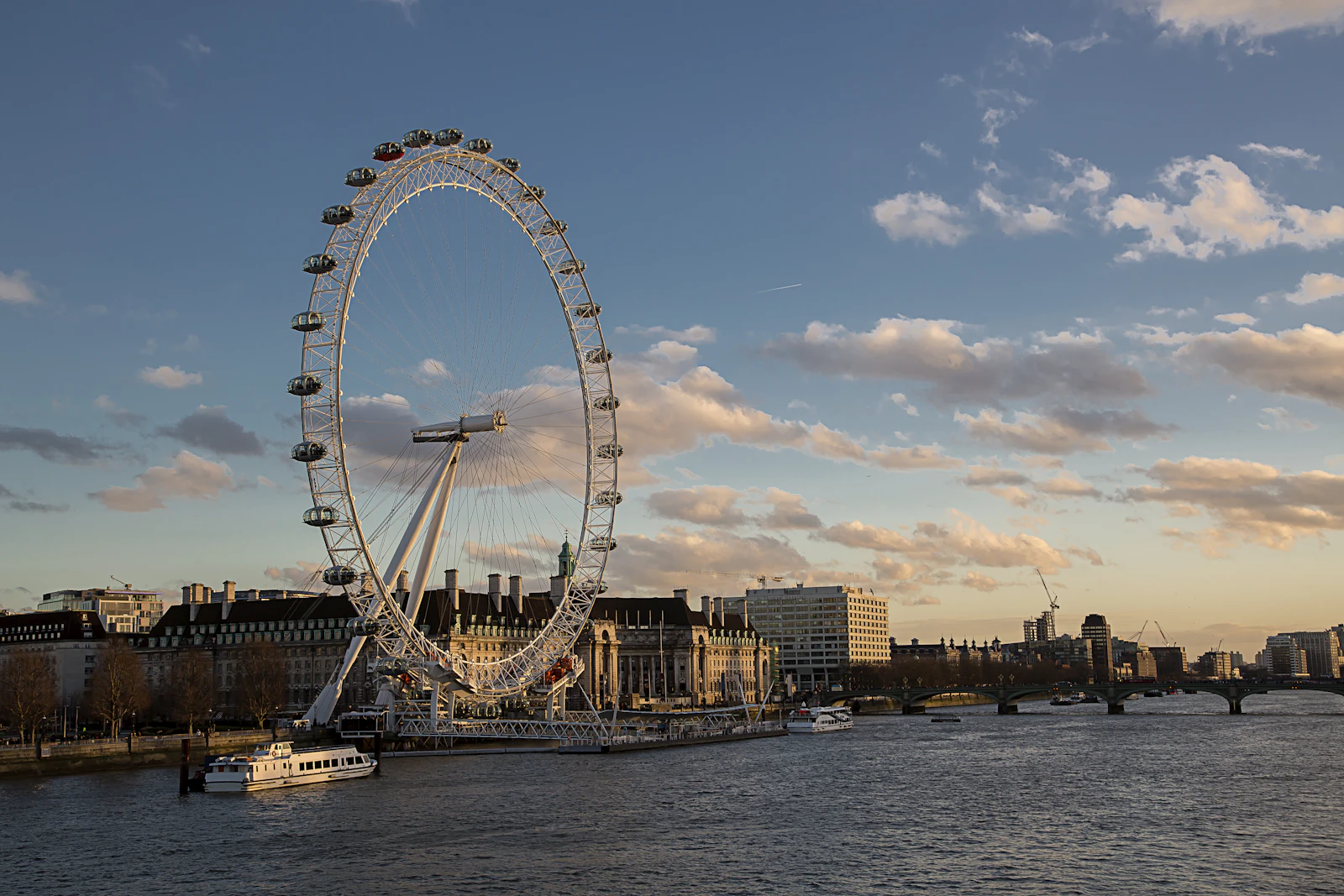
The last word in London's skyline for the millennium, the London Eye is a giant Ferris wheel offering 360-degree views of the capital. Each of its 32 glass capsules represents a London borough. The slow, graceful rotation takes about 30 minutes, providing a serene escape from the bustling streets below. On a clear day, you can see as far as Windsor Castle. Expert recommendations suggest booking the 'Fast Track' ticket to bypass the notoriously long lines, especially during summer. The best sensory experience is during the 'Golden Hour' just before sunset when the city is bathed in orange light. Pro tip: Book online for a significant discount compared to gate prices. For a special occasion, private capsules with champagne are available to elevate the experience.

The Cutty Sark is the world’s last surviving tea clipper, once the fastest ship of her time, designed to bring tea from China to London. Now beautifully preserved in a dry dock in Greenwich, the ship allows visitors to walk beneath its gleaming copper-bottomed hull and explore the cramped quarters of the crew. The architecture of the glass enclosure creates a stunning modern contrast with the 19th-century vessel. Expert recommendations: The 'Cutty Sark Cafe' located directly under the hull offers a surreal setting for a tea break. Pro tip: Combine your visit with the National Maritime Museum nearby for a full nautical history day. It’s highly interactive, making it a hit for families. If you’re feeling brave, you can even book a 'Rig Climb' to experience life as a 19th-century sailor at the top of the masts.

A UNESCO World Heritage site, Greenwich Park is the oldest of the Royal Parks and offers a unique blend of history and science. It is the site of the Prime Meridian (Longitude 0°), where you can literally stand with one foot in the eastern hemisphere and the other in the western. The Royal Observatory atop the hill provides a historic look at timekeeping and astronomy. The sensory experience includes the sweeping views of the Old Royal Naval College and the distant skyscrapers of Canary Wharf. Expert recommendations: Visit at 1:00 PM to see the red 'Time Ball' drop, a tradition since 1833. Pro tip: The walk up the hill is steep; for the best photos of the Queen's House and the river, stand right by the statue of General Wolfe. Access to the park is free, but the Observatory requires a ticket.