
Kyoto Travel Guide
The first lesson Kyoto teaches is hours, not days. Kiyomizu-dera at 06:30, just opened, the morning sun on the wooden stage from the east, almost empty. The same temple at 11:00 in early April: shoulder-to-shoulder. Five hours, one place, two cities. There are a thousand temples here and you will see five or six. The question isn't which to visit — almost all of them reward it — but which ones reward the detour off the bus route. Higashiyama's slope from Kiyomizu south through Kodai-ji and into Gion is the famous walk, and it earns the reputation. The deeper finds are sub-temple gardens: Honen-in behind its moss-covered gate, Daitoku-ji's Daisen-in, Kennin-ji's hidden moss courtyard, Ryoan-ji's dry-stone garden at 08:30 before the buses arrive. A short logistics layer at the back covers the small things that tilt a Kyoto trip: which bus pass actually pays off, the Gion photo rules and why they exist, the half-day train south to Uji, and the small ways Kyoto runs differently from Tokyo.
VoyRay Trip Planner
Turn this guide into a real trip
Start an editable trip for Kyoto and use this guide as inspiration while choosing places and shaping each day.
12 places
Go at dawn, not sunset — the 05:30–07:00 window is when you get the Senbon Torii to yourself and the light actually filters through the vermillion columns. Climb past Yotsutsuji (about 40 minutes up) where 95% of visitors stop; the upper half of the mountain is nearly empty even at 10am. The shrine never closes, so jet-lagged first-night arrivals can go at 02:00 and have an experience almost no tourist ever has.

Smaller than the photos suggest — this is a 45-minute visit, not a half-day. Go right at 09:00 opening or after 15:30; the middle of the day is a conveyor belt of tour groups. The second-floor reflection on the pond only works on still mornings, so windy days you're better off inside the tea garden around the back, where almost no one goes. Pair with Ryoan-ji (15 min walk) to make the bus trip worthwhile.

06:00 opening in summer is the move — you walk the wooden stage in pink dawn light with maybe a dozen people around. November peak foliage is unreal but the afternoon crowds can triple the normal pace of the approach streets. Skip the commercial fortune-telling booths and spend your time at Jishu Shrine behind the main hall; the two stones you're supposed to walk between with your eyes closed is a 1200-year-old romance ritual, still oddly moving.

Arrive before 08:00 or don't bother — by 09:30 the main path is shoulder-to-shoulder and the photos are impossible. On a still morning you can actually hear the bamboo creak, which is the whole point. The best stretch is the 200m section between the Nonomiya Shrine gate and the Okochi Sanso entrance; keep walking past the souvenir stands until the cars stop and the path narrows, that's where the real grove begins.

The underrated half of Kyoto's pavilion pair — never actually silver, but the moss garden and the raked sand cone (Kogetsudai) reward slow looking in a way Kinkaku-ji doesn't. The walking path up behind the pavilion climbs a small hill with a view back over Kyoto that catches late afternoon light perfectly. Combine with the Philosopher's Path entrance just outside the exit — this is the natural starting point for the whole northeast walking day.

Fifteen rocks in raked gravel, and from no single vantage point can you see all fifteen at once — that's the famous design trick. Sit on the wooden veranda and try it yourself; the minute you stand to leave you see another rock you'd missed. Morning is genuinely quiet here on weekdays; weekend afternoons are a slow-motion scrum. The Kyoyochi pond garden at the base is a separate highlight most visitors rush past on the way in.

The 'nightingale floors' in Ninomaru Palace are engineered to chirp underfoot — an Edo-period intruder alarm, and still functional 400 years later. Tadashi go slow and listen. The Kano-school cedar wall paintings in the audience chambers are the most important surviving Momoyama-era art you can see outside a museum. Allow 2 hours for the palace + garden; most guides underplay it at 45 min and you miss half the story.

Kyoto's most underrated major temple. Climb to the top of the Sanmon gate (500 yen) for the rooftop city view that featured in kabuki plays for 400 years. Behind the main hall, the brick aqueduct running through the temple grounds is jarring and perfect — built in 1890, it looks Roman, and you can climb it. Don't miss Tenjuan sub-temple (separate small fee) for the maple moss garden that almost no one visits.

Walk it north-to-south, from Ginkaku-ji down to Nanzen-ji — this is the correct direction because you end at a major temple with options rather than a dead end. Two kilometers, 40 minutes slow. Cherry blossom peak (first week of April) is mobbed but genuinely spectacular; early November's maples are calmer. Mid-path Honen-in is a 5-minute detour that 90% of walkers skip, and it's arguably more atmospheric than the named path itself.

Evening is the time, 17:00-19:00, when the ochaya lanterns come on and you might catch a geiko or maiko hurrying between appointments. Stick to Hanamikoji-dori, the main south-of-Shijo street; photography is legal there. Do NOT photograph on the private side streets — since October 2019 it's been fine-able (10,000 yen) and the residents are fed up. Bar-hop the Shirakawa Canal stretch north of Shijo instead if you want a drink with zero tourist pressure.

The actual reason to go to Arashiyama — the Sogenchi garden, designed in 1339, has been essentially unchanged for nearly 700 years. From the hojo veranda the pond-and-borrowed-landscape composition (the Arashiyama hills fold into the garden frame) is one of the great sights in Japanese garden design. Separate tickets for the garden and the temple buildings; both worth it but if forced to choose, the garden. Pair directly with the bamboo grove exit — they share a back gate.

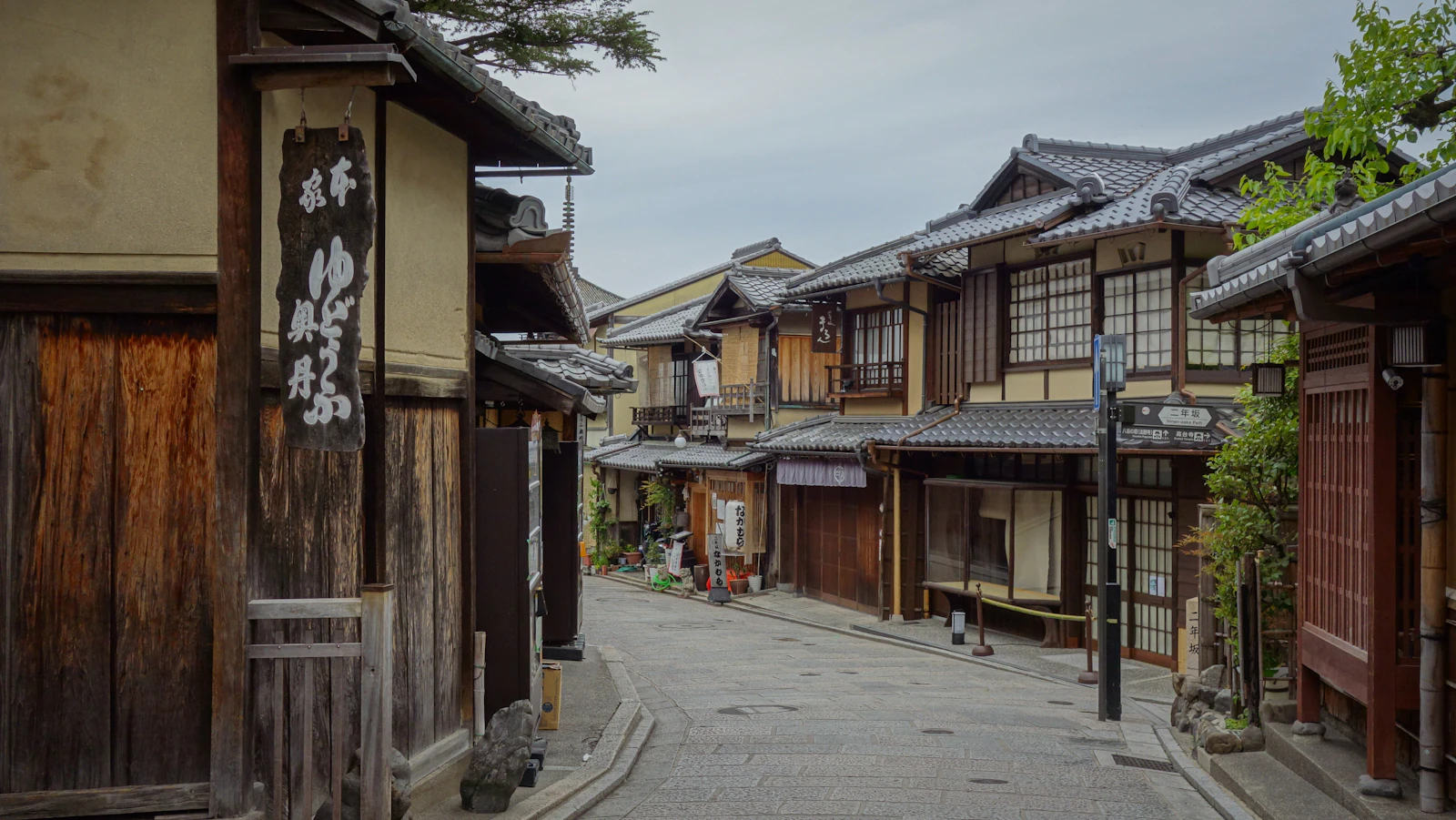
The sloped stone lanes between Kiyomizu-dera and Yasaka Pagoda are postcard Kyoto made flesh — wooden machiya townhouses, tile roofs, zero telephone poles (buried underground in a rare preservation push). 07:00-08:30 in kimono season is magical; by 11:00 it's a river of rental-yukata tourists. The local superstition says if you trip on Sannenzaka (three-year slope) you have three years to live; if on Ninenzaka, two. Watch your step, wear proper shoes.

6 places
Three Michelin stars and the benchmark for seasonal kaiseki in Kyoto, full stop. Dinner is 30,000+ yen and a 6-week lead via hotel concierge; lunch omakase around 15,000 yen is the realistic entry point and still the finest meal I've had in Japan. Chef Murata's hassun course — a single lacquer box of eight tiny dishes keyed to the current month — is the dish that recalibrates what a 'small plate' can do. Wear jacket, leave phone in bag, don't Instagram the food.

Kyoto's 'kitchen' — a 400-year-old covered arcade 5 blocks long, running parallel to Shijo. Go hungry but don't sit-down: this is a standing-eat, grazing experience. Key stops: Aritsugu (Kyoto knives, been making them since 1560), Konnamonja soy-milk donuts, Daiyasu baby octopus-on-a-stick with a quail egg stuffed in the head (yes, really), and any tsukemono (pickle) stall that offers tasting plates. 10am–11am is the sweet spot, before lunch crowds and after morning restocking.

Pure theater more than pure ramen — the chef ladles flaming-hot scallion oil onto your bowl tableside and the fireball hits 30cm above the counter. Wear your hair back, have your camera ready, and order the miso, not the shoyu (the smokier broth pairs better with the charring). Queue is 40 minutes at peak lunch; go at 14:00 or 20:30. You're paying for the spectacle; the ramen itself is honestly mid. Worth it once, not twice.
550-year-old soba house — the longest-running restaurant in Kyoto, and one of the oldest continually-operating restaurants in Japan. The imperial family has a standing order. Get the Hourai soba — five lacquer tiers of cold buckwheat noodles with different topping condiments (quail egg, wasabi, daikon, nori, shrimp tempura) that you build yourself. The nishin-soba (simmered herring over hot noodles) is the classic winter dish. Lunch only; no reservations; expect 20-min wait outside.
.jpg)
Thick-cut udon in a cold hot-sesame dipping broth, with seven small plates of vegetables and condiments you pile into the broth. Unique to Kyoto, rare outside Japan. The Ginkakuji location is a 4-minute walk from the Silver Pavilion exit and perfect for the Philosopher's Path lunch stop. Set meal (around 1500 yen) includes the udon, the condiments, and a small tempura plate. Minimal English menu but the staff are patient; the set meal is all you need to order.
The legitimate Tsujiri — founded 1860, not the Tokyo/overseas spinoffs. The Gion main store has a proper tea-house second floor most visitors miss entirely. Get the matcha-tokusen parfait (the top-grade ceremonial matcha variant) or, in peak summer, their shaved matcha kakigori which is otherworldly. If you're here in winter ask for the hot matcha set with a wagashi sweet — small meditative pause, ~1200 yen, and an actual tea ceremony primer in miniature.
5 places
If budget allows one extraordinary hotel experience in Japan, this is it. Hidden on 72 acres of restored forest at the northwest edge of town, reached only by shuttle — once you check in you effectively disappear from Kyoto. The pavilions hew to ryokan form but with Aman-scale rooms (60m² minimum). The onsen bath-houses use water from a newly-dug spring on the property. Location is remote (30 min taxi to Gion), which is the whole point: this is a retreat wrapper around a city visit, not a base.
The best central-Kyoto luxury location — on the Kamo River with city-facing rooms that look toward the Higashiyama ridge at sunrise. Walking distance to Gion (7 min), Pontocho (3 min), Nishiki (12 min). The rooms are larger than typical Kyoto luxury (51m² entry, but river rooms run 70+). Mizuki offers one of the city's better kaiseki-in-hotel experiences with a sushi counter, tempura counter, and teppanyaki all in-house; rare to find all three at this caliber under one roof.

Only reachable by the hotel's own boat — you board at Togetsukyo pier in Arashiyama, ride 15 minutes up the Oi River through a gorge, and arrive at a car-free riverside ryokan-modern hybrid. The architecture is by Azuma Takamitsu: engawa verandas, stone paths, a central garden with centuries-old pines. No TVs, intentionally. Breakfast is a proper kaiseki morning set. The property is the destination; Gion is a 40-min taxi+boat return, plan it as a retreat night.
Built on the 250-year-old Mitsui family estate, just south of Nijo Castle. The draw: an on-site onsen using genuine hot-spring water, rare in urban luxury hotels. The Forni Italian restaurant is better than it should be. Rooms start at 50m² with beautiful cypress bathrooms. The 1703 wooden temple gate at the hotel entrance was the original Mitsui family gate — preserved and integrated, not imitated. Location is central-west, 10 min walk to Nijo-jo, 15 min by bus to Gion.

The design-travel pick. Kengo Kuma renovation of the 1926 Central Telephone Exchange building in Shinpuhkan, a central shopping-and-dining complex. Rooms are LA-Ace-esque: Pendleton blankets, vintage Japanese art, Bluetooth turntables loaded with Kyoto-curated vinyl. PIOPIKO (tacos + Mexican by LA's Mozza team) and Stumptown Coffee on the ground floor. Central location — 8 min walk to Nishiki, 12 min to Gion — with a younger, more international crowd than the traditional luxury houses.
