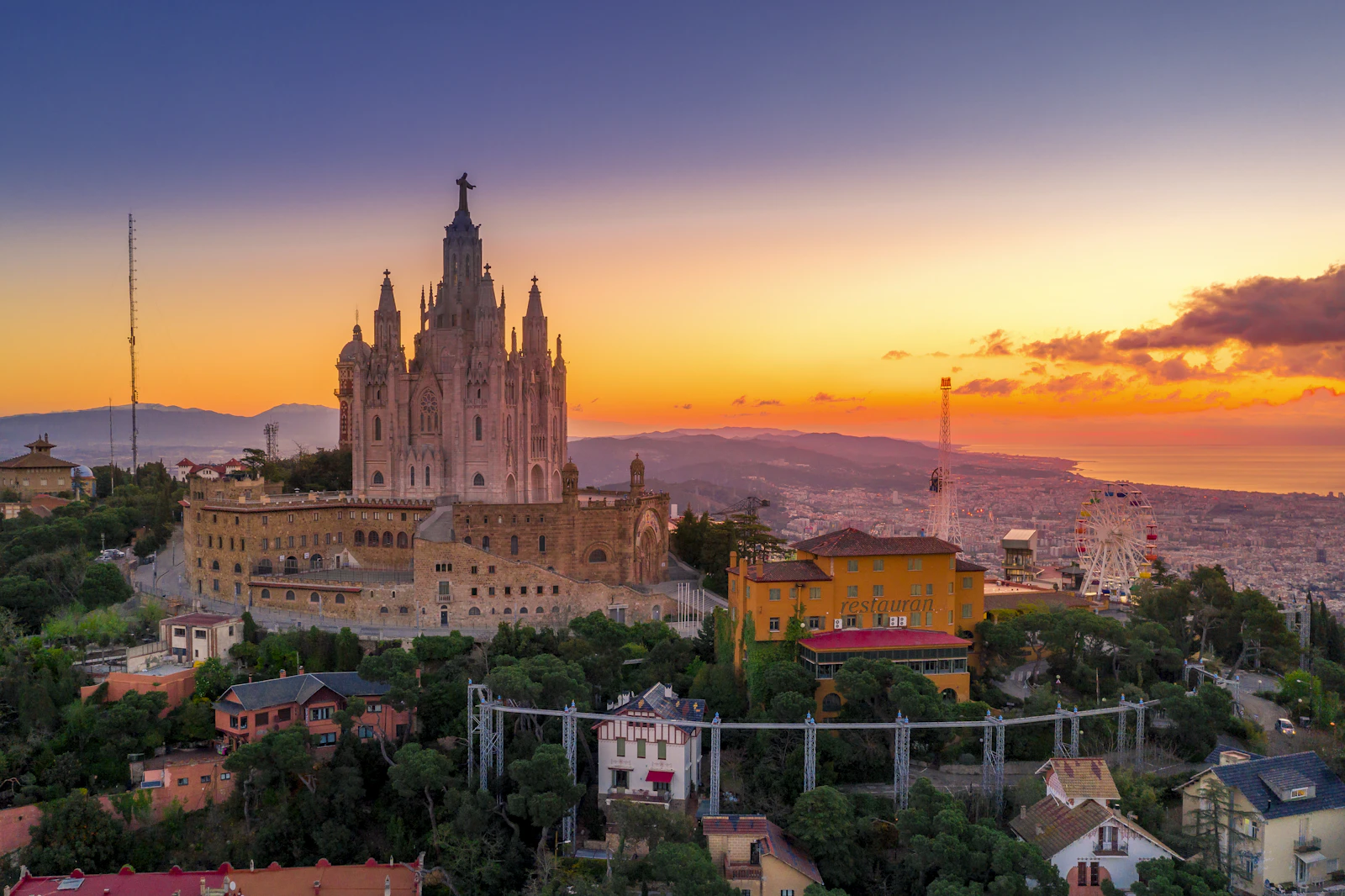

Barcelona Travel Guide
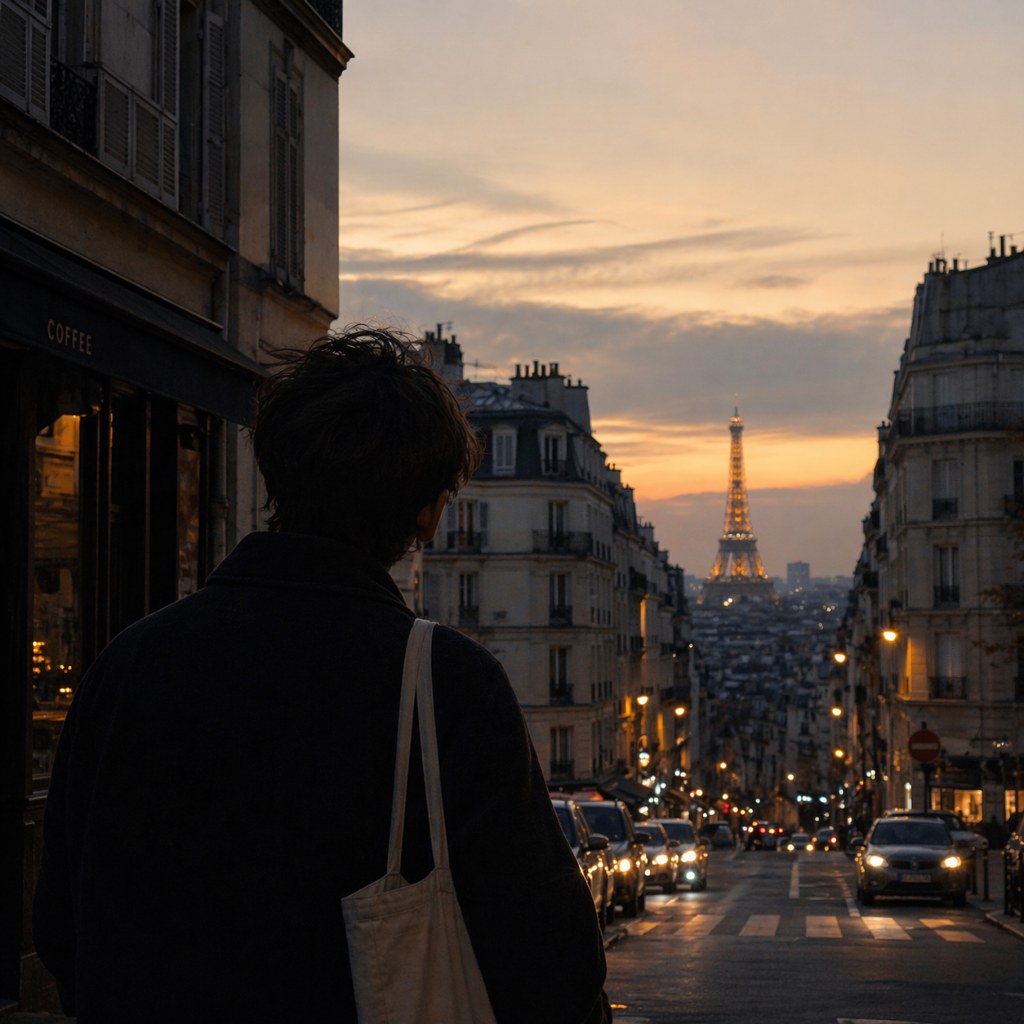
Barcelona has a split personality. The medieval Gothic Quarter is one city, drawn before any of the great cathedrals were finished and still organized around lanes that cars can't fit down. The Modernista Eixample is another — Cerdà's 1859 grid laid over what used to be agricultural land, then built up by Gaudí and his contemporaries from 1880 onward as a deliberate architectural manifesto. The 19th-century Eixample blocks meet the medieval Gothic at Plaça de Catalunya, and the city you visit is whichever side of that line you happen to be on at the moment. It is also a city that runs on a clock you have to learn. Lunch at 14:00. Dinner at 21:30. The Sagrada Família is most beautifully lit at 08:00 and 19:30; the tapas bars don't form their queues before 13:00 or 20:00; the city's soundtrack between those hours is the metro, not the streets. The shortlist below is what survived repeat long weekends. The logistics layer at the end covers the reservations that actually matter, the pickpocket geography (Barcelona has Europe's highest per-capita rate, by a margin), the late-dinner timing, and a small note on Catalan that meaningfully changes how you're treated.
VoyRay Trip Planner
Turn this guide into a real trip
Start an editable trip for Barcelona and use this guide as inspiration while choosing places and shaping each day.
12 places
Antoni Gaudí's unfinished cathedral — under construction since 1882, with a scheduled completion in 2026 (the 100th anniversary of Gaudí's death). **Pre-book timed-entry tickets online 2-4 weeks ahead** at sagradafamilia.org; walk-up is effectively impossible. 26€ for basic entry, 36€ with an audio guide, 40€ with tower access (worth the upgrade for the Nativity or Passion tower — book specifically). The interior is the whole point — go at midday when the stained glass hits full color on the nave floor. The unfinished eastern Glory façade is where the current stonework is active; you'll see cranes overhead.
.jpg)
Gaudí's 1914 mosaic park on the hillside above Gràcia — originally a failed housing project, now one of the city's defining images. **The Monumental Zone requires a timed-entry ticket** (10€, book 1-2 weeks ahead at parkguell.barcelona). The rest of the park is free. The serpentine mosaic bench on the main terrace is the photograph; the Greek Theatre below it and the dragon staircase at the entrance are the supporting cast. Get there via bus 24 or the Alfons X metro + 15-min uphill walk. Morning light is the photograph.

Gaudí's 1906 renovation of a mid-19th-century house — the 'house of bones' with the dragon-scale roof and balconies that look like skulls. 35€ basic, 47€ for the 'Night Experience' with no-one-else-there access. The 10D audio-guide is genuinely one of the best in Europe. **Book online 1-2 weeks ahead.** The ground-floor salon's fire-breathing fireplace and the attic's whale-ribcage arches are the details that stay with you. 90-min visit. Open until 21:00 most days — evening slots are calmer.

Gaudí's 1910 residential block at Passeig de Gràcia 92 — UNESCO-listed, with the famous rooftop of chimneys that inspired the Stormtrooper helmets in Star Wars (George Lucas was reportedly a visitor in the 1970s). 28€ day; 41€ for the 'Night Experience' when the rooftop is projected with Gaudí animations. The façade is free to see from the street. **Book online** — the 'La Pedrera Essential' tour covers the apartment, attic, and rooftop in 90 min.

The medieval heart of Barcelona — Roman foundations layered under the 13th-15th century Gothic buildings. **Walk the loop**: Plaça Sant Jaume (city hall), Plaça del Rei (where Columbus met Ferdinand and Isabella after the first voyage), Plaça Reial (Gaudí-designed lampposts, palm trees, the city's worst-for-crowds-and-best-for-a-beer piazza). Absolute pickpocket zone during the day — front pockets only. Evening is the better version: the stone walls glow warm and the crowds thin after 22:00.

The 13th-15th century Gothic cathedral dedicated to Santa Eulàlia — one of the two patron saints of the city (the other is Our Lady of Mercy). 11€ includes the crypt, the Gothic cloister with 13 resident white geese (one for each year of Eulàlia's life when she was martyred), and rooftop access with the Barri Gòtic panorama. **Free entry during service hours** (08:30-12:45 and 17:45-19:30, weekdays). The Sunday morning sardana (Catalan folk dance) performances in front of the cathedral are a proper local ritual.

The 1836 covered market just off La Rambla — 250+ stalls, the most-photographed food market in Spain. **Go before 11:00** for the actual-shopping version before the tourist crush. Priority stops: El Quim de la Boqueria (counter stall, the fried egg with baby squid is the dish, 15€), Bar Pinotxo (counter stall 66, classic counter breakfast), the jamón ibérico stalls at the front, the seasonal mushroom stand near the back. **Closed Sundays.** The evening version is genuinely empty because most vendors pack up by 20:00.

Catalonia's flagship art museum in the Palau Nacional on Montjuïc. The **Romanesque Mural collection** (Room 7) is the core — 11th-12th century Catalan church frescoes removed and reinstalled here to save them from decay, now the world's best Romanesque collection. The 20th-century Catalan art floor has Dalí, Miró, Picasso's Barcelona period. 12€. The rooftop terrace has the city's best free panoramic view of Barcelona. **Magic Fountain** directly below (free evening shows Thu-Sat April-October) — the combo is a proper Montjuïc evening.

Housed in five connected medieval palaces in El Born — 4,251 works, the most comprehensive collection of Picasso's early years (he lived in Barcelona 1895-1904, the formative period). The Las Meninas series (1957 Picasso reinterpretation of Velázquez) is the highlight — 58 canvases in 17 rooms, his complete sustained study. 14€. **Free Thursday 16:00-19:00 and first Sunday of the month** — queues extend around the block. Timed-entry ticket recommended online 1-2 weeks ahead.

The 14th-century Catalan Gothic masterpiece at the heart of El Born — built in just 54 years (1329-1383), giving it a consistency that most Gothic cathedrals can't match. The interior is mostly clean stone columns rising 42m to simple ribbed vaulting. Free entry during service hours (09:00-13:00, 17:00-20:30); **guided rooftop tour** (10€, 60 min, essential) gives access to the upper gallery and the terrace above the nave with El Born panorama. The novel 'Cathedral of the Sea' (Ildefonso Falcones, 2006) is set here.

Lluís Domènech i Montaner's 1908 Modernista concert hall — UNESCO-listed, arguably the most decorative architectural interior in the city. The skylight is an inverted stained-glass 'sun' rising from the ceiling; the stage wall has 18 half-sculpted, half-mosaiced Muses of music. **Take the 55-min guided tour** (22€, book online 1-2 weeks ahead) OR better: attend an actual concert (35-80€ depending on the program). Concerts let you see the hall as its architects intended — lit for performance, not static display.

The 1937 Spanish-Civil-War anti-aircraft battery on the Turó de la Rovira hilltop — now the city's best free panorama. 360° view over all of Barcelona, the sea, and the Collserola range. Free. Reach via bus 24 or a 20-min walk uphill from Alfons X metro. **Go at sunset** for the golden hour over the Sagrada Família. Pack-in your own bottle and snacks; no facilities at the summit. Can get windy — a light layer helps. A proper Barcelona local move the Cathedral-Sagrada-Park Güell tourists rarely discover.

6 places
Opened 2014 by three former elBulli chefs — now Michelin 3 stars (as of 2024) and currently the highest-rated Catalan fine dining in Barcelona. The 30-course Classic Menu is 270€ (~5 hours); the shorter Festival menu is 215€. The kitchen's signatures are the transparent ravioli, the multi-spherical olive reinvention (inherited from elBulli), and the interactive 'pizza that isn't pizza'. **Book 2-3 months ahead** at disfrutarbarcelona.com. Smart casual dress. Allocate the entire evening — dinner only, start at 19:30 or 21:30.

The benchmark Barcelona tapas bar — a no-reservations institution on Carrer Mallorca near Passeig de Gràcia. Order from the English menu or point at whatever's on display at the counter: bombas (potato croquettes with spicy aioli, 3.50€), pimientos de Padrón (blistered Padrón peppers, 6€), tortilla de patata (classic Spanish omelet, 4€). **Arrive at 13:00 or 19:00** for a 30-60 min wait; off-peak anywhere from 15:00-19:00 is the less-crowded version. 30-40€/head for a proper tapas dinner with wine.
The 1929 Xampanyet bar in El Born — generations of the same family pouring cava across a worn marble counter. The house xampanyet (the cava-adjacent sparkling wine, 3€ a glass) comes with a boquerones (anchovy, 2€) and a slice of jamón (4€) and you'll find yourself at it for two hours. **Closed Mondays and August.** No reservations; arrive at 19:00 opening for a spot, later it's standing-room. Cash only.
.jpg)
The chef's-bar tapas institution in El Raval — open kitchen, marble counter, wall of wine, a proper Spanish bar experience in a city that over-tapas-fies for tourists. Order the tortilla de patata (the slow-cooked runny-center version is the argument, 12€), esqueixada (salt cod salad), and whatever's seasonal on the chalkboard. 70-90€/head. Book 1-2 weeks online for dinner; walk-in before 21:00 usually gets a counter spot.
The 1914 standing-room-only tapas bar in Poble Sec — a 4m counter, 1,500 wine bottles lining the walls, and the montaditos (small open-faced sandwiches) that made Quimet famous: salmon-and-honey-and-yogurt, foie-and-caramelized-onion, anchovy-and-blue-cheese. 4-6€ each; 25-35€/head for a proper standing-counter stop. No seats, no reservations. Closed Sundays. Open 12:00-16:00 and 19:00-22:30 — the evening window is shorter than most.

'La Xampanyeria' — the 1968 Barcelona institution two blocks from Barceloneta. Rosé cava is 1€ a glass; pork sausage bocadillos are 2-3€. Standing-room only; the place turns over every 30 minutes. **No reservations; get there before 20:00 or after 22:30** to avoid the peak crush. Cash only. A genuine cheap-and-fast standing counter that hasn't given in to gentrification.
5 places
The 98-room property on Passeig de Gràcia between Casa Batlló and Casa Milà — arguably the single best location for a first-time Barcelona luxury stay. Patricia Urquiola interiors (a Barcelona-based architect herself). Rates from 800-1,200€/night. **Bankers Bar** on the ground floor is the hotel's social hub; **Moments** (2 Michelin stars, Chef Carme Ruscalleda) is the in-house fine dining. Rooftop pool has Sagrada Família views.

The 482-room Ritz-Carlton flagship at Port Olímpic — 44 floors, the tallest hotel in the city, with direct beach access to Barceloneta. The Frank Gehry golden-fish sculpture is on the adjacent Port Olímpic promenade. Rates from 500-900€/night. **Enoteca** (2 Michelin stars, Paco Pérez) is the in-house destination restaurant. Location is beach-and-marina-forward; 15 min by metro to Passeig de Gràcia.

The 2021 Hoxton opening in the Poblenou district — Barcelona's former industrial quarter, now the design-and-tech heart of the city. 250 rooms across a converted 1900s textile factory. **Rates from 180-350€/night** — the best 'design-conscious mid-luxury' value in Barcelona. **Sibarita** (ground-floor Spanish-Mediterranean) and the rooftop pool + Tope (Mexican-influenced) are both worth reservations. Location is 15-20 min by metro to Passeig de Gràcia; the neighborhood itself is one of the city's most interesting right now.

The 67-room boutique in a 1869 neoclassical building on Gran Via — 10 min walk to Passeig de Gràcia. Interiors by a revolving cast of international designers (Ilse Crawford, Studio Swine, others). **Libertine** (ground-floor casual Mediterranean) and the **Chandal** rooftop bar are both genuine locals-and-guests mixed destinations. Rates from 200-350€/night. The design-first Barcelona boutique; less luxe than Mandarin, more specific than W.

The 473-room Ricardo Bofill 'sail' building on the Barceloneta beachfront — one of the two iconic Barcelona skyline buildings (with Torre Agbar). Unbeatable beach position. Rates from 400-700€/night. **Wet bar** rooftop pool (open to non-guests with a drink minimum) has the best sunset cocktail view in the city. The architecture is more memorable than the rooms (standard W aesthetic), but the location genuinely justifies the stay for a beach-focused trip.
