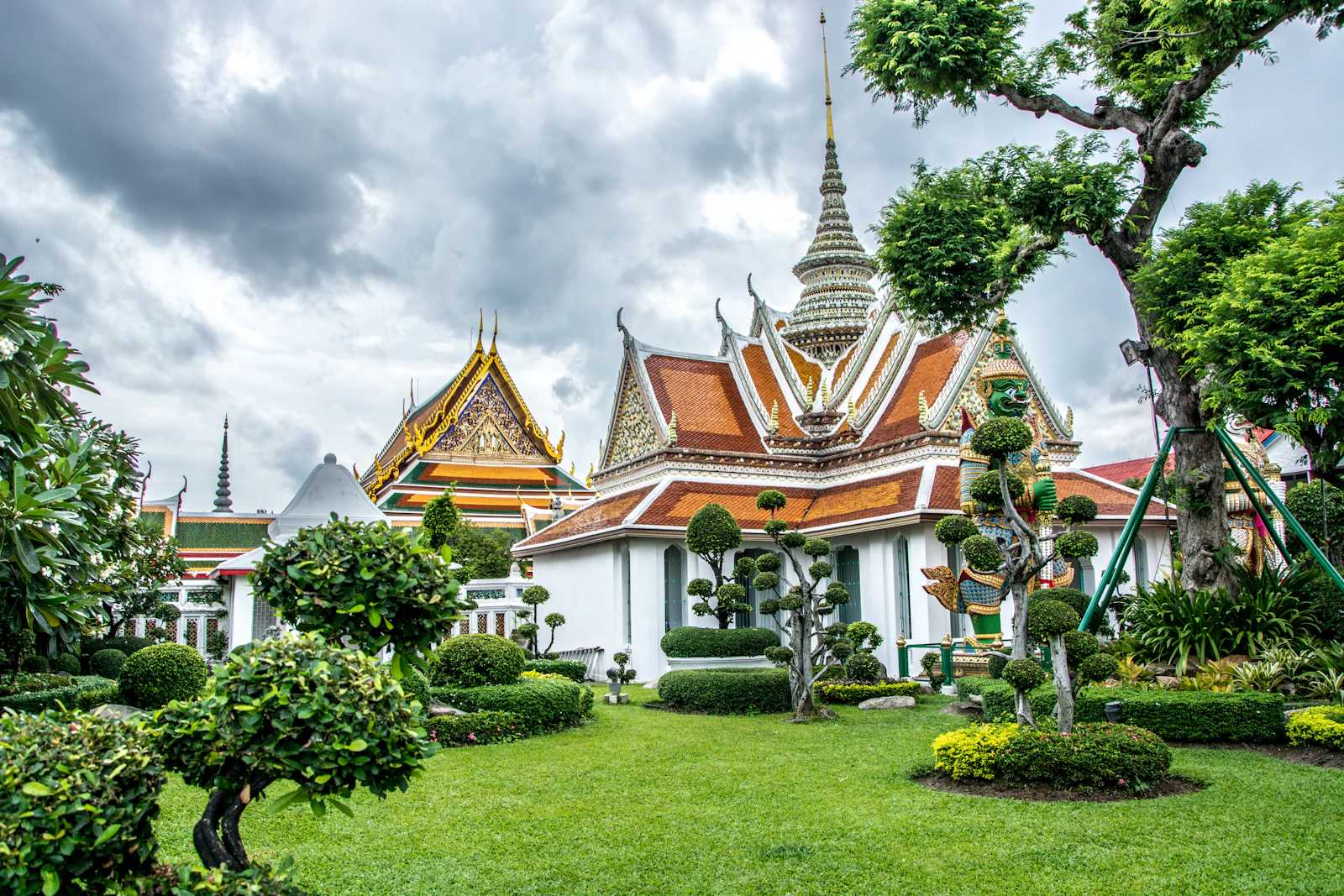

Bangkok Travel Guide
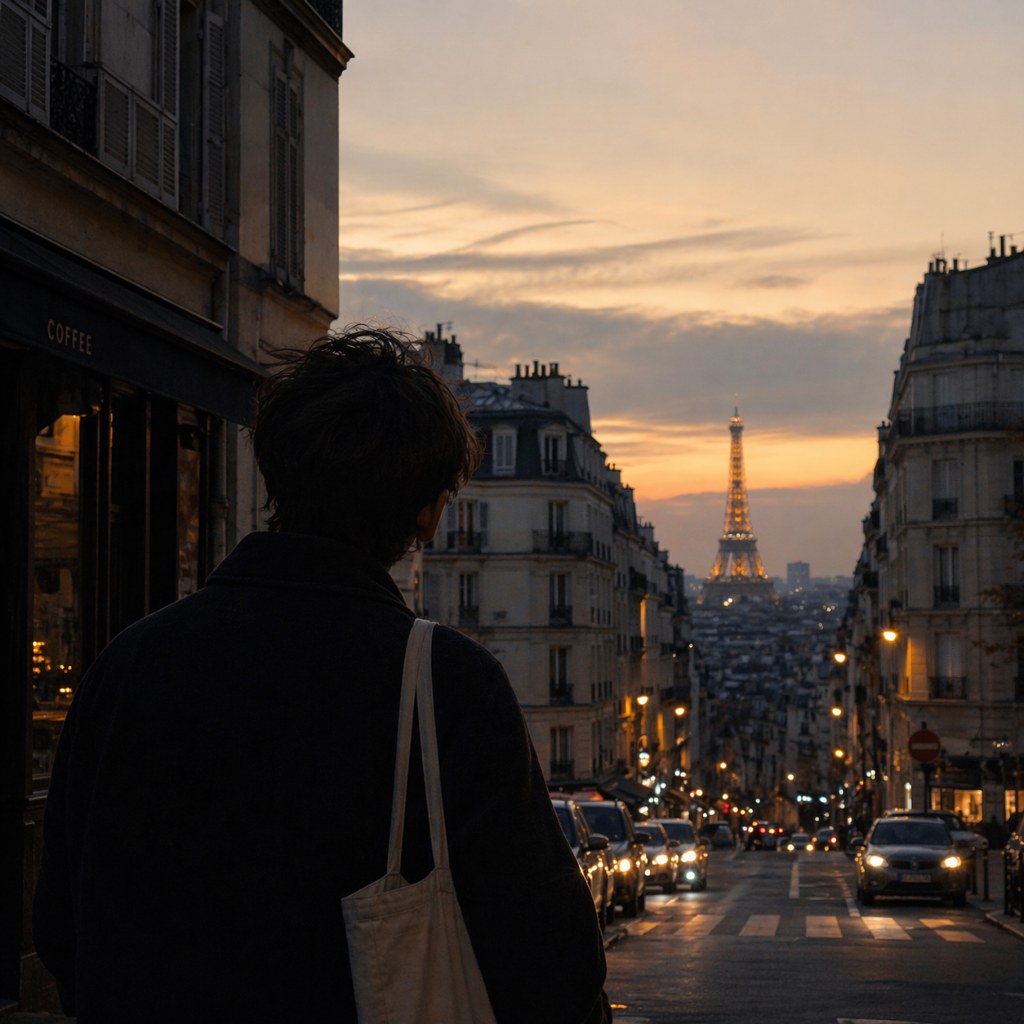
Bangkok will measure you in degrees Celsius and humidity points before it shows you anything else. Step out of the Suvarnabhumi arrival hall in April and the air hits you like a warm wet towel; the Grand Palace at 11:00 is a furnace of stone and sun and tour buses; a Chinatown tom yum counter at 02:00 is somehow still 32°C with the wok throwing heat at your face. The city does not negotiate with the heat — it works around it. You'll plan your day around shade, river breeze, and the BTS air-conditioning the same way locals do. Geographically, Bangkok organizes itself by transit line rather than neighborhood. The BTS and MRT are the fast spine, and the Chao Phraya river is the slow alternative — the boats are how you actually get to the Grand Palace, Wat Pho, and Wat Arun without sitting in traffic. This shortlist is the places that survive the heat. The logistics layer at the back covers the parts that catch first-timers: which transit pass for which day, the temple dress code, the tuk-tuk scams, and the street-food rule that determines whether a stall is safe.
VoyRay Trip Planner
Turn this guide into a real trip
Start an editable trip for Bangkok and use this guide as inspiration while choosing places and shaping each day.
12 places
The royal palace complex built in 1782 by Rama I — still officially the king's residence (though the current monarch actually lives elsewhere). 500 THB entry, valid for 1 day plus Bang Pa-In Royal Palace. Wat Phra Kaew is inside the palace grounds and houses the Emerald Buddha (actually carved from a single block of green jade, 66cm tall, dressed in different robes for three seasons by the king himself). **Dress code is strict**: long pants, covered shoulders, no flip-flops — rentals available at the entrance. **Arrive at 08:00 opening** for the tolerable version; by 10:00 the bus groups turn it into a scrum. The so-called 'palace is closed today' tuk-tuk scam operates out front — the palace is open 08:30-15:30 every day except state occasions.

Next door to the Grand Palace. The 46m gold-leaf-covered Reclining Buddha is the headline (built 1832, feet inlaid with 108 mother-of-pearl panels representing the Buddha's auspicious symbols). But Wat Pho is also **Thailand's first public university** and the traditional-massage academy is still active — a proper 1-hour massage on-site is 420 THB, an authentic extension of the visit. 200 THB entry. Pair with the Grand Palace the same morning (they share a wall).
.jpg)
Across the Chao Phraya from Wat Pho — the 79m prang (Khmer-style tower) covered in broken Chinese porcelain tiles. Take the 4-THB cross-river ferry from the Wat Pho pier. **Climb the central prang** (moderately steep steps) for the Old City panorama. **Sunset viewing is the iconic photograph** — but the best view is actually from the east bank across the river (The Deck or Eagle Nest bar at Sala Arun both have perfect sightlines). 100 THB entry. Temple closes at 17:30; the sunset photograph is from outside looking back.

8,000 stalls across 14 acres — the world's largest weekend market, open only Saturday and Sunday (some sections Friday night). Everything from Thai silk to vintage denim to live tropical fish to 1960s rock-and-roll records. **Go early (09:00-11:00)** before the 35°C heat sets in — or Friday night when parts of the market are lit up for the nocturnal version. Bring 2,000-3,000 THB cash; haggle at 30-50% off listed prices. The central food court (Section 26) is the lunch move — try the coconut ice cream at Ros Niyom.

The mile-long neon-lit Yaowarat is Bangkok's Chinatown spine — founded 1782 when the Chinese community was relocated here from the Grand Palace area. The **evening food scene is what you come for**: Jay Fai's omelet, Rung Rueang's pork noodles, oyster omelets at stalls with plastic stools on the sidewalk, and the absurdly good bird's-nest soup institutions inland from the main road. Talot Noi (the adjacent village) has become Bangkok's street-art hub — walk the lanes between Soi Khangnampramong and Soi 16. **Go after 18:00**; the market comes alive with the lights.
.jpg)
The 1959 traditional Thai-style teak house built by Jim Thompson — the American ex-CIA operative turned silk-industry revivalist who vanished mysteriously in the Malaysian highlands in 1967. Six teak houses relocated from Ayutthaya and Lopburi, reconstructed as one compound around a central courtyard. Inside: Thompson's personal art collection (Burmese Buddha sculptures, Chinese Ming-dynasty porcelain). **Guided tour only**, 200 THB, every 30 minutes. Adjacent Saladaeng Jim Thompson outlet has the best silk shopping in Bangkok.

The gilt Brahma statue at Ratchaprasong intersection — built 1956 to ease construction problems at the adjacent Erawan Hotel (which became the Grand Hyatt). Now one of the busiest active shrines in Bangkok — tourists mix with local businessmen offering 100 THB garlands in the morning and devotees hiring the resident Thai-classical dance troupe (350 THB for a short performance) as thanks for granted wishes. Free, open 24 hours. **Best at 08:00-09:00** when the morning offerings start — a 15-minute stop that shows Bangkok's religion-commerce blend better than any museum.

The 80m artificial hill crowned by a gold chedi — built in the 18th century as a vantage point for the royal army, now topped by what's claimed to be a relic of the Buddha. **Climb 344 spiral steps** (mild climb, 10 min) for the single best Old City panorama — you see Wat Arun and the Grand Palace from the same rooftop. 100 THB entry. The November Wat Saket Temple Fair is the city's largest and oldest annual temple festival, lasting 9 days.

The 78th floor of the King Power Mahanakhon tower — the fourth-tallest building in Thailand (314m), with a glass-floor observation deck that lets you look straight down to the Chong Nonsi BTS station 300m below. 1,080 THB day slot, 1,280 THB evening (sunset is worth the upgrade). Floor-to-ceiling windows have uninterrupted 360° views. The **glass floor section** on one side is the novelty; the free-roaming rooftop area is the real experience. 90 min.
The 2018 riverside megamall built across the Chao Phraya at Khlong San — 525,000 sq m across 7 retail floors plus an 80-floor hotel/residential tower above. The **SOOKSIAM indoor floating market** on the ground floor recreates Thailand's four regional market traditions under one roof — authentic-ish, good for first-time food sampling. Take the free shuttle boat from Sathorn Pier (every 20 min). The **river-facing ICON LUXE** floors have the luxury labels (Dior, Hermès, LV, Chanel flagships); the cheap-fashion floors are upstairs. River light shows (choreographed fountain + fire + LED) every evening at 18:30 and 20:00.
142 acres — Bangkok's 1920 Central-Park-equivalent, built by Rama VI on royal land. **Morning tai chi at 06:00** in the main plaza is a genuinely cinematic scene (100+ older Thais, synchronized, free to join). The 2.5km paddle-boat lake has swan boats (60 THB/30 min). Resident **5-foot monitor lizards** swim in the canals — not dangerous unless cornered; don't approach. Jogging path around the perimeter is 2.5km, popular at 17:00-19:00 before the heat drops. Free. A useful rest-day escape from the tourist loop.
_-_img_01.jpg)
The wholesale flower market on the riverfront near Memorial Bridge — open 24 hours but **peak is 02:00-04:00** when the night-market traders arrive for the next-day supply. For tourists: go at 21:00-23:00 to see the stall setup without the 03:00 chaos. Thousands of jasmine garlands strung by hand (these are the 20-THB offerings you'll see at every shrine), orchids, roses, marigolds stacked in mountains. Free to wander; buy a garland for 20 THB as a souvenir that lasts 24 hours.

6 places
The 70-something 'aunty with goggles' who holds Bangkok's most famous Michelin star — earned 2018 for her street-stall crab omelet. Samran Rat neighborhood, visible from the street (open kitchen, aggressive wok flames — the goggles are for the oil splatter). The **crab omelet (1,200 THB)** is the dish — a golden pillow of beaten egg wrapped around chunks of fresh lump crab, plus her famous drunken noodles (800 THB). **No reservations historically**; the queue now opens online via a digital ticketing system. Arrive at 13:30 for the 14:00 opening, or expect 2-4 hour waits in the afternoon.

The Michelin-recommended Isaan kitchen that cracked Bangkok's fine-casual scene — Sala Daeng BTS, 2 min walk. Order **som tum Thai** (the benchmark green-papaya salad, 120 THB — ask for 'phet phet' if you want the Isaan heat level), **larb moo** (northeastern minced pork, 180 THB), grilled chicken with sticky rice (150 THB). They opened a New York outpost in 2018 that got a Michelin nod too, which tells you about consistency. 300-500 THB/head. Go at 17:30-18:30 for a pre-rush table.
Gaggan Anand's post-2020 eponymous restaurant — the chef who held 4-Asia's-50-Best-title for four years at the original Gaggan (closed 2019), now running a more focused operation. 27-course 'emoji menu' tasting (6,500 THB), 4 hours start to finish. **Book 3-4 months ahead** via the website. Language of the menu is playful emoji; the cooking is serious molecular-meets-Indian-street-food — pani puri as an amuse, 'lick-it-up' curry painted on a black slate. A genuinely singular dining experience. Jacket recommended.
The Chulalongkorn-area noodle shack that invented 'Tom Yum Mama' — a bowl of instant mama noodles (yes, really) transformed into a volcano of spicy pork broth, minced pork, squid, shrimp, fried egg, and chili oil. 250 THB. The single most-photographed Bangkok late-night stop after 2018 when TikTok discovered it. Open 17:00-24:00. **Queue 60-90 min on weekends**; arrive at 17:00 opening or after 22:30 for a workable wait. Cash only. The tom yum goong version (with shrimp, 350 THB) is the deeper cut.
The Mahachai Road pad-thai institution — open since 1966, often claimed as Bangkok's best. The **Superb Pad Thai** (280 THB) comes wrapped in an egg-net omelet with a garnish of fresh river-prawn head still intact; the **Pad Thai Song Kruang** (200 THB) is the everyday version. Open 17:00-01:30 — strictly a dinner place. Queue 30-45 min at peak; arrive at 17:00 opening for zero wait. The adjacent Thai dessert stall (still part of the family) does a 5-minute mango-sticky-rice worth ordering on the way out.
The open-air Italian-Mediterranean rooftop at Lebua State Tower — floor 63, 247m up, reached via the distinctive gold dome you've seen in the Hangover II (the film was set here). Dinner is the point: the view is unobstructed across the Chao Phraya with downtown Bangkok's Sukhumvit skyline in the distance. 3,500-5,000 THB/head for a 3-course meal; drinks at the adjacent Sky Bar start at 800 THB. **Strict dress code**: no shorts, no sandals, collared shirts required (literally enforced at the elevator). Book 2-3 weeks ahead.
5 places
The 1876 riverside institution — where Somerset Maugham, Graham Greene, Noël Coward, and Joseph Conrad all lived at various points. The original 'Authors' Wing' from 1887 is preserved; the suites there are named for the writers and still have period furniture. 393 rooms across three connected buildings. **The Oriental Terrace** afternoon tea (since 1958) is the pilgrimage. Rates from 22,000 THB/night for a standard river-view room. The benchmark Bangkok luxury experience that every other hotel in the city is measured against.

The 2020 Chao Phraya riverside property on a 2-acre parcel — 101 villas and suites, every room with a direct river view. Bill Bensley designed much of the public spaces. **Auriga Spa** is one of the best hotel spas in Southeast Asia (3,500+ THB for a 2-hour treatment). Rates from 28,000 THB/night. Location is quietly-upriver (north of the ICONSIAM area), which keeps the noise off the terraces and forces you to take the hotel boat for central Bangkok — that's the design intent.
The 2020 replacement for Four Seasons' former Ratchadamri location — a 300-room riverside property on a 35-rai parcel, sharing the Chao Phraya Estate with Capella next door. Bill Bensley architecture: four connected mid-rise buildings around a courtyard of reflecting pools. Rates from 18,000 THB/night. The **Yu Ting Yuan** (Cantonese, 1 Michelin star) is the hotel's destination restaurant. Riverside position slightly south of Capella — similar ambient but 20% cheaper on comparable rooms.
The 2017 Park Hyatt at the top of Central Embassy — 222 rooms on floors 28-36 of a Morphosis-designed titanium-scale tower. Direct shopping access to Central Embassy luxury mall via private elevator. Rates from 12,000 THB/night. The **Living Room** library lounge is one of the city's quieter high-ground cocktail bars; **Penthouse Bar + Grill** is the rooftop restaurant with Central Embassy and Lumpini Park views. The 'design-conscious Bangkok business trip' default pick.
The 39-suite all-villa property on a 3-acre riverside parcel in the Dusit district — owned by the Sukosol family who have filled it with their private Art Deco and Asian antique collection. Bill Bensley architecture again (he's done half the Bangkok luxury openings). **Pool Villas** have their own river-view pools; **Bensley Suites** have personal butler service. Rates from 22,000 THB/night. A deliberately lower-key counterpoint to Mandarin/Capella/Four Seasons — less trafficked, more residential-feeling, the pick if you've already done the bigger names.